
This is the second edition of Odds & Ends, a new capsule-review column collecting brief notes on movies taken throughout the month.
‘A White Dress for Marialé’ (1972), dir. Romano Scavolini
Often performing under the name Evelyn Stewart for reasons I haven’t looked into, beautifully cheekboned Ida Galli starred in a lot of gialli before pretty much quitting from acting at the twilight of the 1970s. Despite not technically being a classical-sense giallo, the best of those movies I’ve seen is A White Dress for Marialé, in which she plays a recluse living with what seems to be undiagnosed PTSD (she saw her mother murdered as a little girl) and a domineering husband (Luigi Pistilli) who never lets her do much of anything. She rebels early in the movie by inviting a cadre of old friends and acquaintances — including her ex-lover (Ivan Rassimov, for once not playing a creep and therefore allowed to just be hot) — over for a dinner party that transforms first into something of a bacchanal, then the grounds for a series of murders. A White Dress for Marialé doesn’t have much of the sex- and death-obsessed sordidness common in gialli; sneakily haunting, it’s more concerned with the false fronts and insecurities of its characters, and the depleting effects of never-worked-through grief.
‘Madeleine’ (1950), dir. David Lean
The true story inspiring Madeleine — the 1857 trial of Madeleine Smith, a 22-year-old Glasgow socialite accused of (but then not charged with) murdering her lower-status fiancé to preserve her high-society cred — is approached all wrong here. Besides being too old for the part of a (maybe) reckless young woman whose financial security (maybe) makes her feel invincible, 43-year-old Ann Todd (also Lean’s wife) gives a mannered and unduly inscrutable performance recalling a slow-to-dethaw ice sculpture. And Lean, working off a wisely ambiguous screenplay from Stanley Haynes and Nicholas Phipps, directs with the kind of prim elegance sapping any real sense of danger or malice. The trial inspired a huge fuss in real life; Madeleine inspires not a lot more than a polite offering that it was “well-made.”
‘The Great Texas Dynamite Chase’ (1976), dir. Michael Pressman
The Great Texas Dynamite Chase is a lot of fun until a bland love interest (Johnny Crawford) is gratuitously thrown into the mix mid-movie and makes things suddenly go limp. Before then, it’s a rollicking action comedy that keeps a proper amount of tongue in its cheek as it watches its leads, Ellie-Jo and Candy (Jocelyn Jones and Claudia Jennings), embark on an impulsive bank-robbing voyage through Texas. They become Bonnie and Clyde-infamous outlaws whose trademarks are methodically thrown sticks of dynamite and an unwillingness to ever disguise themselves beyond in-reach touches like big-framed eyeglasses or tied-up hair. Affable Jones and Jennings have the kind of easy chemistry that makes you want to join them, but then you see how much the Crawford character brings things down and conclude that it’s better to just let them do things on their own terms.

Philip Ahn and Anna May Wong in Daughter of Shanghai.
‘Daughter of Shanghai’ (1937), dir. Robert Florey
Barely more than an hour, this adrenaline shot of a thriller is elevated by a germane subject matter — an immigrant-smuggling operation led by callous whites who couldn’t care less whether their clients of color live or die — and excellent performances from Anna May Wong and Philip Ahn, whose characters take it upon themselves to investigate the ring once it becomes clear white authorities cannot be relied on to step in. One can’t help but wish the movie had a bigger budget and more running time to work with. Still, it accomplishes plenty with its meager B-movie tools, groundbreakingly centering Asian-American characters and going out of its way to condemn the white opportunism they’re trying to thwart.
‘Five Nights at Freddy’s’ (2023), dir. Emma Tammi
I defer to Dance Moms’ Abby Lee Miller when moved to describe in a nutshell how I found Five Nights at Freddy’s: boring; yawning; sloppy — lazy. That Josh Hutcherson is actually pretty good in this unnecessary adaptation of a video-game franchise makes things more painful to sit through.
‘Abandoned’ (1949), dir. Joseph M. Newman
A scrappy B thriller zeroing in on an insidious plot hidden in plain sight: a baby-selling ring successfully operating on the black market. Abandoned has been cleverly plotted by screenwriters Irwin Gielgud and William Bowers, who keep things satisfactorily twisty, and it’s lucky to have Dennis O’Keefe and Gale Storm, brought together by a shared determination to figure out what’s going on as a hard-nosed reporter and the younger sister of a missing pregnant woman who might have been in too deep with the ring’s organizers.

Peter Pittaros in Greek Pete.
‘Greek Pete’ (2009), dir. Andrew Haigh
Whether Greek Pete, a movie chronicling a year in the life of a young, gay male sex worker getting by in London, is a documentary or a drama shot like a documentary doesn’t matter. In either case, it’s so stagey that you don’t respond to it much more than as a curiosity — a hint at the emotional-realism bonafides Haigh would more substantially develop over the next couple of decades.
‘The Spider Woman’ (1943), dir. Roy William Neill
The seventh of 14 features respectively pairing Basil Rathbone and Nigel Bruce as Sherlock Holmes and John Watson, The Spider Woman is great for occasions like the one I watched it on: when you’re not quite ready to go to bed and want to watch a movie but even 80 minutes sounds like too big a commitment. An engaging, to-the-point 62 minutes, the film finds Holmes and Watson investigating a mysterious string of deaths that seem to be suicides but which are too similarly strange to not ward off suggestions of foul play. The Spider Woman gets a lift from Gale Sondergaard as the sly, clever antagonist of the title, who was subsequently reused as deceptive fodder for the even-more-fun The Spider Woman Strikes Back in 1946. Each movie technically has Sondergaard playing a different character; the latter isn’t related to anything Arthur Conan Doyle ever wrote. But Sondergaard is so good in both films that she turns such qualifiers insignificant.
‘The Last Mistress’ (2007), dir. Catherine Breillat
Erotic cinema pioneer Breillat’s lush period piece tracks the affair between a pillow-lipped libertine (Fu’ad Aït Aattou) and the darkly beautiful Spanish courtesan (Asia Argento) he will eventually betray to marry into higher social standing. The movie is riveting, tasteful smut, aided greatly by the fieriness of Argento’s increasingly unbridled performance.
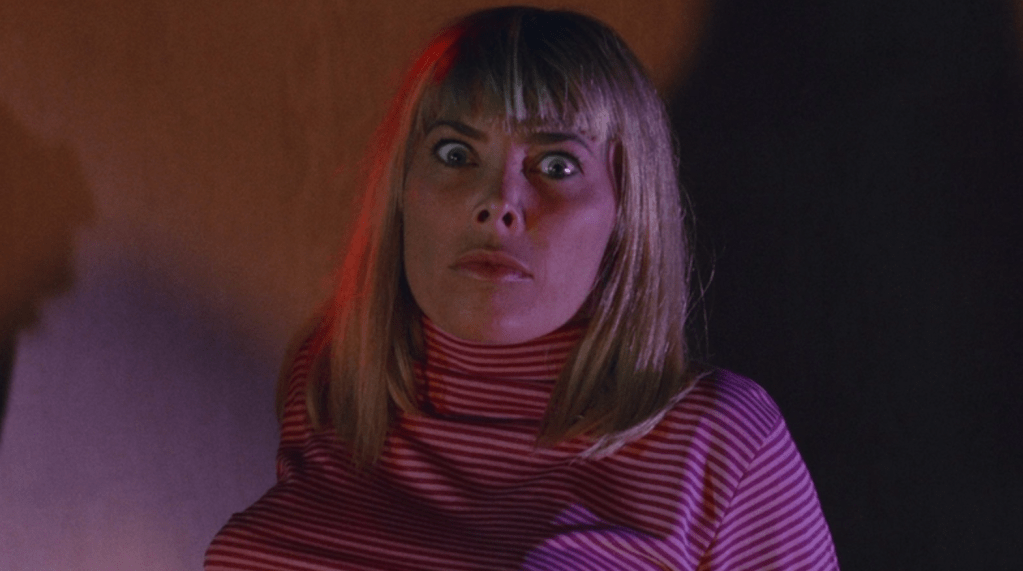
Claire Brennen in She Freak.
‘She Freak’ (1967), dir. Byron Mabe
The excess padding of aimless carnival footage in She Freak is an obvious attempt by Mabe, a director used to making movies with budgets of pennies and piles of lint, to get the film to a respectable enough 83 minutes. But it actually works to the film’s benefit, generating such a strong sense of business-as-usual mundanity that it makes the horrific ending that much scarier — unspeakable horror hidden in plain sight. That horrific ending is actually the only time the titular “monster” appears in this misleadingly titled but effective movie about a beautiful, blonde, and bored waitress (Claire Brennan) who works her way up through the local circus milieu often at the expense of the sideshow “freaks” she looks down upon. You can tell where she’s going to end up early on, hoping fruitlessly that she can maybe turn things around. But this is, after all, basically a remake of Freaks, a movie where karma infamously won the argument.
‘So Long at the Fair’ (1951), dir. Terence Fisher and Antony Darnborough
The plot of a movie like So Long at the Fair is meant to make you question its heroine’s sanity at least a little bit, but you can tell from the jump that she’s being tricked by some rotten French people for reasons it’ll take a while to uncover. Vicky (an excellent Jean Simmons) is a young Englishwoman vacationing in Paris with her older brother when, the morning after their arrival, he disappears from the hotel and everyone working there is adamant she arrived alone, and that she must be making up stories to try getting out of a bill she can’t pay. Tenacity prevails, though it’s tested by the dislocation of being in a foreign land where you don’t speak the language and understandable doubt over whether sanity really is slipping. Vicky gets some 11th-hour help from a boyishly handsome Dirk Bogarde, playing a painter who was around at about the time of the vanishing. It’s all compelling, convincingly frantic filmmaking that’s good at making you fear for the worst but better at getting you to hold on to some of the hope pushing Vicky to get the answers she’s certain are there.
‘Afire’ (2023), dir. Christian Petzold
Like a summery Éric Rohmer comedy if it were markedly less pleasant, Petzold’s Afire takes place at a small vacation home by the Baltic Sea encircled by parched trees amid wildfire season. The movie is most preoccupied with Leon (Thomas Schubert), an insufferably self-serious writer who received much anxiety-inducing acclaim for his debut novel. He’s absconded to this cozy abode to get work done on his follow-up with his friend Felix (Langston Uibel), who’s working on an artistic portfolio he’s decided will collect portraits of people gazing at the sea. The trip’s mojo is interrupted, at least as Leon sees it, by Nadja (Petzold muse Paula Beer), a literary scholar making summer money scooping ice cream, and her handsome new fling, Devid (Enno Trebs). It’s a movie one admires more than likes interested in the destructive quality creativity can have on a person with an unhealthy relationship to it, astutely using climate change-related threat as a device complementary to the nerve-wracking specters of deadlines and the menace of the public eye.
 Peterson Reviews