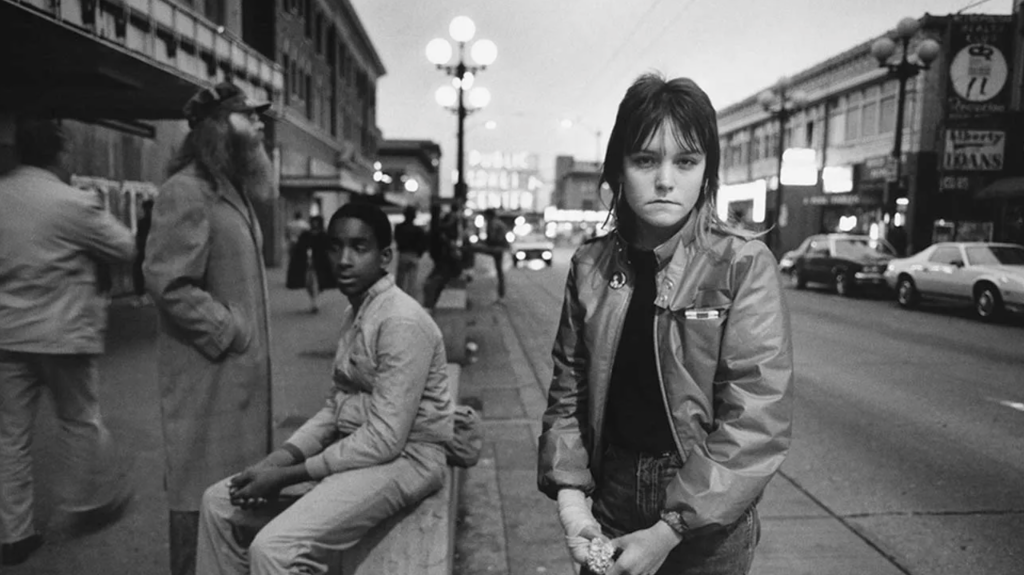
Early on in Streetwise, Martin Bell’s haunting documentary from 1984, a bright-eyed 14-year-old who calls herself Tiny visits a health clinic. She calmly tells her physician about the several STDs she’s had in the last few months; she wonders, a little less calmly, if there are times during your period, which she’s started having only recently, when it’s impossible to get pregnant. Staunchly against abortion (“it’s like you’re murdering somebody”), Tiny wants to know because she’s a sex worker, and only the other day serviced a john who refused to use protection.
Born Erin Blackwell, Tiny is among several young people featured in Streetwise, a documentary galvanized by a 1983 Life magazine article. In “Streets of the Lost,” journalist Cheryl McCall followed a subset of Seattle-area teenagers who either partially or completely took to the city’s mean streets to get by. Bell’s wife, Mary Ellen Mark, took the photos. In stark black and white, Mark’s austere snapshots frankly captured harrowing scenes: an 18-year-old dozing in the makeshift bed he’d assembled underneath a dank waterfront viaduct, a 14-year-old getting injected with a dose of MDA.
The film and the article don’t condescend to their subjects — sensationally frame their hardships to adequately sate a viewer’s lurid interest. Akin to documentarians Les Blank or Frederick Wiseman, Bell’s showing-it-like-it-is plainness — which itself is, of course, still a product of the editing-room subjectivity of Nancy Baker — creates an ethos of respect and care, with its subjects, used to being placed in the city’s margins, subliminally deemed important, worthy of having their stories told as they are without blatant editorializing. You sense the subjects can feel that too; they never betray a lack of trust in the people recording brief moments in their lives for posterity. That several of Streetwise’s kids would not live much longer, their lives ended by the likes of violence, sickness, or suicide, transforms the film into an inadvertent memorial, a testament to how rarely the simple biographical facts of one’s life actually capture color and nuance.
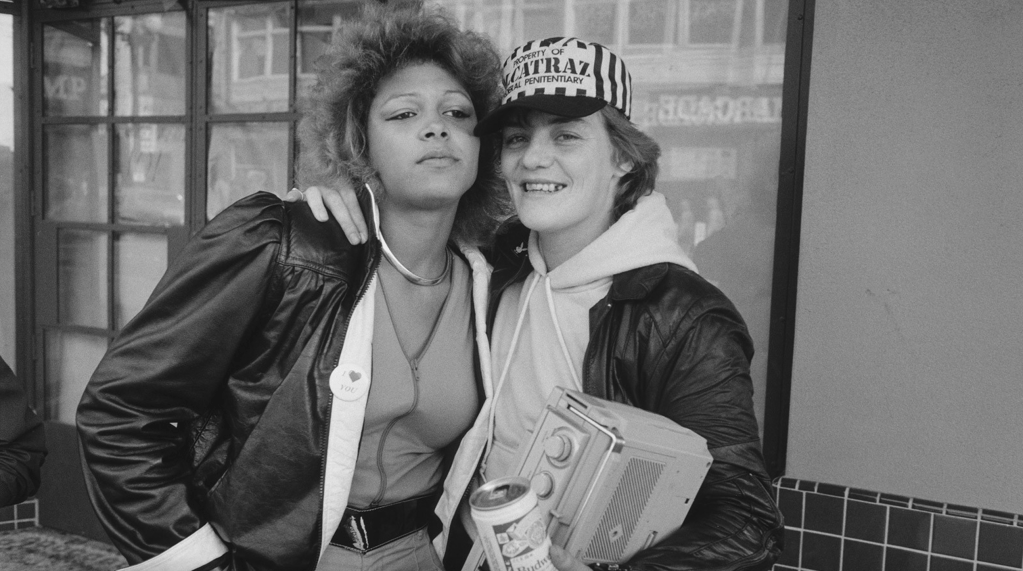
Lou Ellen “Lulu” Couch and her girlfriend, Dawn Wade. All photography by Mary Ellen Mark.
You get glimpses of the unrelenting protectiveness of Lou Ellen “Lulu” Couch, who a year after Streetwise’s release was killed by a man while she was trying to help out a girl he was assaulting. You can see how much Dewayne Pomeroy’s convict father loves his scrappy and clever son during a jail visit; you also can see him practically shake with worry that his offspring, whom he can only see if there’s a glass partition between them, is on track to end up like him, youthful mistakes begetting the kinds of dead ends you prefer not to think about until they’re right in front of you, halting your life before you can make sense of what’s happened. (Pomeroy hanged himself before Streetwise came out; the scattering of his ashes into the Puget Sound is one of the film’s final images.)
Bell’s unintrusive style underlines the destructiveness of indifference, whether from the lack of governmental intervention in the homeless Pomeroy’s situation or from Tiny’s own mother, a waitress with debilitating alcoholism whose parenting style is so passive that passive seems too generous a description. (She dismisses her daughter’s sex work as only a phase; she reasons that there’s nothing she could do to stop her, not long afterward sternly reminding Tiny not to bother her while she’s drinking.) The simple act of depicting his subjects’ lives seems to be Bell’s own kind of intercession; he characterized his objective as “being there showing you that there’s something seriously wrong here” in a 2016 interview with Filmmaker magazine.

Dewayne Pomeroy
It naturally can be hard not to sometimes question the balance of empathy and exploitation here, given the utter powerlessness and vulnerability of the subjects. Bell himself has struggled with his place in this milieu. “The audience is always asking afterwards, ‘why didn’t you help them?’ And the truth of the matter is, you’re powerless,” he continued in the Filmmaker interview. “It’s hard to offer that help. What does it mean? A dollar? That’s not the answer … of course I was angry and concerned when someone we knew was at risk.”
Some of Streetwise’s subjects escaped their difficult circumstances. A dumpster-diving kid who cares much for Tiny and goes by the nickname Rat was, as of a years-ago check-in, happily married and steadily working at a towing company, one jail sentence too many convincing him that he needed to get out of the street life he’d grown accustomed to. “Little Justin” Reed Early would write about his experiences and later parlay them into advocacy work with at-risk youth.
Bell and Mark reunited with Tiny, at length, for 2019’s Tiny: The Life of Erin Blackwell, which finds the teenage sex worker who once dreamed of owning yachts and wearing diamonds decades older, the mother of several kids who too are dealing with what their mother thought she’d one day get away from in Streetwise.
Streetwise soberly rebukes the 1983 declaration that Seattle was America’s most livable city. More than four decades later, its approach to homelessness and crime remains callous at best and unfathomably cruel at worst; the compassionate Streetwise takes seriously the kinds of people for whom things have only become more untenable. It’s an artifact whose concerns we fruitlessly wish could be entirely left in the past.
 Peterson Reviews