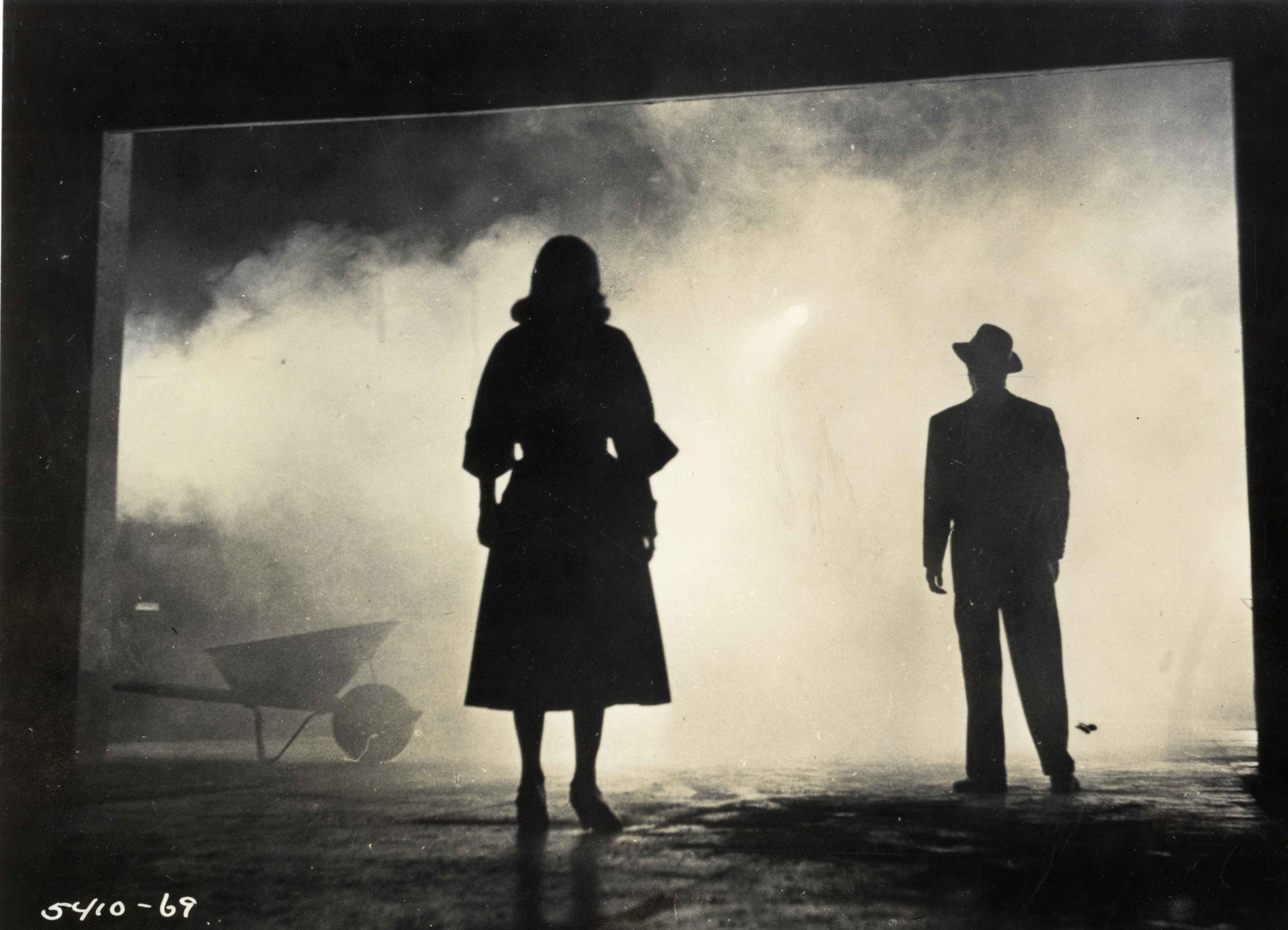
Even if you don’t know The Big Combo (1955) by name, there’s a chance you’ve seen its most iconic image: the ink-blank silhouettes of its leads, Jean Wallace and Cornel Wilde, outlined by the bright-white fog suffocating a vacant airfield. The only other discernible objects in the frame are an empty wheelbarrow and a circular light beaming in the distance. Sans context, there’s something ominous about the image — like Wallace and Wilde were walking toward purgatory. But when it arrives at the movie’s very end, the shiny, misty air is suddenly recast as sort of heavenly — the dank entryway to a better future.
There are no other moments like this in The Big Combo, which is among the nastiest, bleakest movies to come out of the classic film noir era. Written by Philip Yordan and directed by Joseph H. Lewis, it’s propelled by a quasi-game of cat and mouse between Leonard Diamond (Wilde), a police lieutenant whose captain cracks has too many brains for his own good, and Mr. Brown (Richard Conte), a vicious, omnisciently powerful gangster whose scary equanimity recalls a hooded cobra perpetually ready to strike.
Their names unsubtle suggestions of their moral compasses, these men have been locked in a sort of tango for years now — “you’re fighting a swamp with a teaspoon,” a superior says to Diamond of his pie-in-the-sky ambitions to defeat someone of such influence — but Diamond thinks he might be closer than ever to a technicality-free means to lock his opponent up for good. He’s started believing lately that his answer will be found in Alicia (Helen Walker), Brown’s missing, possibly murdered ex.
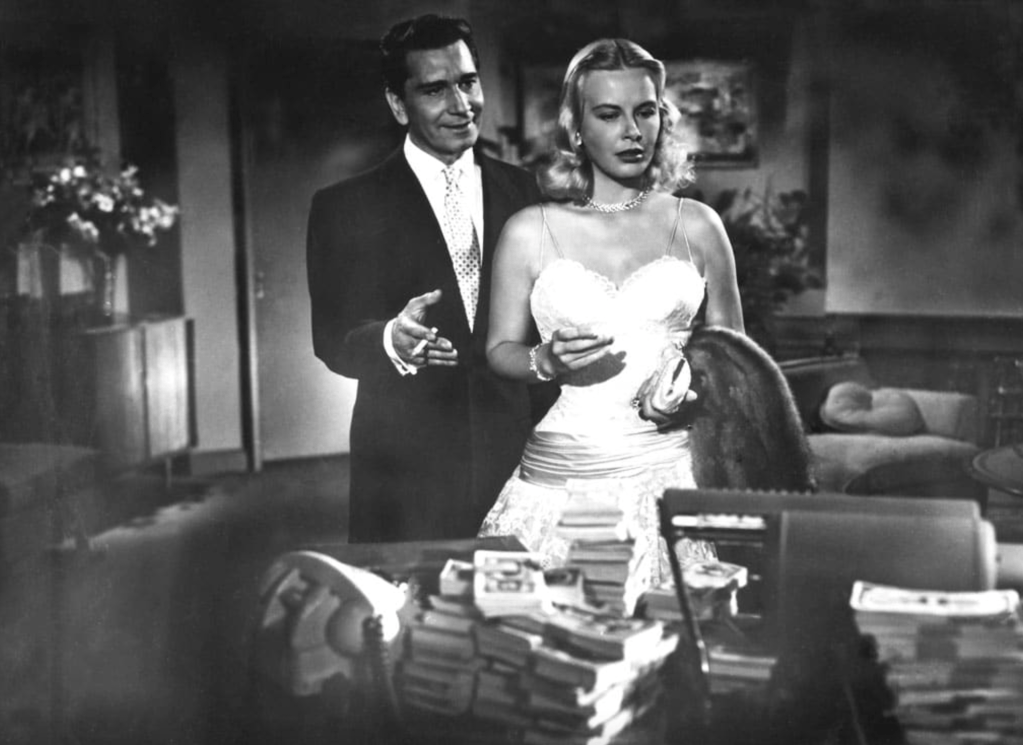
Richard Conte and Jean Wallace in The Big Combo.
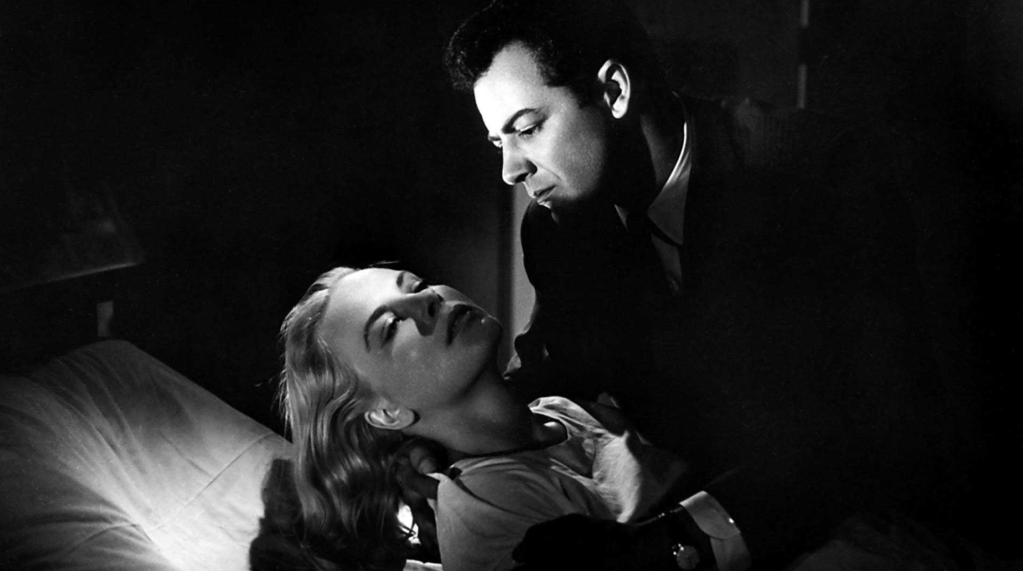
Diamond weaves through potential leads, unperturbed even by a frightening early run-in with Brown that sees him nearly fatally poisoned with a bottle of hair tonic and tortured by the sounds of beating drums cranked up in headphones jammed into his ears. He falls in love on the way with Susan (Wallace), Brown’s at-her-wits’-end girlfriend who chronically speaks like she’s about to burst into tears and who attempts suicide near the film’s start. (It’s a haunting paper-doll performance from an actress whose unflashy acting style gives the impression of someone who might have been more at home coming up as a performer in the 1970s; Wallace’s pale skin and thin, white-blonde hair help bestow the character a ghostly quality.)
The most interesting thing about this rather thinly plotted movie is not Diamond’s dogged efforts — so personal for him that he will at one point shed tears the cameras hungrily home in on — or the tentative romance he’ll form with Susan. It’s Brown himself, performed by Conte with such hypnotic cruelty that you practically wait with bated breath for how his callousness will outdo itself next. The way he talks makes him more terrifying. His words tumble out at a breathless pace, but his chilling certainty in himself promises that he’ll never stumble on even one. You always feel like he’s coming at you even when he’s at a safe distance.
You can immediately feel how most people who aren’t Diamond could be so pessimistic about a potential end to Brown’s reign in the segment of Los Angeles in which the film is set. The Big Combo wouldn’t feel nearly as gloomy without John Alton’s stunning cinematography, whose hankering for chiaroscuro lighting makes even ostensibly safe places stalked by unsettling shadows, or the music from David Raksin, whose score often foregrounds a dejected, lonesome trumpet. The movie concludes as happily as it possibly could for the put-through-the-ringer Diamond and Susan. But the lack of any explosively finite resolution does little to quell the unease we feel throughout the rest of the film. One form of evil has been quashed, but there’s plenty more from where it came.
 Peterson Reviews