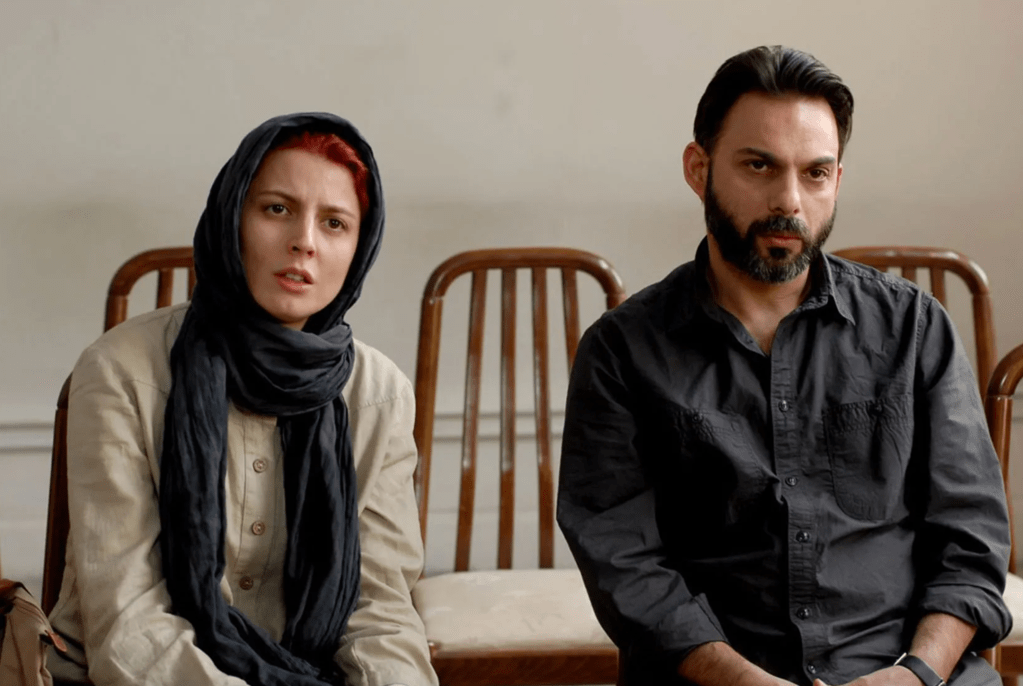
There are no real hard feelings between Simin and Nader (Leila Hatami and Peyman Moaadi) at the start of Iranian filmmaker Asghar Farhadi’s A Separation (2011). It’s true that we’re introduced to them seated side by side in a family court, declaring their intentions to get a divorce. But their Simin-spurred reasons for splitting up have more to do with practicality. (“He’s a good, decent person,” the latter says of her husband of 14 years with conviction.) Simin, a teacher, wants to leave Tehran so that their 10-year-old daughter Termeh (Sarina Farhadi) has more opportunities and freedom. The visas for everybody are prepared. Nader, though, is adamant about staying behind. His father (Ali-Asghar Shahbazi) has Alzheimer’s and requires around-the-clock care; the last thing he wants to do is start fresh.
Simin subsequently moves out to temporarily live with family — a development that may be the only predictable thing about this domestic drama so mountingly tense and morally spiky that it feels like a thriller. A Separation subverts divorce-movie expectations by having nearly all of its narrative flow from a different conflict for which the central split is technically obliquely responsible. Nader hires a woman, Razieh (Sareh Bayat), to act as his dad’s caretaker now that Simin isn’t around to help. After he comes home from work early one day and finds that cash is missing, his father tied to his bed (which he’s fallen off) as if he were a dog whose keeper was trying to stop it from misbehaving, and Razieh gone, he angrily forces her out of the house when she returns. Then comes some horrific news: Razieh — who was concealing her new job from her husband, Hodjat (Shahab Hosseini), and a pregnancy from Nader — has suffered a miscarriage. She and Hodjat want to press charges. Razieh could go to prison for a few years, for murder, if a judge decides his home-banishing pushing was aggressive enough to cause the baby’s death.
The sparring between A Separation’s opposing forces amasses intensity to an almost unbearable degree. One might initially gravitate more toward Simin and Nader’s side — from what Farhadi shows, Simin’s reaction to Razieh’s professional slip-up is heated but not violent in the way it’s being framed — but the movie ultimately steers its viewers to think more humanistically about emotionally rubbed-raw people only trying to protect themselves and their families. Everyone, in the context of their self-preserving day-to-day lives, is more right than wrong.
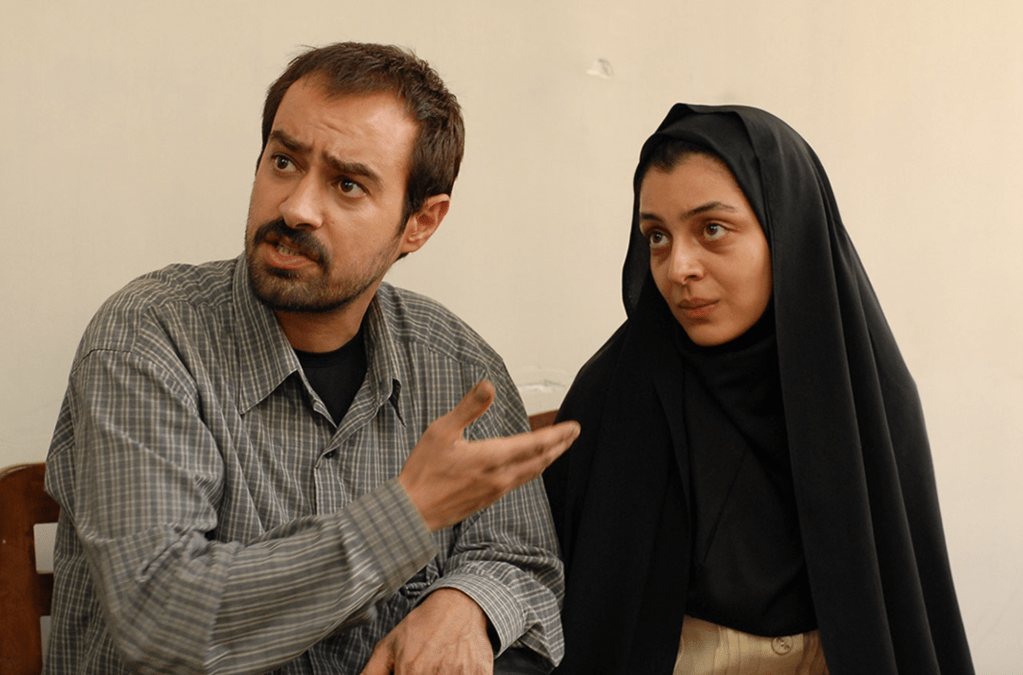
Shahab Hosseini and Sareh Bayat in A Separation.
A Separation is still conscious of the power imbalance between its litigiously dueling parties and how the upper-middle-class Nader might see the blue-collar Razieh and Hodjat as beneath him — jump to accusing Razieh of swiping money without having exhausted all possible explanations and see her temporary abandonment of his father as more of an unforgivable moral failing and not the byproduct of a legitimate emergency that he doesn’t allow her to explain.
Nader seems to be thinking more, in a court setting, about an accusation he finds unreasonable than the fact that Razieh and Hodjat have tragically lost a child and are looking for justice. He’s unconsciously guilty of what we all are in some way: internalizing what we understand about ourselves and others and not realizing how much it can warp a situation’s reality. Clear-eyed Termeh puts that into relief for him: her largely silent observations become more directly expressed during the film’s third act, where she pushes her father to more closely examine his own self-deceit. The director’s own offspring, Sarina Farhadi gives what might be the movie’s most sneakily powerful performance without saying much. Her discerning eyes, laser-like behind glasses, are their own kind of compass to look to to get one’s bearings.
The title A Separation feels applicable to more than just its narrative-starting divorce: the class divide between its two couples and how that disparity heightens their mutual acrimony; the invisible partition between each duo’s lives before and after they crossed paths. The scaffolding of the movie’s emotionally intricate plotting leaves openings for interpretive possibilities that transcend the baseline realities of its ambiguity-amenable storyline. “More than anything else,” Farhadi told The Guardian in a 2011 interview conducted a few months after the movie’s premiere at the Berlin International Film Festival, “I think today’s world needs more questions than answers … I’m not hiding the answers away from my viewers — I simply don’t know them.”
 Peterson Reviews