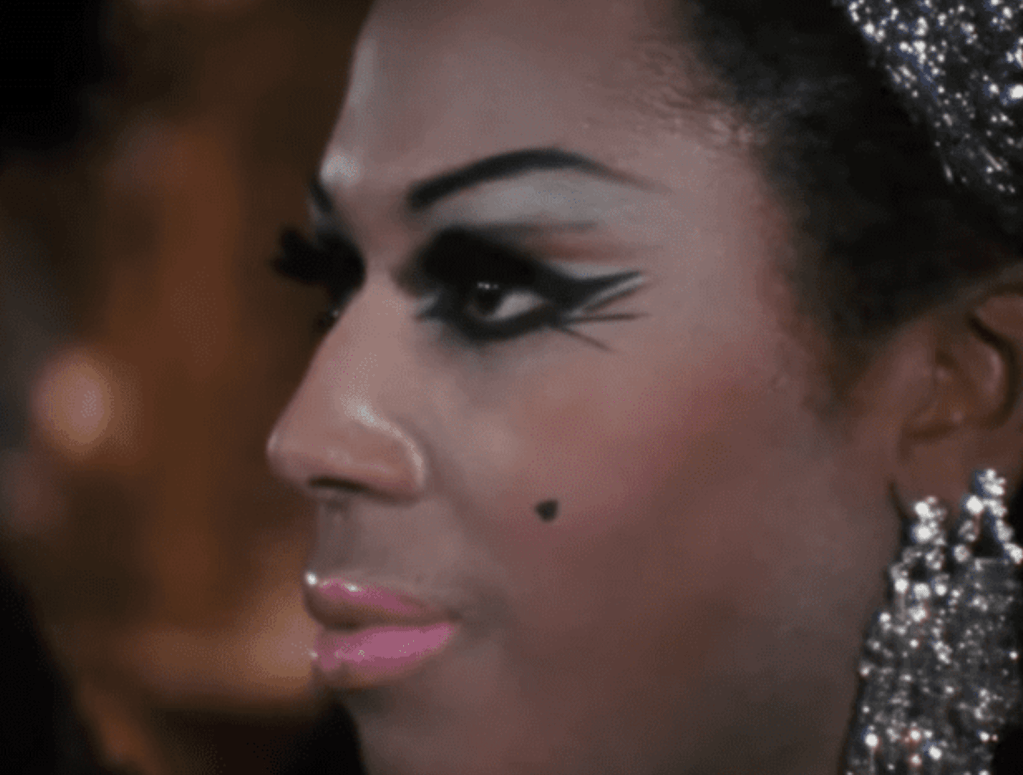
The Queen (1968) parachutes into the preparation for something Jack Doroshow had been doing all the time around the country: organizing, and acting as the master of ceremonies of, a drag pageant. Happening in New York City’s Town Hall in 1967, the one the film covers is called the Miss All-America Camp Beauty Contest. It sees Doroshow, as in all his other events, transform from a rather shrimpy 24-year-old into the icy-blonde Flawless Sabrina, a drag persona that sartorially takes cues from the look-at-me glamour of Zsa Zsa Gabor but interpersonally maintains the cheerleader-like warmth and encouragement observed pre-metamorphosis. (Sabrina simply calls her look a “bar mitzvah mother thing.”)
Barely over an hour, the Frank Simon-directed documentary seems to want to be seen similarly to an immersive ethnography. It doesn’t have proper direct-to-the-camera interviews. It mostly hangs out among some of the contestants filling out a no-frills hotel near the venue — a challenge to secure, Doroshow notes, because it’s hard to find a place that’s in a good location, has 20 empty rooms near each other, and is progressively minded. Simon’s behind-the-scenes guidance is still suggested despite the unobtrusive presentation. It struck me, perhaps cynically, as convenient that all the topics straight, cisgender viewers might be curious about as they relate to gay people who do drag, from appropriate pronouns to the possibilities of gender-affirming surgery, are all spoken of in neat succession before the onstage strutting can begin. That doesn’t make The Queen any less compelling or, in some moments, genuinely emotional. For these men congregating for what Sabrina likens to a convention, drag is a catharsis-fueled source of power, an art form trafficking in infinite opportunities to remake oneself in a world that incentivizes blending in.
The Queen is vital. It’s a little maddening, too. It continues to be joyous just for presenting its subculture and queer people writ large matter-of-factly, if not compassionately. It’s bracing to see gay men living more than a half-century ago without their guards up, unabashedly enjoying themselves in an era where their actions could be criminalized. (It’s been reported that the movie’s outtakes showed the contest’s afterparty threatened by a police raid; it was illegal, at the time, to cross-dress in public unless the act was happening onstage.) But the documentary can be unsurprisingly vexing in an of-its-time way, too. Simon doesn’t seem to have fully gotten rid of the internalized urge to see everyone as a bit of a curio; the movie never particularly tries to get to know anybody very deeply. Abstaining from more individualized moments with contestants and taking the time to uncover stories that might emerge outside friendly group conversations feels like a proxy of that — a way to maintain distance and detachment.
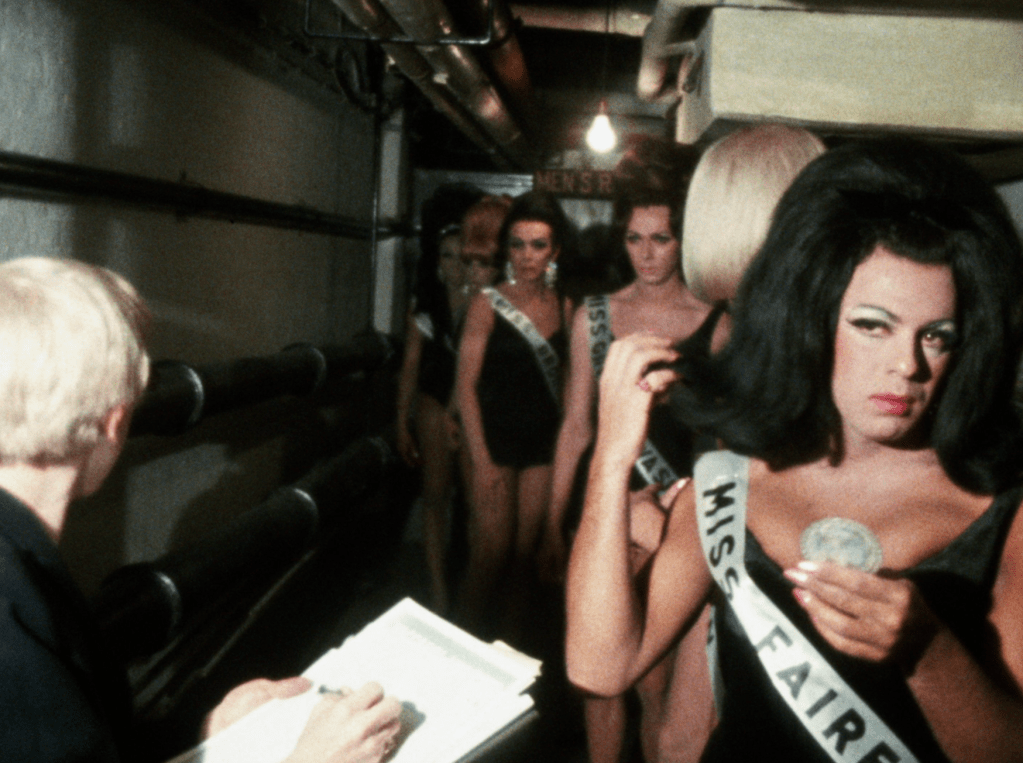
From The Queen.
That perception doubles later in the movie, when some of the enrolled Black drag queens — who go mostly unseen nearly all film long in favor of a small group of white participants — are angered by an outcome they understandably find unfair. A conventionally beautiful white contestant, newcomer Rachel Harlow, wins. Her model-esque looks have evidently made up for her nothing-special presentation. Crystal LaBeija, a Black queen who places fourth, storms off the stage before knowing for sure who’s won. She’s already — and correctly — predicted who will be crowned.
To the now-iconically apoplectic LaBeija, the gathering is another example of a popular drag competition strongly and frustratingly preferencing white beauty standards. Even at an event looking to be inclusive and fun, it remains common for whiteness to be celebrated as a default, regardless of if it wasn’t consciously intended by the white host or white judges. Because Simon never previously engages very substantially with LaBeija and the other Black contestants who support her in that moment of climactic fury, the movie puts white drag queens on a pedestal while pushing their Black counterparts into the margins — the exact action that causes LaBeija, fed up over what we can reasonably presume are years of being overshadowed by white queens, to lash out.
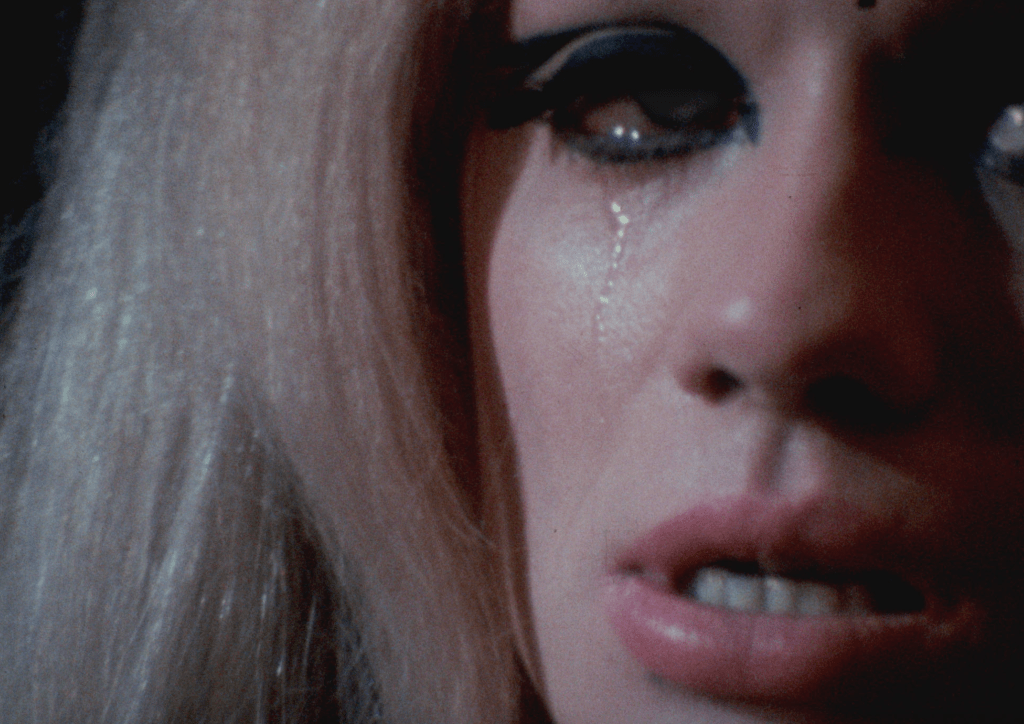
Rachel Harlow in The Queen.
A rare moment in the movie that does spotlight a Black contestant finds Pepper, who’s in LaBeija’s drag family and 22 years later famously appeared in another totemic drag-focused documentary, Jennie Livingston’s Paris is Burning, bemoaning getting turned away during the Vietnam War draft. She writes to the president himself, hurt over her exclusion. She wanted to have the same opportunity as her peers.
The Queen sought to tell one story — the narrative of a milieu largely misunderstood by the mainstream — but its last few moments lay bare what, and who, was nearly left out. LeBeija would go on to constructively capitalize on her rage. She’d collaborate with another member of her drag family, Lottie, to host an all-Black counterpoint to the competition seen in The Queen and wound up pioneering ball culture’s now-entrenched and collectively minded house system. She remained a pivotal, looked-up-to figure until her premature death in the 1990s. (The exact date, like her birth, is shrouded in mystery, adding, one could say, to her mystique.)
Doroshow continued performing as Flawless Sabrina and programming events, devoted to uplifting drag queens and transgender people until her death in 2017. “Without Jack Doroshow, our Flawless Sabrina, my friend and mentor, The Queen would not exist,” Harlow, who transitioned in the 1970s, told Rolling Stone over email when the movie was restored and rereleased in 2019. “Because of his absolute dedication to the art of drag, he championed a whole generation of us who were, until that time, silenced by intolerance and shame, and delivered us from the darkness into the light.” For all its flaws, The Queen achieves something similar on a smaller scale.

