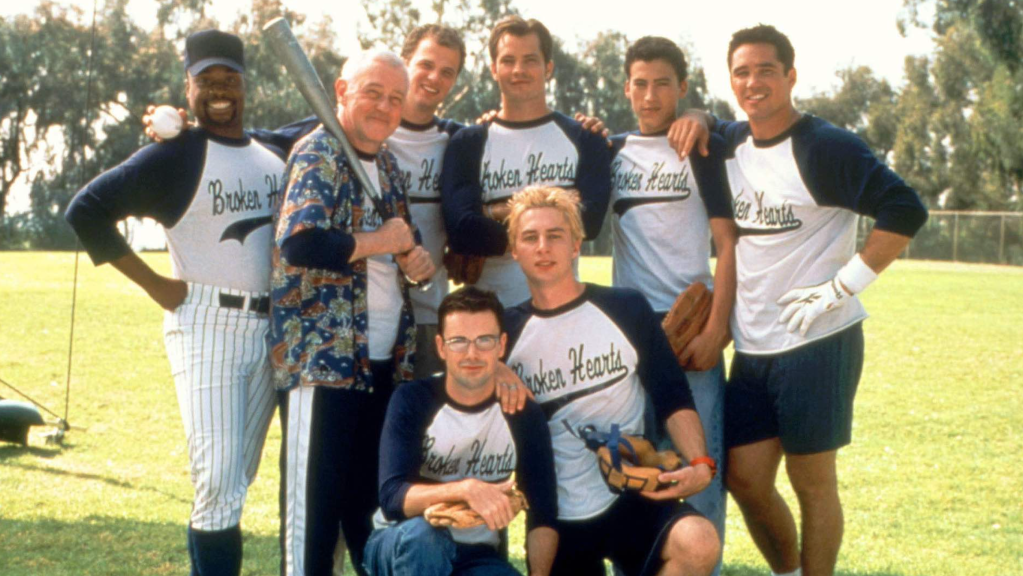
The objective of writer-director Greg Berlanti’s The Broken Hearts Club: A Romantic Comedy is perhaps too neatly laid out mid-movie. While at lunch with his friends, scrawny introvert Howie (Matt McGrath) bemoans the limited ways gay men are represented in mainstream movies. One can predict the types of roles he resents before he can even name them. The tragic hustler. The sex addict. The nobly suffering AIDS victim. The stylishly dressed, wise-cracking bestie of a rom-com’s female lead. “Just once,” he says, “I’d like to see a gay character that is not sick, has not been laid in about three months, and is behind on his student loans.”
Howie’s exasperation is exactly why Berlanti was moved to scribe the movie’s screenplay. “It was born out of wanting to write a film that to me was about maybe the silent majority of gay men that I knew who weren’t like a lot of these men on the screen,” Berlanti said in an interview at the time, a couple years into his tenure as a writer and co-executive producer on the hit teen soap Dawson’s Creek. The movie amiably accomplishes what its still-not-yet-30 director set out to do — a modest goal that, given mainstream-courting cinema’s resistance not to couch queer life in tragedy, felt and still feels quietly radical.
The Broken Hearts Club’s subtitle is a bit of a misnomer. There’s romance in it, but not of the genre’s default two-people-falling-in-love variety. Episodic in a way that evinces Berlanti’s TV background, it’s a conventionally structured ensemble feature about a group of 20-something friends. With the exception of Billy Porter and McGrath, The Broken Hearts Club has to have the highest number of straight performers playing gay in a movie: Timothy Olyphant, Dean Cain, Zach Braff, Andrew Keegan, Ben Weber, and Justin Theroux, plus John Mahoney as a mentor figure and Nia Long and Mary McCormack as a grouchy lesbian couple hoping to use one of the main cast members’ sperm for a baby.
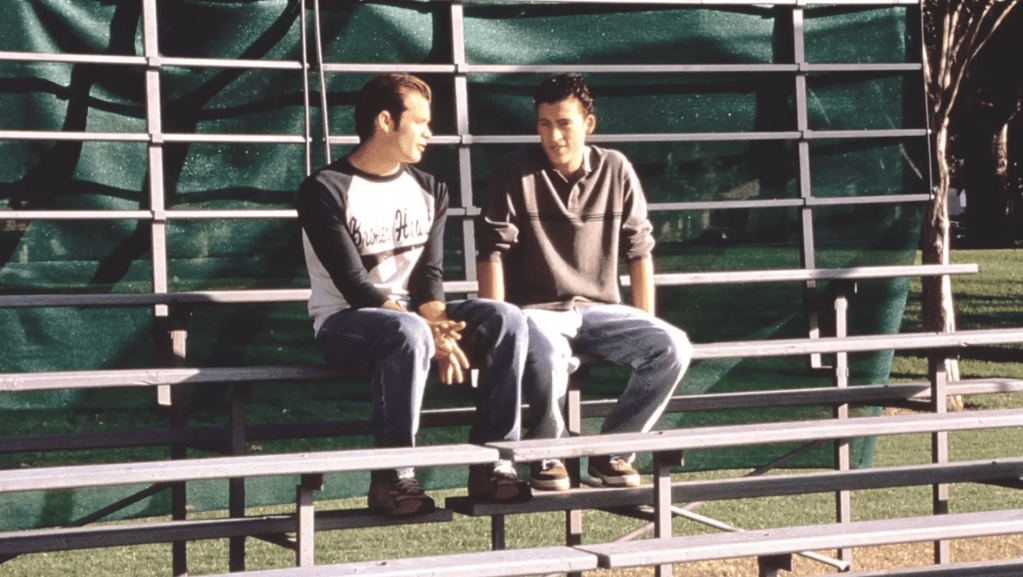
Timothy Olyphant and Andrew Keegan in The Broken Hearts Club.
The Broken Hearts Club is most drawn to Olyphant’s photographer character, a 28-year-old named Dennis who’s only been out for three years. When a prospective love interest refuses to have sex to The Carpenters’ dulcet tones after a party one night, it dawns on him that he wants something more romantically serious than serially meaningless hooking-up. (And, if not that, he’d like, quarter-life crisis-style, to be more satisfied creatively, a photography trip to Europe to hone his eye always in the back of his mind.)
There’s a will-they-or-won’t-they relationship teased with Keegan, a newly out 23-year-old Dennis takes under his wing and brings into the friend group. But the movie proves disinclined to use romance as a comprehensive solution to get rid of one’s malaise. Dennis is attracted to his younger peer, but he also understandably wants to be with someone with a better sense of themselves, not still figuring out their identity. (It’s suggested that Dennis might change his mind once Keegan has done a little more growing up.) Your heart in the meantime aches for Keegan, who will have other romantic disappointments of his own. The actor conveys internal hurt so well that I might be misremembering him as being able to seemingly get rosy-cheeked on command.
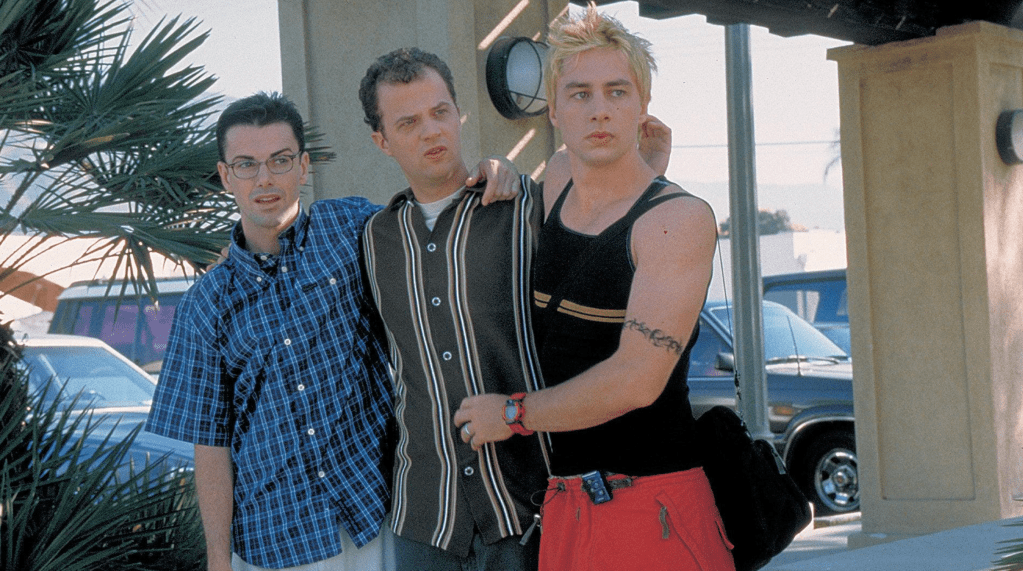
Matt McGrath, Ben Weber, and Zach Braff in The Broken Hearts Club.
The Broken Hearts Club takes its name from the recreational softball team its characters are members of, and also, unofficially, from their sad-sack energy. Porter mopes after being dumped by his kept-offscreen long-term boyfriend. McGrath broods over his rocky relationship with Theroux’s character. Weber chronically self-loathes because, since he’s losing his hair and has a slight paunch, he never feels like he’s seen with genuine desire by physically judgemental fellow gay guys. Cain is an outlier because he’s the one constantly breaking hearts, liable to scribbling his it’s-not-you-it’s-me apologies on his hand to help him deliver the news as eloquently as possible. No man he spends the night with ever wants it to be a one-night thing the way he’d like it to; his friends are envious of his hunkiness, lack of neuroses, and the ease with which he moves on from one guy to the next.
Nobody in The Broken Hearts Club comes across as excessively depressed; Berlanti affectionately writes these characters like they were his own friends, their romantic torment ever-present but muted when they can blow off steam by goofing off with each other, group-ogling hot passersby and opining on pop culture. (The ensemble’s chemistry feels lived-in — brotherly.) The film would make for a good double feature with Patrik-Ian Polk’s Punks, which also came out the same year, chronicled the everyday lives of West Hollywood-based 20-something gay men (though its racial majority was Black), and has a TV connection: It inspired Noah’s Arc, a dramedy that ran for two seasons in the mid-aughts on Logo.
An arguably gratuitous death of an elder and a somewhat moralistic late-movie overdose notwithstanding, nothing particularly dramatic happening in The Broken Hearts Club is part of its appeal. Akin to Berlanti when he first got the idea to write the screenplay to honor the lives of his friends, I’m pressed, more than 25 years later, to think of many movies whose characters are not just chiefly gay men but also devotes its narrative to friendship and relatable crises of confidence, profound strife and hardship kept to a minimum. Representation of the “gay and average,” as the Mahoney character frames it, is so negligible in movies that it becomes curiously thrilling.

