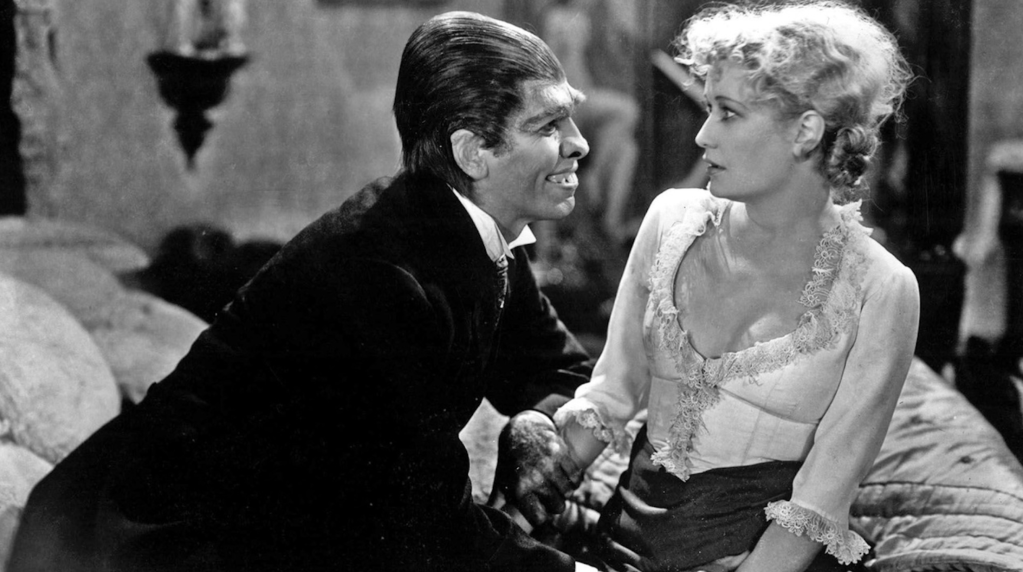
The first few minutes of Rouben Mamoulian’s 1931 adaptation of Dr. Jekyll and Mr. Hyde see the world through its scientist main character’s eyes. Rather than present his POV the customary way — keeping the camera at ocular level and moving around as a person might — the movie makes a slight alteration. It does all that, but it also rounds the frame’s corners so that you feel like you’re peering at its Victorian London setting through a Halloween mask.
The conventional wisdom goes that everybody is always wearing some sort of proverbial mask at all times. This one, though, looks particularly uncomfortable — perhaps destined to be slipped out of regardless of a lab-made concoction that will unintentionally turn Jekyll into Hyde, the infamous brute who’s not created from nothing but elbowed out with some narcotic courage. It’s a visually inspired choice in a film that exceptionally distills the frightening essence of an iconic story with an indelibly provocative premise.
Dr. Jekyll and Mr. Hyde hinges on its Fredric March performances as the title duo. Earning the not-yet-35-year-old actor his first Oscar, it’s among the most thrilling to come out of the Hollywood Golden Age, a period during which even the most comparably feral work was still often slightly reined in by the Production Code’s neutering regulations. (It naturally helps that the movie — also unambiguous about the dangerousness of weaponized male heterosexuality — was released a couple years before the latter went into effect.) As Hyde, an alter ego with stalactite teeth, sunken eyes, and lycan hair, March — whose transformation is a timelessly impressive feat of makeup and editing-room cleverness — comes across as unadulteratedly deranged. One half-a-second detail in his performance — the moment where the doomed object of Hyde’s crazed affections, sex worker Ivy (Miriam Hopkins), attempts to run up some stairs to escape him but is stopped when he manages to acrobatically jump over the banister — does much to solidify the idea of Hyde as unstoppably, demonically omniscient.
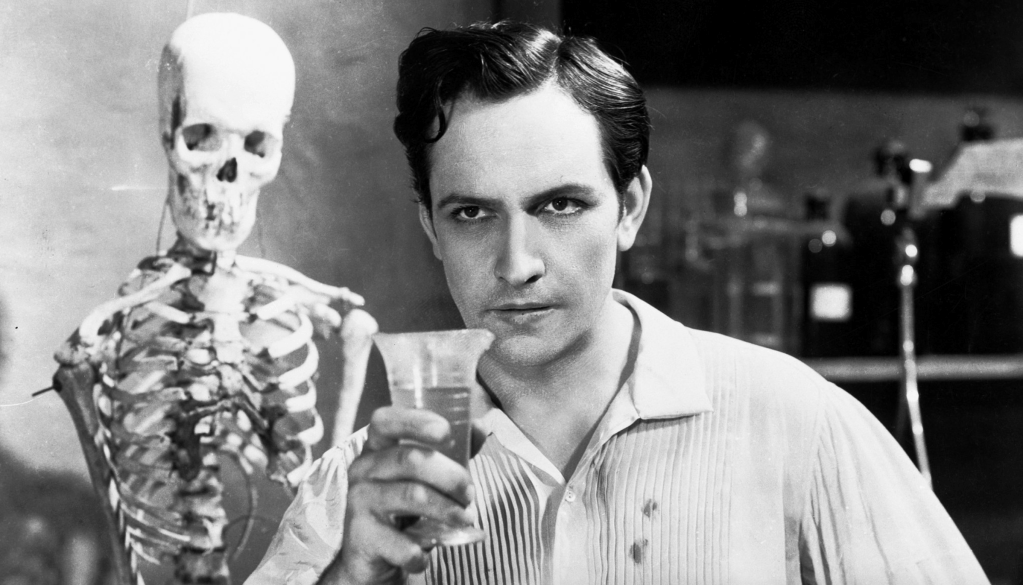
Fredric March in Dr. Jekyll and Mr. Hyde.
Horror of Dr. Jekyll and Mr. Hyde’s era gravitated toward fog- and shadow-assisted eeriness I’d venture to call generally tasteful even when they were nightmarish. (The main commonality between the film and its peers is most obviously a preoccupation with monsters, which the critic Christine Smallwood has observed “resemble normal men but are in some way deformed, deranged, or awfully and miserably inhuman.”) Dr. Jekyll and Mr. Hyde was and is an anomaly for its near-ceaseless belligerence. There’s never a scene featuring Hyde where you don’t feel like things could explode into ghastly violence; you’re almost always bracing yourself for a vicious attack delivered with Hyde’s trademark toothy grin.
I never found Jekyll to be particularly sympathetic. Written by Samuel Hoffenstein and Percy Heath, the movie makes you feel like Hyde’s destruction would one day arrive in some form or another. Without partly excusing his actions in the process, you sense in the film a progressive contempt for, particularly in the scenes where talks of Jekyll’s impending marriage are stymied by his fiancée’s (Rose Hobart) domineering father (Halliwell Hobbes), how ingrained mores around sex and romance can warp a person. Exemplary of the notion of monsters always being a product of the environment which made them, Jekyll pitiably evinces what “becomes of sexuality when it is pent up by contrived, hypocritical social conventions,” Elise Moore wrote in Bright Wall/Dark Room.
The depiction of Ivy, though, is lastingly devastating. We don’t get to see the fullness of her humanity, but before she becomes the film’s principal victim we can nevertheless see that she’s confident and street smart, hardened but not yet deadened to how her profession makes her more vulnerable to the world’s cruelties. The randomness with which she’s plucked as prey (Jekyll ironically first encounters her while she’s being aggressively hassled by another man and becomes smitten with her) is terrifying. When unwanted visits from Hyde prove constant, she has to tormentedly live with a violent kismet she feels she cannot escape. What else could happen when a man undoubtedly capable of murder is obsessed with her, and the public and police see her line of work as beckoning perhaps deserved trouble? What makes Dr. Jekyll and Mr. Hyde so chilling has far less to do with Jekyll’s plight and more her hellish reality. The movie takes her predicament with heartrending seriousness; in a genre where female victimhood tends to be associated with easy disposability popularized by the later-to-come slasher subgenre, Dr. Jekyll and Mr. Hyde lucidly sees what’s happening for what it is.

