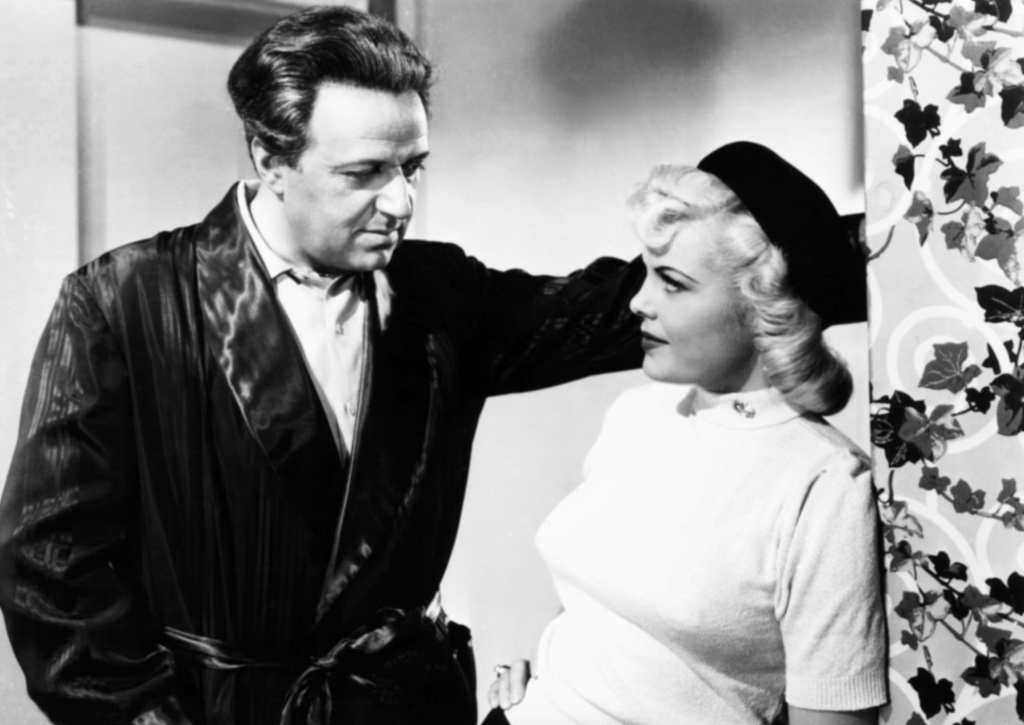
One of the most undersung collaborations of the Old Hollywood era was the one between writer-director Hugo Haas and actress Cleo Moore. The six movies they made together largely revolved around women who, sometimes criminally and sometimes just scrappily, tenaciously worked to carve out lives they felt they deserved, unwilling to settle for something beneath them. I haven’t seen them all, but in the ones I have, I’ve been struck by how nimbly Moore, who scarcely acted in a different director’s movies before retiring early, moves between hardness and softness, and the empathy with which Haas wrote her characters even when unadulterated villainization or moralizing could be easier.
Haas’ real-life fascination with Moore proved ruinous — it was part of what led his wife to leave him — and its effects are conspicuously felt in Strange Fascination (1952), the kickoff of their partnership. (The dynamic pulls from real life in other ways: Haas, who also stars in the film, plays a character based on his composer brother, Pavel, who was killed in the Theresienstadt concentration camp in the Czech Republic.)
Sometimes classified as a film noir (I see it more as a melodrama), Strange Fascination orbits around a concert pianist, Paul (Haas), struggling to forge a career in America until a wealthy widow (Diana Fowler) takes him under her wing. She finances live engagements and even a neighboring apartment with an implicit understanding that, once the very gifted Paul finds success, he’ll pay her back. Just as he starts actually finding notoriety, though, he’s distracted by Margo (Moore), a much-younger woman with whom he gets off on the wrong foot when they first cross paths. He shows up drunk at the nightclub where she has a dancing act, and his noisy stumbling around during her set makes her so angry that she buys a ticket for one of his performances soon after, looking to return the favor.
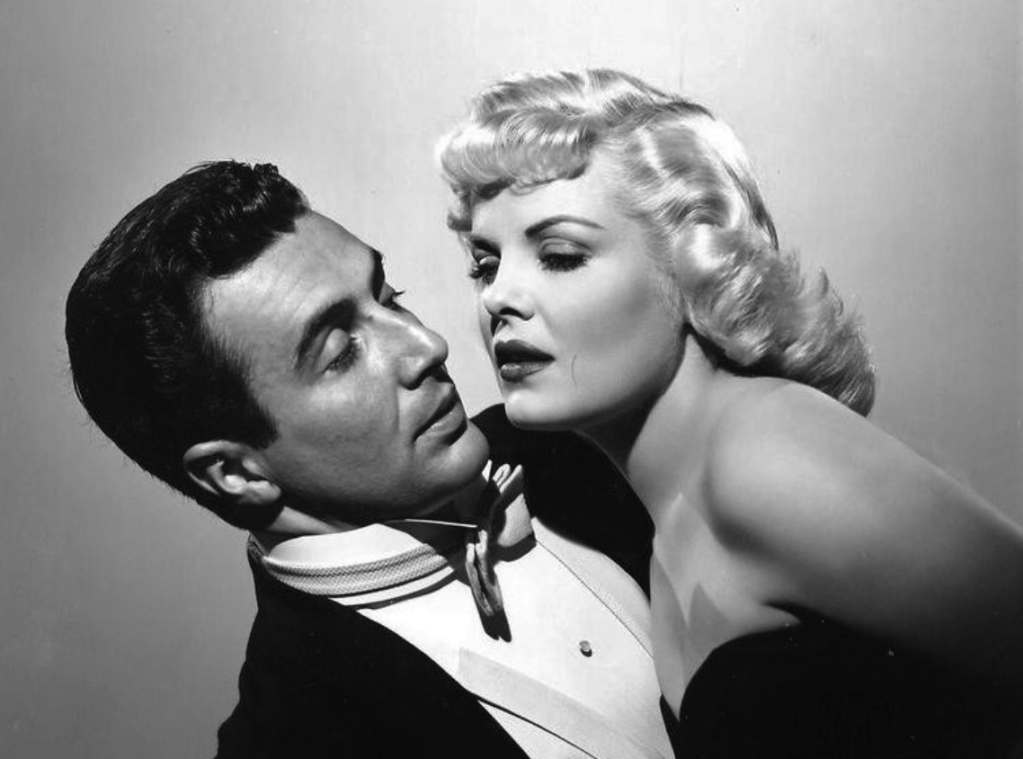
Rick Vallin and Cleo Moore in a publicity photograph for Strange Fascination.
Margo is committed at first: she fake-coughs loudly, crinkles plastic, whispers at a high volume to the person sitting next to her questions for which she already knows the answers. But she quickly surrenders, the music too moving for her to continue staying mad at a man she’d not long ago found unforgivably disrespectful. She asks for his autograph — the first he’s signed in the states — and what begins as a friendship turns romantic, with both openly commenting on how odd and unexpected their May-December, worlds-apart coupling is.
Margo and Paul’s relationship initially comes across as a touching mirror to Moore and Haas’ artistic bond. Moore valued the vision of a director who wasn’t taken very seriously beyond his commercial prospects by Hollywood, and Haas drew characters for Moore to play that were far more complex than what other actresses styled as Marilyn-alternative blonde bombshells were offered.
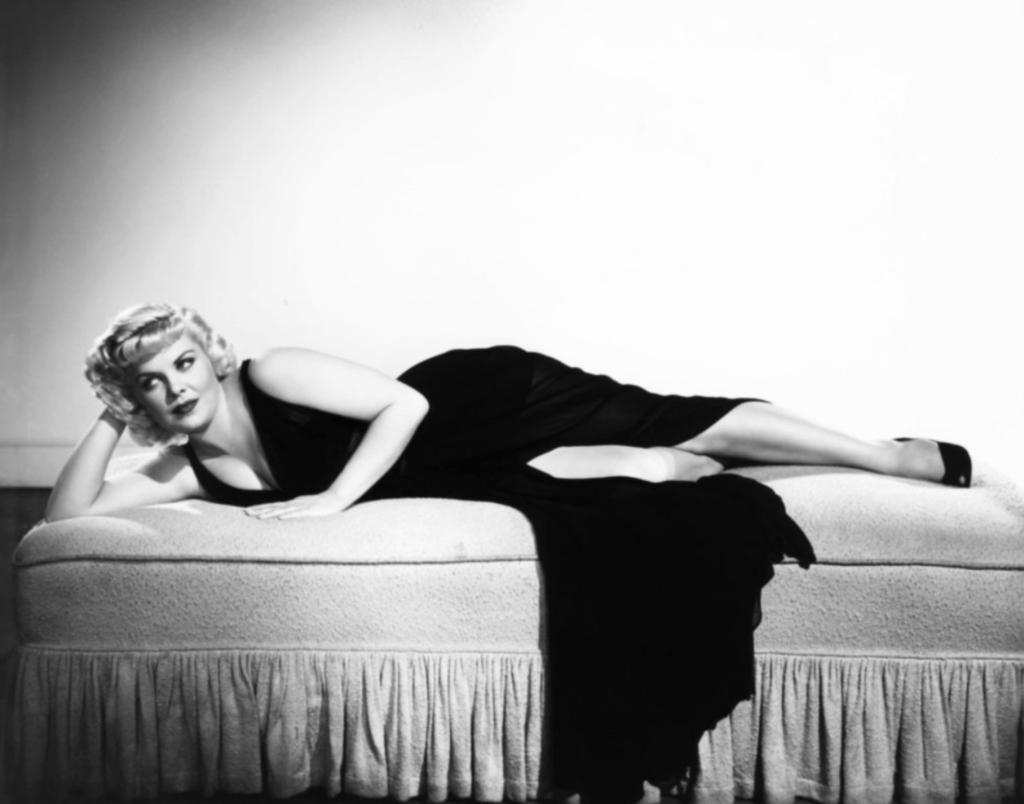
Cleo Moore in a publicity photograph for Strange Fascination.
But Margo and Paul’s quick-to-arrive marriage sours almost as quickly as it starts. There isn’t enough money coming in — his wealthy, secretly-in-love benefactor is only willing to amass so many no-questions-asked IOUs — and when Margo happily takes on jobs that could provide them with some (she first models, then goes back to dancing with the male partner she liked but never had real feelings for), Paul’s jealousy proves too great. He can’t handle the idea of men staring at his wife as she shows off the new fashions du jour; he doesn’t trust that the young and sexy guy (Rick Vallin) who’s long been the other half of their dancing duo won’t inevitably take her from him.
Thanks to the era’s production code, it wouldn’t come as much of a surprise if the movie ultimately had Margo happily acquiesce to the desires of her husband, who would, maybe by the third act, figure things out. But Strange Fascination turns out to be surprisingly clear-eyed about the toxicity of 1950s’ domestic expectations — how unfair it is for a woman to have to sacrifice her own passions in order to not bruise her husband’s ego. There is no suggestion in Strange Fascination that Margo is the one responsible for her spouse’s eventual ruin. The blame is mostly put on him, his pride and inability to fully see his wife’s humanity primarily responsible for his spiral. Moore is very good in the role, convincingly smitten with a man she maybe admires more than loves but not enough for her to minimize her own self-worth in the process.
The blame is also partly, of course, on the difficulty of finding artistic fulfillment while living under capitalism. Paul is, without question, a genius, but like many geniuses of the artistic kind, he can’t easily translate his brilliance into something that’s also professionally viable, which is enough to drive a person mad. Haas himself knew all too well the struggle of maintaining one’s artistic integrity in a competitive, cutthroat atmosphere. Many of his films were self-funded and made by his own production company, Hugo Haas Productions, and sought distribution from larger studios after being made. It’s a shame that that struggle would finally get the better of him: 1962’s Paradise Alley fought to get a theatrical release for three years and proved to be his last movie before he died, at 67, in 1968. Like the character he plays in Strange Fascination, you’re impressed by his persistence and obvious forte, depressed by the hard circumstances one can only endure for so long.
 Peterson Reviews