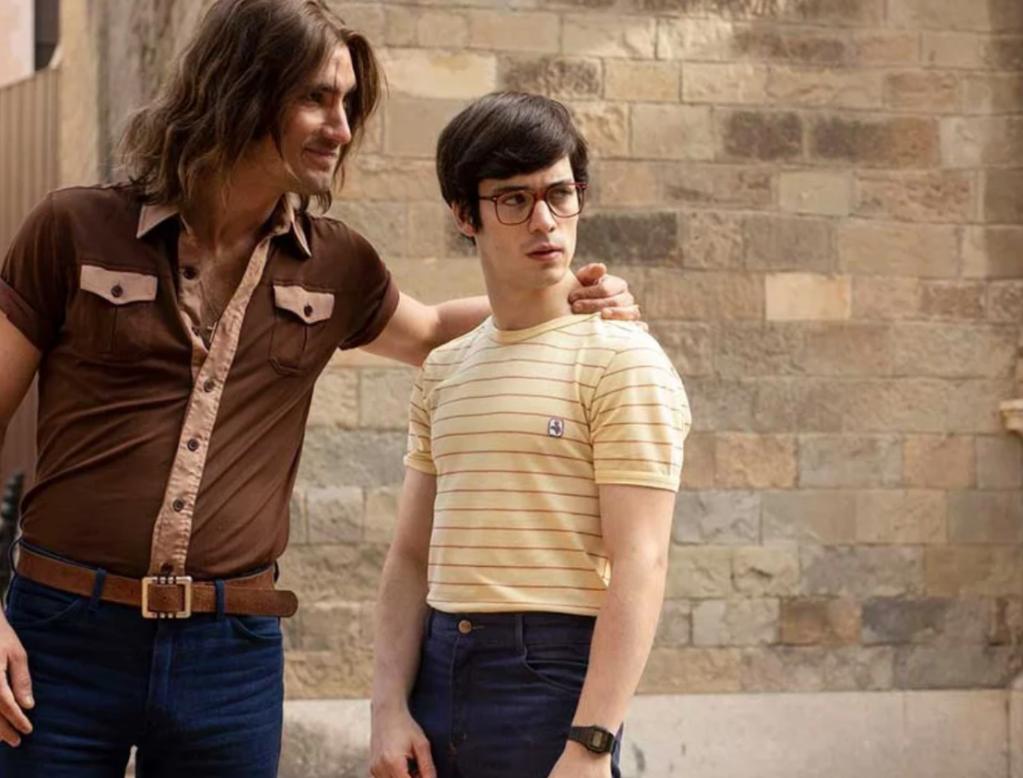
Outlaws (2021), Daniel Monzón’s adaptation of Javier Cercas’ novel, is a crime drama with the potency of an extended reenacted segment from some run-of-the-mill true-crime TV junk: visually temperate, narratively rote, and more generous with bad wigs than genuine thrills. It’s set in a plasticky vision of Girona, Spain, in the late-1970s, and follows a 17-year-old named Nacho (Marcos Ruiz) as he goes from unhappy loner to full-fledged criminal after getting involved with some young and sexy people with a thing for bank robbing. (Nacho is especially drawn to Tere, a femme fatale type prone to red tank tops and always-tousled hair played by Begoña Vargas.)
The movie might have been interesting if Monzón’s visual approach weren’t so static and overlit — Outlaws’ cinematography, from Carles Gusi, has all the oomph of a made-for-TV movie produced quickly and on the cheap — and if Nacho weren’t such an intensely drab lead, little more than his rakish awkwardness and the frustration pent up from his relentless bullying at school. The latter, combined with a home life where “nobody understands him,” is what makes him so vulnerable to seduction by this posse of wild-at-heart 20-somethings.
The movie doesn’t do much else with his character to make a case for him standing at its foreground. Its insistence we care about what happens to him tends to mostly be annoying, in part because the ending — that this middle-class child manages to get away scot free, while the older, lower-class people he’s joined do not — feels so preordained almost as soon as the plot gets going.
I’d have liked Outlaws better if it had unfurled from the perspective of Tere, who in the moments where she gets to be more than an object of lust is signaled to have far richer an inner life than the young man we’re spending so much more time with. But of course a movie this mechanical wouldn’t center the kind of woman character who in a story like this tends mostly to be decorative.
 Peterson Reviews