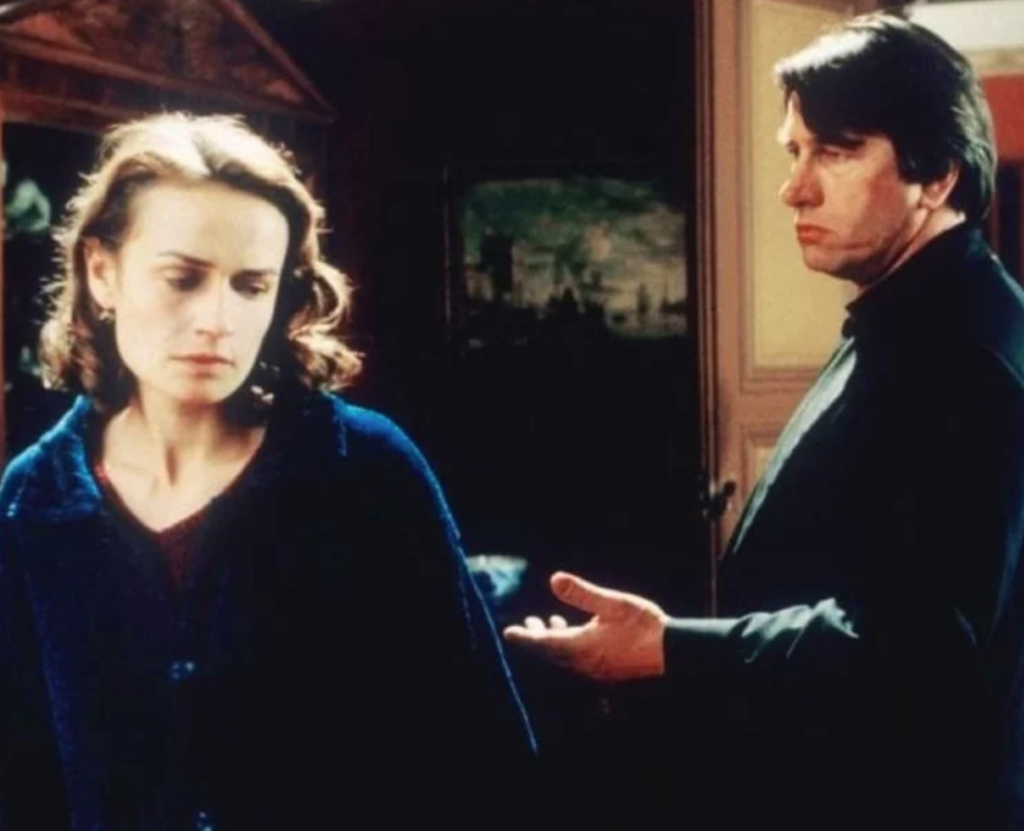
It’s been five years since Sylvie (Sandrine Bonnaire), a scientist, last saw her younger brother, Paul (Grégoire Colin). They both know the exact date their estrangement began — it was the day of their father’s funeral — and, in Jacques Rivette’s hypnotic Secret Defense (1998), it’s his death that puts it to an end. Though his death by moving train was labeled an accident at the time, Paul now isn’t so sure. He shows up out of the blue at Sylvie’s lab job with some charged claims that their father’s death was, in fact, a thoroughly plotted murder. He believes the culprit is their dad’s onetime business partner, Walser (Jerzy Radziwilowicz).
The more her suspicions accrue, the more the normally level-headed Sylvie seems inclined to vengeance. As it is for many of Rivette’s films — Secret Defense clocks in at a little under three hours — what could otherwise have been a quick and cheap thrill takes its time to the point of putting you under a spell, almost. The quotidian, rather than sensationalist genre traits, dominates. Secret Defense revels in mundanity: the long train ride needed to get to Walser’s secluded countryside home from the city; the tedious process of squeezing peas out of their tight green pods for a meal; the smoking of a cigarette.
That appreciation of everyday routine ordinarily unwritten or shot for movies intriguingly commits to the camera what a crime drama might look like if its narrative were transplanted onto a real life. It also makes everything feel a little hazy, a little dreamy. The effect at least in part comes from how, in this genre, everything is so in service to a thrill that we rarely step back and sit in the prosaic tasks our characters must tend to before embodying the tenser characteristics of a crime-drama hero. A slower pace can bring about a maybe accidental uncanniness.
Bonnaire is, as always, extraordinary; you can feel this once-steady woman start to slowly unravel as she not only discovers that this death she had made peace with was not merely as open-and-shut as it seemed but also the culmination of a dark secret-heavy life she’s belatedly becoming privy to. The best scenes in Secret Defense are the ones where she’s across from Radziwilowicz, playing a character who arouses your suspicions as often as he can quickly dispel them. It’s in them that Sylvie, who’s known Walser since she was a child, is most thrillingly unpredictable, pronest to making her most whiplashed decisions. They create an interesting friction in a movie whose entrancing languorousness is, in contrast, a product of thoughtful, tight control from a filmmaker who sweeps you up in the confidence of his vision.
 Peterson Reviews