
I had assumed, going into Chris Columbus’ Stepmom (1998), that it would be a comedy about a spunky young woman played by Julia Roberts returning home for the holidays, struggling to get along with her dad’s new wife (Susan Sarandon) until something mid-film makes both realize that their mutual defensiveness was preventing a meaningful relationship.
Some of those elements are in the actual movie. But Stepmom, a film where it is, in fact, Roberts who is a stepmom-to-be and Sarandon an ex-wife resentful of being “replaced” by her, would much prefer that you cry, even weep once it gets to its set of climatic scenes. The movie begins at a time of domestic transition: with an attorney named Luke (Ed Harris), recently divorced from publisher-turned-housewife Jackie (Sarandon), living with his fashion-photographer girlfriend, Isabel (Roberts), and seeing how it would play out if his kids, 12-year-old Anna (Jena Malone) and 7-year-old Ben (Liam Aiken), spent quality time with the woman he plans on proposing to.
This is, inevitably, a challenge. Anna is still so upset about the divorce that she sees Isabel, even when she’s making nice gestures like buying the kids a new puppy, as incapable of doing anything right — something she can’t stop herself from aggressively voicing at a near-constant clip. Jackie holds Isabel to impossibly high standards — she threatens legal action, for instance, when Ben wanders off on a day where he and Anna accompany Isabel on a photoshoot — and actively undermines efforts to bond with her stepchildren-to-be, forbidding Isabel from taking Anna to a Pearl Jam concert on a school night only to herself surprise Anna with tickets for that same show a few days later.
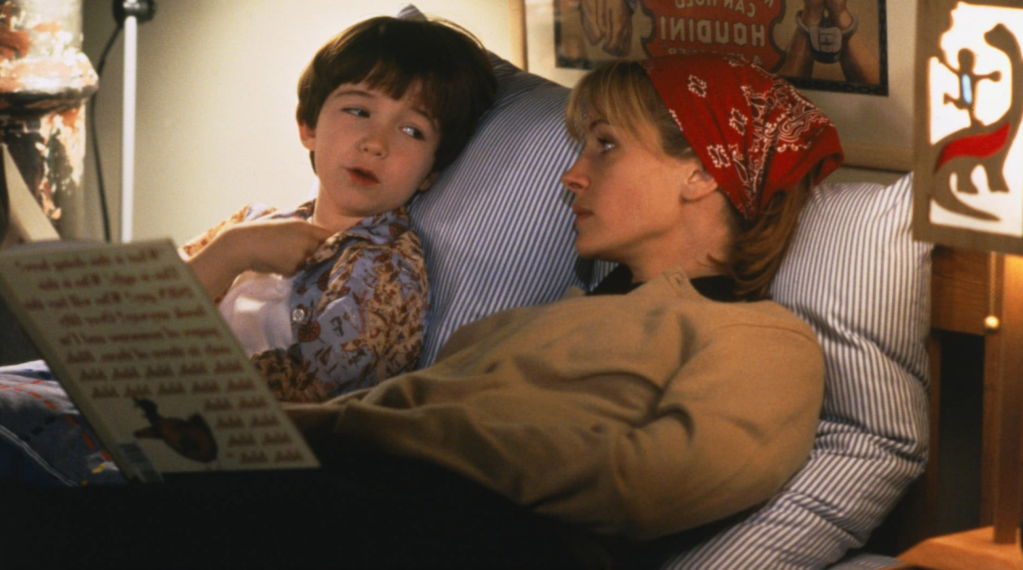
Liam Aiken and Julia Roberts in Stepmom.
The first few acts of Stepmom gratingly cycle through these dynamics, eschewing the kinds of nuances that would inspire true empathy for justifiably spiky characters to pigeonhole them into limiting stock types: Anna the bratty tween, Jackie the unbearably helicoptering stay-at-home mom who thinks thwarting any kind of relationship between her kids and their new stepmom is healthy, Isabel the career woman who never thought about having kids now trying her best to dredge up the maternal instincts she not long ago didn’t think she had. Luke, strangely, is almost always absent, ostensibly hard at work to maintain the fabulous wealth in which everybody is cocooned. Isabel is usually the one doing all the parenting when the kids come to visit him in town.
Stepmom has five credited screenwriters, and it shows: the possibility the text poses is flattened into comfortable sitcom familiarity, John Williams’ insistent score nearly always playing in the background to remind you what you’re supposed to be feeling during a certain scene. The surplus of voices ensures that Stepmom has no real distinct one of its own.
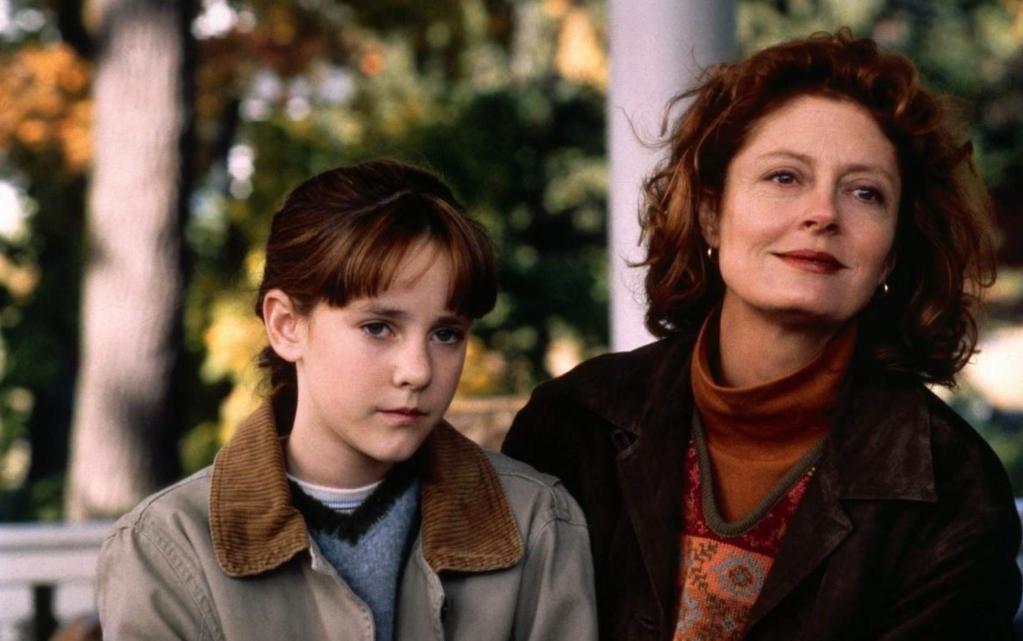
Jena Malone and Susan Sarandon in Stepmom.
We eventually find out that much of Jackie’s reluctance to accept Isabel comes from personal devastation. The cancer her doctors thought they’d successfully zapped a year ago has returned. It’s never made explicit whether it’s terminal — the movie doesn’t conclude, the way one might expect, with everyone circling around her bed as she takes her last breath — but it doesn’t need to be said in so many words to be made clear. Her fear is that, if the kids come to like Isabel too much, she’ll be forgotten. Stepmom’s most effective scene comes near the end of the film, when she says as much over drinks to an Isabel who also has finally laid bare her fears about the future, too. Predictably, the genuine pathos of the scene is marred at its end by some too-tidy emotional wisdom from Jackie, kicking off her status for the rest of the film as an ever-courageous woman dealt sad circumstances who has a knack for always saying the right things to the family members she’ll soon leave, made into an angel even before she has died.
I worry about this all coming across as overly brusque; I promise that it’s just a byproduct of this being a tearjerker that feels factory-made, so dutifully hitting its beats that it seems to care less about the characters themselves and more that you shed an adequate number of tears over the tragic reality they’re bravely trying to make sense of. If the movie does make you emotional, it’s likelier because it stirs “what if this happened to me”-style speculations or too-close-to-home memories of something similar that has happened to you.
It’s also a byproduct of seeing great work from Roberts and Sarandon servicing a movie whose material seems a better fit for a more middle-of-the-road TV project. (Roberts, to add insult to injury, gets her lush head of hair snipped into a blonde-banged Diane Keaton-esque bob; the movie’s advertorial obfuscation of this with a knitted red hat has a way of confirming this follicular idea as unwise.) It was wise, though, to release Stepmom during the Christmas season, when most people are feeling more sentimental than usual. It was a big hit. Maybe I made a mistake watching it in February.
 Peterson Reviews