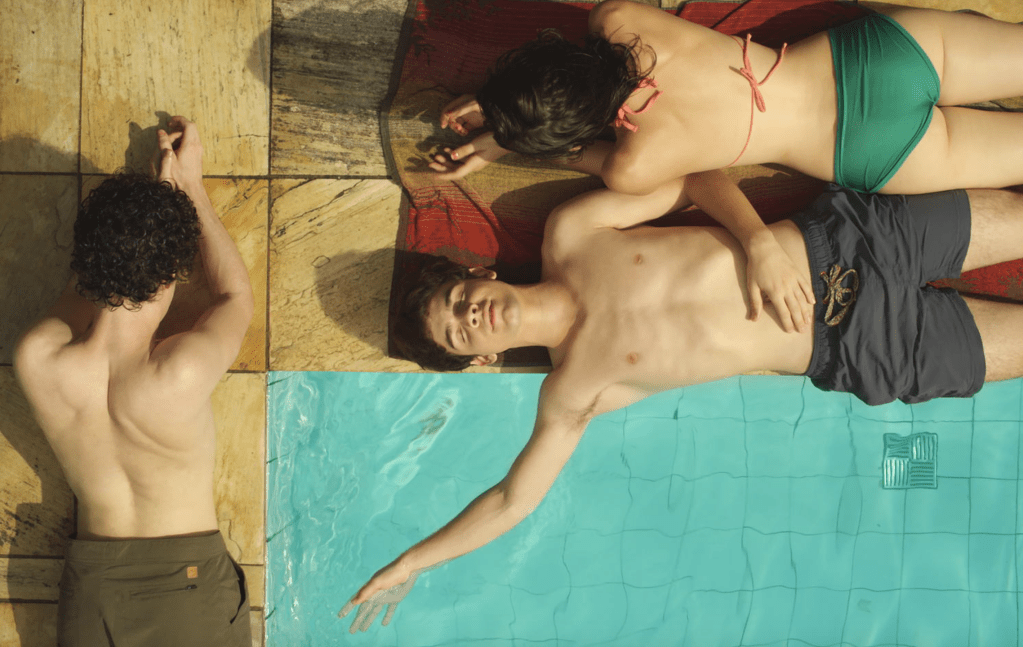
For many, it’s a teenage rite of passage to have your style cramped by your parents. For the protagonist of Daniel Ribeiro’s tender, touching The Way He Looks (2014), things are kicked up a few notches. Born blind, Leo (Ghilherme Lobo) understandably can’t do much of anything — go on an overnight field trip, so much as consider a foreign-exchange program designed specifically for those who are visually impaired — without Dad (Eucir de Souza) and especially Mom (Lúcia Romano) creating a big fuss.
They worry so much about what could happen that they seem to forget that there isn’t anything wrong with staking a claim of independence within reason. Leo puts it frankly that it’s embarrassing to continue being so babied past childhood — that he yearns for a life where he can start over solo, no longer encumbered by the responsibility of always assuring someone that he’s OK so that they can feel OK. Leo’s parents, though, will learn to loosen up a bit in the course of The Way He Looks, a movie where most of the characters are also, whether related to the self or others, arriving at new places of understanding.
Leo is tired of what is and isn’t available to him because of something he was born with, and of the shockingly sadistic schoolyard bullies who won’t let him so much as walk to his grandma’s house down the street without taking an opportunity to trip him. He also comes to be more in touch with a sexuality about which he ostensibly hasn’t thought much. That changes when a curly-haired new student, Gabriel (Fabio Audi), sits behind him in history class, then partners with him on a research project about Sparta. They bond, which creates a rift between Leo and his closest friend, Giovana (Tess Amorim). Leo begins to take her friendship — apparently the only meaningful one either person has — for granted; it’s also suggested that she herself might have feelings for Leo, newly solidified by the bulk of his attention suddenly turned elsewhere.
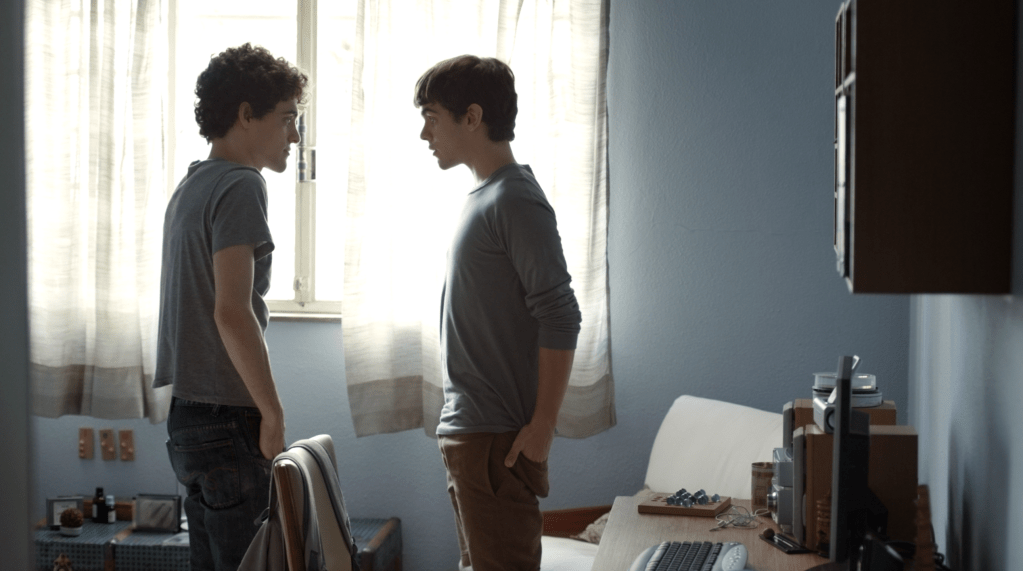
Fabio Audi and Ghilherme Lobo in The Way He Looks.
Romantic feelings emerge between the boys. They sneak away to movies where Gabriel whispers into Leo’s ear what’s happening in a scene without dialogue. Gabriel introduces Leo to the breezy pleasures of riding a bike on a sunny afternoon, and also of his favorite band, Belle & Sebastian, whom Leo has never heard of. (He isn’t attuned to most au courant music: he exclusively listens to classical.) Not as certain in his sexuality as Leo — who nonchalantly admits his feelings for Gabriel to someone who didn’t know he was gay — Gabriel poignantly externalizes his feelings for much of the film in loaded, furtive glances Leo doesn’t know are being directed his way. When he nervily pecks Leo on the mouth at a house party marred by a cruel prank, he makes excuses on a different afternoon about being too drunk to remember what had gone on.
The Way He Looks offers a sweet, easy-to-root-for romance turned more moving for how sensitively Ribeiro and his screenwriter, Diana Almeda, approach Leo having his personhood recognized — and being loved — in tandem with his disability, something he’s frustrated about people, even from those who care for him most, chronically placing far in front of everything else. The Way He Looks is, refreshingly, not a coming-out story, either. It’s more interested in the worlds of possibility romance poses, and the excitement of truly feeling seen by another person — something that takes on a different dimension for someone who so often is, wittingly or not, treated by others like a kind of liability.
Lobo is excellent, alternately rumbling in frustration at a lifetime of underestimation and exhilarated by what could be available to him if his family would just let him live a little. So are Audi and Amorim as young people struggling to come to terms with what they want for themselves and what they want from Leo, a person whose pain they sympathize with but can’t, by design, fully understand. Gabriel and Giovana are not written with as much depth as Leo. But Audi and particularly Amorim — who, among other things, wants the emotional attentiveness she pays to her best friend to be more evenly reciprocated — do work that feels lived-in. You come to genuinely care for these characters; The Way He Looks is a deeply felt movie where you want to see what happens to them long after the closing credits have started to roll.
 Peterson Reviews