I’m inclined to call the no-budgeted Scorchy (1976) the best Seattle movie, not because it’s particularly great — it’s largely a dramatically inert police procedural energized by a handful of accidentally funny line readings and a couple of surprisingly thrilling bursts of action — but because of how much it makes the most of the city where it’s set. So many movies shot in the so-called Emerald City spend the bulk of their production in Los Angeles, with a smattering of pretty landmark shots inserted to remind us where we’re meant to pretend we are: a sweeping, wet-eyed look at the Space Needle and the buildings it foregrounds, an appreciation of the beaming red neon that lights up the Pike Place Market sign.
Shot on location presumably for cost-cutting purposes, Scorchy is the most eagerly exploratory Seattle movie I’ve seen. A duo of chase sequences careen around the Monorail, blow through the unruly roads weaving around the waterfront, and duck under Montlake Bridge. (One concludes with a shootout at Gas Works Park, a rusty monument ingenious for that kind of thing.) A fight takes place on top of one of the city’s several Ivar’s locations. A stakeout begins at Arrivals at Seattle-Tacoma International Airport, a place it’s nice to hear loudly declared over the intercom as a flight is landing.
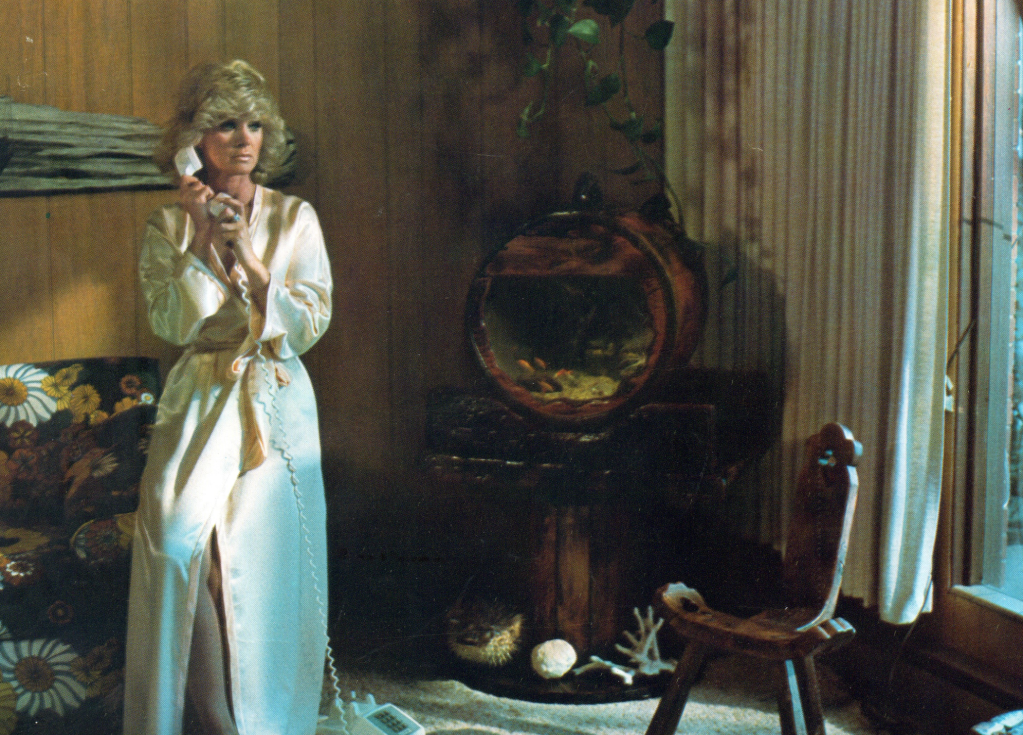
It’s true that Scorchy probably poses little appeal for those not living in and/or without a personal connection to Seattle. Outside of how great it is at making the city look good (it seems to have been shot either in the spring or early summer, when everything is bright without being stiflingly hot), it’s a pretty lethargic thriller in which Connie Stevens, false-eyelashed and feather-haired to the gods, plays a federal agent with an enviably cute beachfront house doing undercover work to bust a narcotics ring. She is not very good at her job: she’s a terrible shot, and also not averse to letting the personal and the professional irresponsibly merge (i.e., sleeping with someone she definitely shouldn’t). But she approaches her work with a can-do attitude and I’ll-show-you chutzpah. The character recalls the kinds of girl-next-door characters Stevens had made her name playing in the late 1950s and early ‘60s.
Scorchy premiered five years after Stevens had made her most recent movie; it was meant to be something of a comeback vehicle for her. Mostly, though, it bespeaks the limitations — and generational datedness — of her acting style: very presentational, very suffused with probably unconscious gee-whiz wholesomeness. It gives the movie a slightly depressing quality, knowing there’s some hope in the air that it will revive a career it cannot. (Writer-director Howard Avedis only seems comfortable staging action and some gratuitous “tasteful” nude scenes seemingly trying to pander to the exploitation-film market.) Yet Scorchy‘s shortcomings are not so overpowering that it snuffs out the fun that can flare up. For many a Seattleite (and those living close enough), watching it might have the quality of browsing a candy store.
 Peterson Reviews