
Writer-director Dario Argento built his name on giallo, a subgenre that peaked in Italy in the 1970s and early ‘80s that could be rudimentarily described as slasher movies made with an unusual amount of style. During the latter part of the decade, he injected the giallo form he helped perfect for a crop of less-talented imitators with an invigorating dose of the supernatural. Suspiria (1977) and its sequel, Inferno (1980), contained all the subgenre’s stalk-and-slash tropes while incorporating welcome additions like witchcraft and a primary-color-forward visual style that beautifully — and unsettlingly — evoked the nauseous feeling one might have upon learning that the danger they’re in is being caused by forces beyond their control.
Following Inferno, Argento briefly returned to the “real world” for Tenebrae (1982), a quite possibly career-best work of warped self-examination, before heading back into the otherworldly’s embrace with Phenomena (1985). Suspiria and Inferno were inspired fusions of genre; Phenomena, though, marked Argento’s first horror film in 15 years far more miss than hit. Phenomena shows a director whose visual acuity is still needle-sharp; he consistently makes great use of the silvery moonlight often blanketing the green and windy environs of the film’s Swiss-countryside setting, for instance. But its slasher and fantasy elements coalesce uneasily — a problem Suspiria and Inferno eluded by having both symbiotically feed each other.
Phenomena’s fantasy component is provided by Jennifer (Jennifer Connelly), the teenage daughter of a famous actor. His latest shoot will put him in the Philippines for at least a year, so he’s sending her to an all-girls boarding school that used to be the home of the composer Richard Wagner. It’s in a part of Switzerland whose greenery so much seems like it could swallow you whole that it doesn’t come as a surprise when someone describes the area as “Swiss Transylvania.”
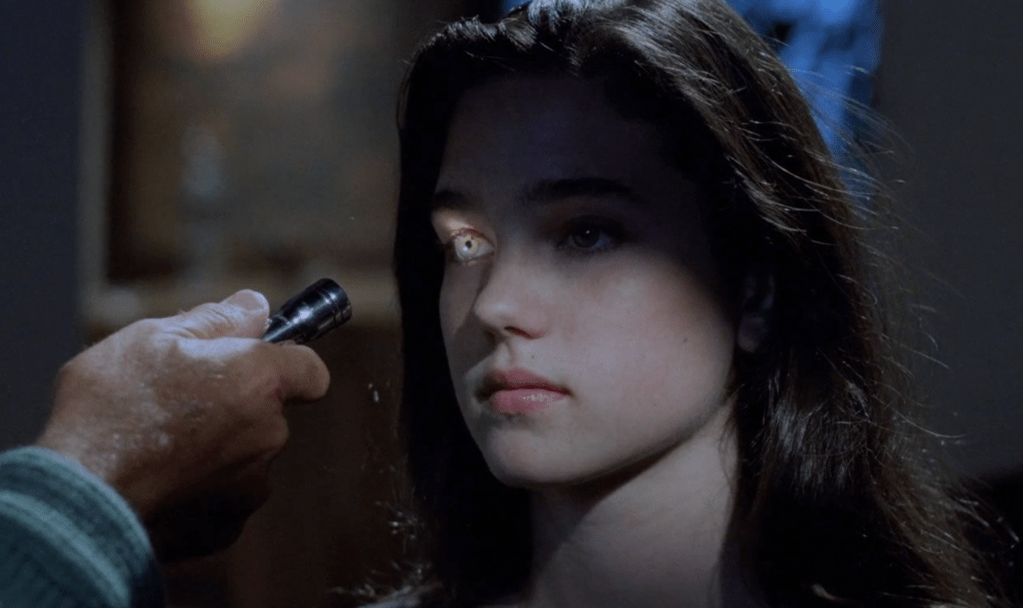
Jennifer Connelly in Phenomena.
Pretty, quietly self-assured, and with a performer dad famous enough for her roommate to swoon at the mere mention of his name, Jennifer seems, at first, like she’ll quickly come to be the school’s resident much-envied cool girl. But she’s beset with a couple of quirks that will, instead, make her into a gawked-at pariah: a proclivity to sleepwalk and an Eliza Thornberry-esque ability to attract and befriend bugs. She can pet a bee without fretting about a stung finger; she can, when a throng of girls decides mid-movie to mercilessly taunt her after an anxious letter to her father is intercepted, summon millions of flies to swarm the school, sealed-shut windows not letting the threat become more than a dipteran warning shot.
A killing spree is also going on locally. The targets are all teenage girls, like the young Danish tourist (Fiore Argento) who tragically misses a bus in the middle of nowhere in Phenomena’s tone-setting prologue. Argento tends to the slasher side of the story so sporadically that it can feel shoehorned in even though it obviously wasn’t. (That isn’t to say, though, that the film’s stalk-and-slash sequences, usually accompanied by admirably audacious but nonetheless ill-fitting music from the likes of Iron Maiden and Motörhead, themselves feel hastily added in: they’re where Argento seems the most comfortable.) More time is spent with Jennifer, whose inner life the movie is frustratingly disinterested in, and her struggle with the parts of herself that have turned her into an outcast.
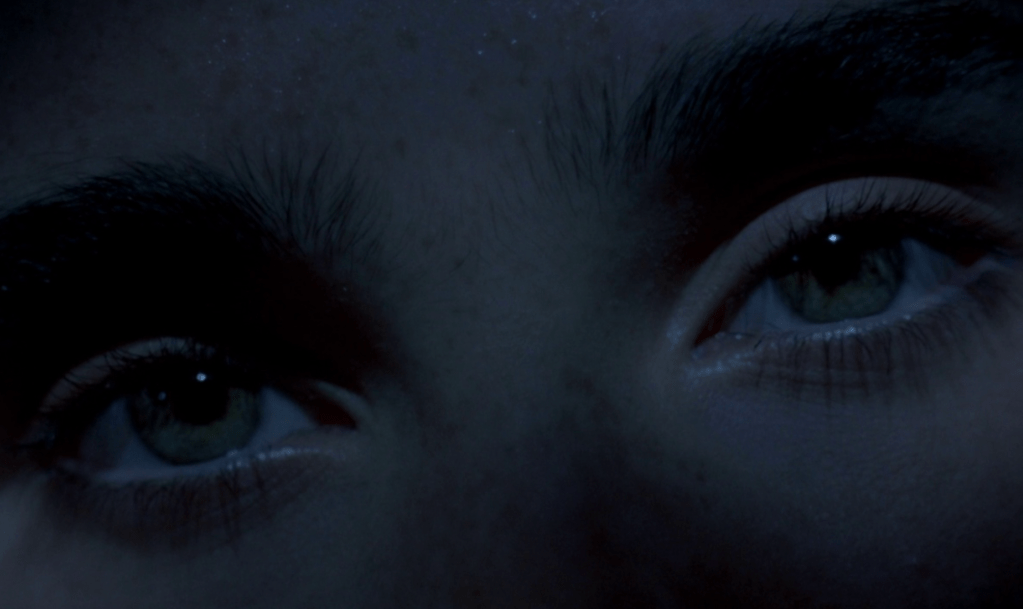
Jennifer Connelly in Phenomena.
She’ll eventually become something of a de-facto detective, particularly after one of few people who looks after her at the school becomes the killer’s latest victim. She’ll befriend, in one of the quirkiest character link-ups I’ve seen in a movie, a local entomologist (a phoning-it-in Donald Pleasence) whose pet chimpanzee finds Jennifer out sleepwalking one night and brings her to its owner for help.
Phenomena feels as foot-draggingly somnolent as its protagonist for most of its runtime even while effectively conjuring an atmosphere of wall-to-wall malevolence. (Argento has said that he wrote the movie as if it took place in an alternate universe where Germany won World War II — a vantage that helps explain why characters who fit into the so-called status quo are so cartoonishly harsh to those who don’t, and why the killer reveal of the climax evinces someone[s] essentially driven homicidally crazy by such aggressive rancor from a difference-averse public.) The movie is saved at the 11th hour by an extended finale where Argento takes all of its pent-up energy for a thrilling, madcap face-off in a house of horrors complete with bottomless vat of water browned by corpses in various states of decomposition.
Phenomena’s final act is so enjoyably batty that it almost makes you forget that the movie before it had struggled to incite a similar kind of gut-punching visceral reaction — the kind of feeling that had been a regular part of, not a last-minute addition to, his last few movies. Argento’s next project, Opera (1987), returned to the more straightforward mode of Tenebrae; it’s a marked improvement on Phenomena, a movie that, in hindsight, shows a director starting to lose grip of a command that would famously not quite return to what it once had been.
 Peterson Reviews