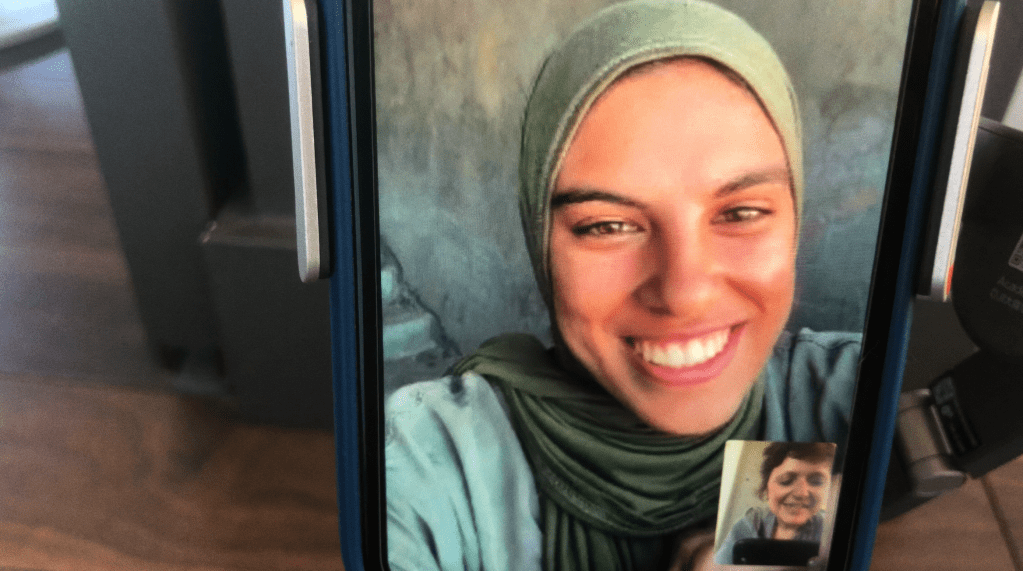
This is the 10th edition of Odds & Ends, a capsule-review column collecting brief notes on movies taken throughout the month.
Put Your Soul on Your Hand and Walk, dir. Sepideh Farsi
Put Your Soul on Your Hand and Walk is visually janky. It compiles a series of FaceTime conversations between Iranian filmmaker Farsi and a Palestinian photojournalist, Fatima Hassouna, which Farsi captures on a carefully held-up second phone. But that jankiness buttresses rather than takes away from the film’s sense of powerful, resilient thwarted intimacy. Often frustratingly slowed and made glitchy by Hassouna’s lack of reliable internet access, the calls start in early 2024 and go on for a little more than a year. Disarmingly smiley and optimistic in spite of the constant devastation she faces in the Israel government-decimated region of Gaza she was born and raised in, Hassouna relays her hopes, dreams, and fears as the war worsens across her and Farsi’s talks. The movie is as much an unforgettable portrait of an extraordinary young woman (who was tragically killed, alongside most of her family, the day before Farsi learned that their movie would be shown at the Cannes Film Festival in a targeted Israel Defense Forces strike for which the latter characteristically gave an unconvincing rationale) as a devastating simulacrum of the nauseatingly high number of lives cruelly and unnecessarily extinguished by Israel’s ongoing genocide.
Reflection in a Dead Diamond, dir. Hélène Cattet and Bruno Forzani
Life and creative partners Cattet and Forzani are master homagists, recreating to a T in their previous films the textures of giallo (2009’s Amer and 2013’s The Strange Colour of Your Body’s Tears) and 1960s- and ’70s-era Western-inflected crime thrillers (2017’s Let the Corpses Tan). I’ve usually appreciated more than loved their obsessively studied pastiches; their far more imagistically than narratively forward movies have erred a little too much on the side of “spot the reference.” But their latest, a kaleidoscopic Danger: Diabolik (1968)-cum-early James Bond mashup called Reflection in a Dead Diamond, changes things. It stirs in some smart meta awareness that as much gives it some real-versus-fake-blurring playfulness as slyly get at how all-consuming creative fixation is. It’s some of the most thrilling filmmaking I’ve seen all year, bound even to electrify audience members unfamiliar with the movies from which Cattet and Forzani ravenously source.
Afternoons of Solitude, dir. Albert Serra
Serra’s documentary portrait of the matador Andrés Roca Rey doesn’t glorify the sport to which its eternally-mugging-for-the-crowd subject dedicates his life. By only showing brutal exchanges in the ring where Rey regularly gets trampling-preventing assistance; moments during between-performance drives home where Rey is encircled by yes men who characterize scared and confused bulls who more aggressively than is typical fight to stay alive as “unfair”; and the painstaking process to get glammed up in objectively beautiful regalia for a match, Afternoons of Solitude uncomfortably but potently sees bullfighting for what it is: an inhumane ritual through which toxic masculinity is sanctified.
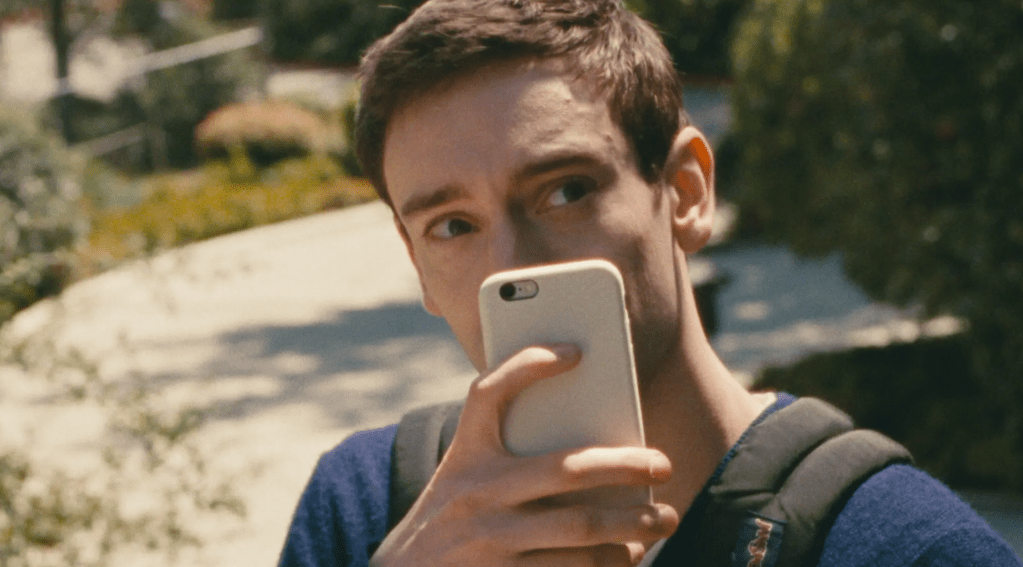
Théodore Pellerin in Lurker. Courtesy of MUBI. Header photo of Fatima Hassouna and Sepideh Farsi. Courtesy of Kino Lorber.
Lurker, dir. Alex Russell
The Bear alum Russell’s Lurker puts an Instagram-era spin on the stalker thriller. What if an ulteriorly motivated amateur photographer (Théodore Pellerin) with antisocial tendencies embedded himself among the unendingly affirming hangers-on that swaddle the laughably named mononymnal pop star Oliver (Archie Madekwe)? The premise does not evolve particularly scarily or incisively; some dumb Oliver-penned lyrics unsure about the difference between love and obsession are repeated often. But Pellerin chillingly musters several variations of a menacing, beady-eyed stare.
Sirāt, dir. Ólíver Laxe
In Laxe’s Sirāt, a father (Sergi López), his young son (Bruno Núñez Arjona), and their dog travel deep into the southern Moroccan desert in pursuit of a missing relative they think might be attending a rave there. She is not, so the patriarch thinks it’s a next-best idea to potentially join a caravan of event attendees to a farther-flung dance party coming up in the next few days. We know that this is a bad idea because they’re not quite sure where it is; because they’re not that equipped to be traveling across the punishing, oft-dangerously-paved landscape for that long; and because World War III — an alternate-reality framework that doesn’t really add anything to the movie — is said to be kicking off. Of course the López character, a puzzling decision-maker who thought it was wise in the first place to bring his elementary-school-age kid and pet pup along for a ride he knows will probably be perilous, ends up agreeing to tag along. The movie’s progression coincides with it getting more comically miserable. There is not much more of a discernible point, if one could call it a point, to any of it besides its neverending despair.
Urchin, dir. Harris Dickinson
Actor turned director Harris Dickinson’s first filmmaking effort neither tells a story of overcoming nor spiraling deeper into the bowels of addiction. It wallows more in the cyclicality of substance-addled poverty and turns a critical eye to the limits of the social services that try to mitigate the problem. Starring an excellent Frank Dillane as a homeless junkie who tries and then fails to move into a straight life, the naturalistic but magical-realism-inflected Urchin’s often-drawn comparisons to Andrea Arnold, Mike Leigh, and the pre-trial-separation Safdie brothers are apt. Those comparisons might also by the same token throw into relief where Dickinson has room to grow, but the movie puts faith in you that he’ll get there.
 Peterson Reviews