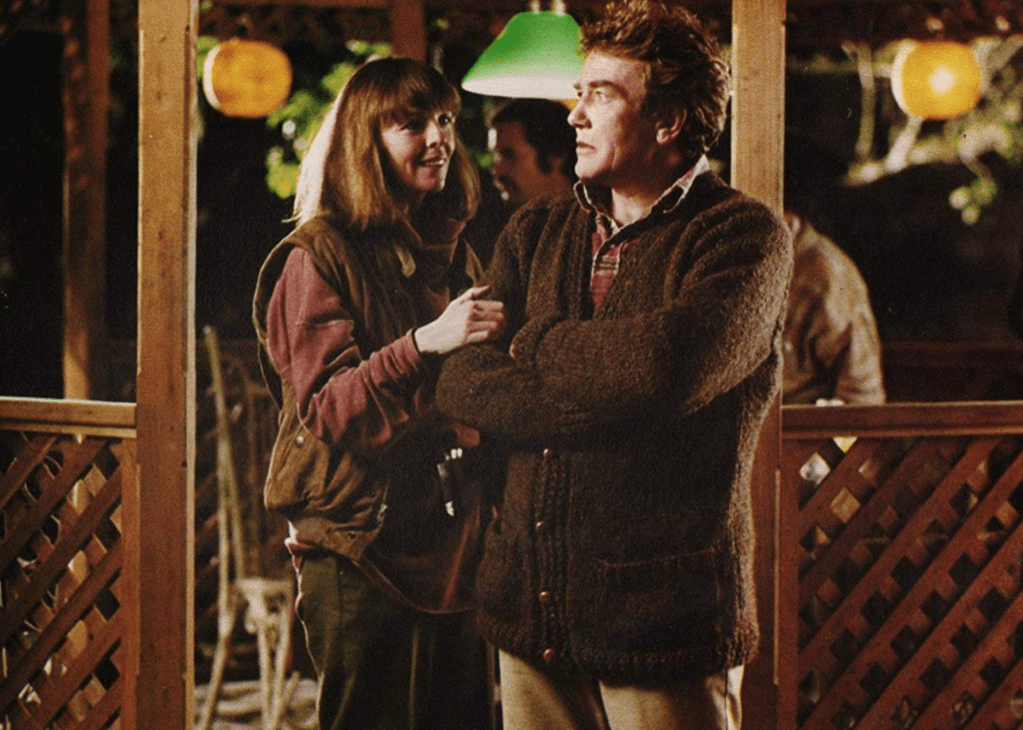
In Shoot the Moon (1982), we know the 15-year marriage between Faith and George (Diane Keaton and Albert Finney) is over before we’ve even seen them in the same room. They’re getting ready for a night out in the city, where they’re attending a ceremony at which revered nonfiction writer George has been nominated for a prestigious award. While Faith is doted on by their four puppyish young kids, who avidly ask if they can cake on makeup alongside her, George phones his mistress, Sandy (Karen Allen), for whom he’s planning to leave Faith any day now, in a neighboring room. Sandy warns him that he shouldn’t be taking a call when everybody in the house is home, and her advice turns out to be astute: the couple’s suspicious eldest, Sherry (Dana Hill), has discreetly picked up the house’s second landline and overhears nearly all of the conversation. She neither confronts her father nor relays what she’s just heard to her mother. We can tell this isn’t the first time this has happened.
Faith and George’s official separation comes a few scenes later. Shoot the Moon, written by Bo Goldman and directed by Alan Parker, is notable among divorce movies for featuring a breakup where nothing has to be that explicitly declared for both parties’ feelings to be clear. George doesn’t even have to confirm that he’s been unfaithful because Faith can already sense it. Smashing dishes and openly avoiding anything resembling having a hard talk about what’s next is enough for people who have known for a while that something has been irretrievably lost. That won’t be the only example in the movie of characters so at a loss for words that they can only wildly lash out. A film where emotional realism takes precedence over the cathartic articulation of feeling that can sometimes only exist in movies, Shoot the Moon knows how difficult it can be to outwardly express the deep pain the end of a relationship — and in this case, also the end of a once-happy nuclear home — can bring.
Shoot the Moon is so gripped by its characters’ present-day pains that it doesn’t feel much of a need to dig very deeply into its main couple’s past. It correctly surmises that we know about as much as we need to: That Faith, very young when she and George got together, was never able to forge much of an identity for herself before motherhood and domestic duty took over everything. Resentment is only natural when your husband, followed around by self-doubt and -loathing, maintains emotional distance and doesn’t try very hard not to adulterously step out. He defers so many parental tasks that the first time he’s in charge of the kids for a day, he asks no one in particular, “Jesus, how does she do it?”
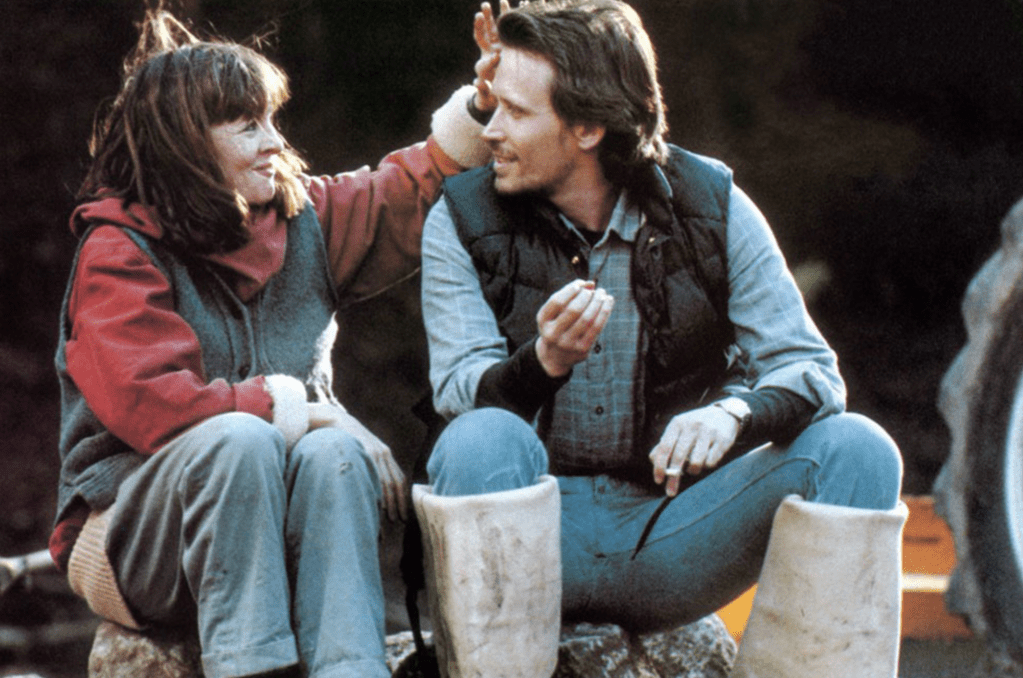
Diane Keaton and Peter Weller in Shoot the Moon.
One of Shoot the Moon’s more loquacious scenes finds Faith and George getting dinner out together months into the separation and, with inappropriate loudness, verbalizing their regrets more than their anger with the other person. It’s one of the film’s least convincing, because Shoot the Moon is better at communicating when not a lot is said at all. Its most lasting image might be of Keaton alone at home in the bath, smoking a cigarette and haltingly singing The Beatles’ “If I Fell,” telling the empty bathroom that she misses her husband but knows it wouldn’t be worth it to try to work things out when so much trust has been lost. Or maybe it’s of George, in a fit of rage that seems extraordinary even for a person we’ve come to understand has a rather short temper, breaking into the stately, windswept home he’s been kicked out of to aggressively try to force Sherry, who doesn’t want anything to do with him, to accept her birthday present.
There’s a certain arc one expects from a divorce movie: the initial break, heartsickness, maybe some vengeance, the potential happiness posed by a new relationship, an appreciation of newfound freedom. Shoot the Moon has all of that, but you never feel like it’s trying to hit specific beats because so much of it feels overseen and -heard. It’s cautious about romanticizing turning a new leaf. It doesn’t feel abrupt when a heavy moment — George coming over, a cop accompanying him because his lawyer advised it, to pick up some old books — is suddenly brightened with levity. An image reminds Faith of a date she and George went on where they couldn’t stop laughing over the restaurant’s pianist only badly singing Beatles covers in French.
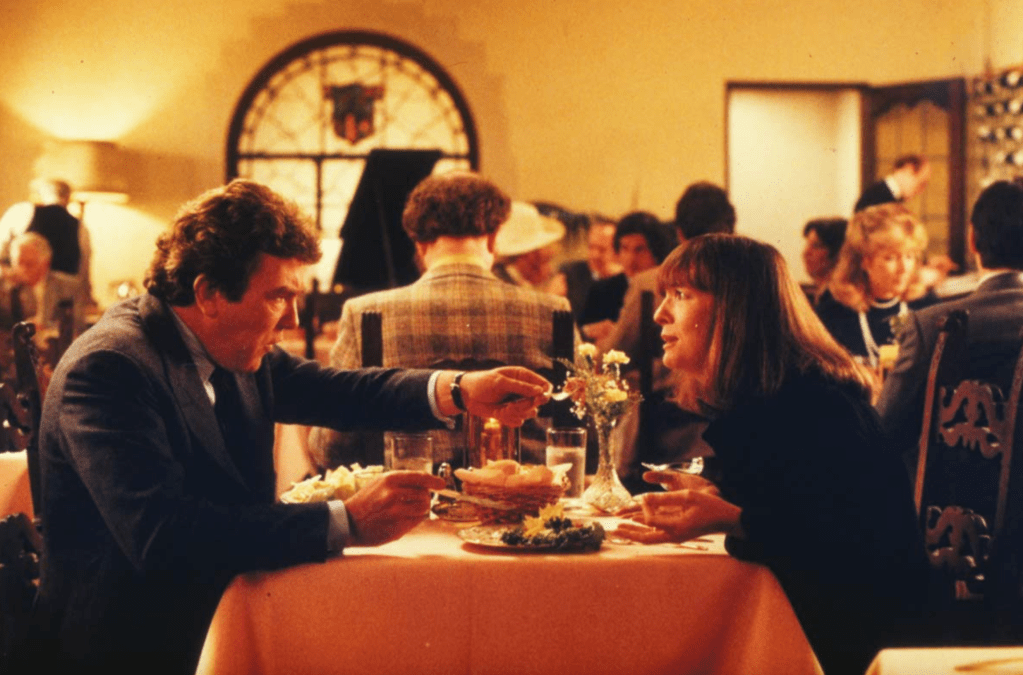
Albert Finney and Diane Keaton in Shoot the Moon.
And Faith’s tentative romance with the contractor (Peter Weller) she hires to do some outdoor design — his main focus is renovating the home’s essentially never-used tennis court — is so touching because of how uncertain of herself the romantically inexperienced Faith is. She turns up a vinyl she throws on way too high during a dinner date at her house and flatly declines a polite request for a kiss before spending what feels like minutes deciding that she’d like one after all. The cameras wait with bated breath for her to make the eye contact she’s been avoiding.
Shoot the Moon’s child performances are some of the best I’ve seen — great not because they’re particularly showy but because they feel unencumbered in a way one isn’t used to with kid actors, who so often seem hyperaware that they need to be as cute as possible for the cameras. Parker still lets them be young and silly: they can’t help themselves from singing in a group during car rides; while the family passively watches a TV showing of The Wizard of Oz (1939), one of the girls, as if in a trance, mouths along to all the dialogue, down to the inflections of the actors. (Pauline Kael observantly pointed out in her review that Parker being a father of four and Goldman of six more than likely contributed to the movie’s uncommon naturalness with kids.)
But the movie most of all drives home the late Keaton’s once-in-a-generation magnificence and how rarely that magnificence is remembered in a context where she wasn’t doing a lot of joking around. She doesn’t give a disappear-into-the-role kind of performance in Shoot the Moon. You see the slightly stuttering, simultaneously bashful and charismatic energy for which she was beloved, especially in early scenes with the contractor, where she’s perceptibly nervous about opening herself up again. But it’s a performance that evinces the reserves of emotion she had inside her, and how much, even though she was always brilliant at bending it to her will, dialogue could be a secondary tool for her with which to cultivate lucid work. Shoot the Moon is about a couple’s undoing, and it takes pains to get to the bottom of both people bearing different kinds of responsibility for the fracturing. But it’s Keaton alone that most underlines the movie’s specialness.
 Peterson Reviews