Though the mood surrounding 1995’s Salaam Cinema is rather celebratory — an early title card tells us that its release year falls on Iranian cinema’s 100th anniversary — the movie doesn’t turn out to be very sentimental. It’s closer to an indictment of the industry writ large — the disappointments and humiliations it can heap onto those looking to make a living in it.
Salaam Cinema is a documentary, or it at least resembles one. The extent to which the lines between the real and the fake have been smudged is intentionally not always very obvious. What we know to be true is that its director, Mohsen Makhmalbaf, who appears on screen as a heightened version of himself, placed an ad in a newspaper calling for locals to audition for his ostensibly centenary-commemorating new movie. He expects about a hundred people to materialize at the listed venue. Instead about 5,000 do, the ensuing frenzy likely to prompt viewers to worry about crowd crush.
The amateur talents who show up understandably believe that, if they sufficiently impress Makhmalbaf, they’ll be up for a plum part that’ll jumpstart their career. (The eagerness is arguably most exemplified by one young actor who pretends, for several minutes, that he can’t see — a charade he’d been maintaining all day, even on the journey over from his home.) They aren’t aware, at least not initially, of Makhmalbaf’s real intentions: making a documentary composed just of auditions, turning hopefuls into actors in a movie the moment they step into a room.
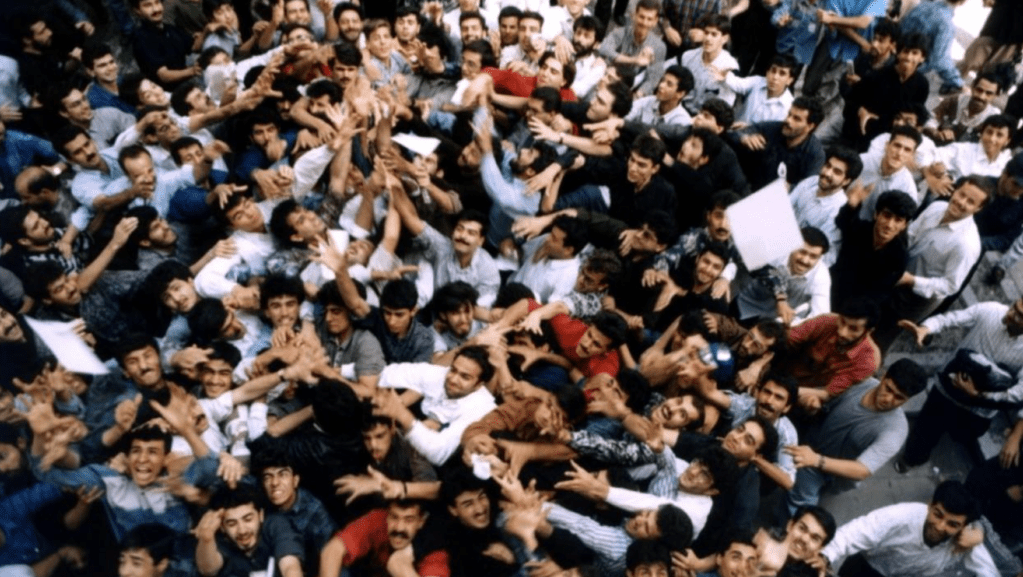
From Salaam Cinema.
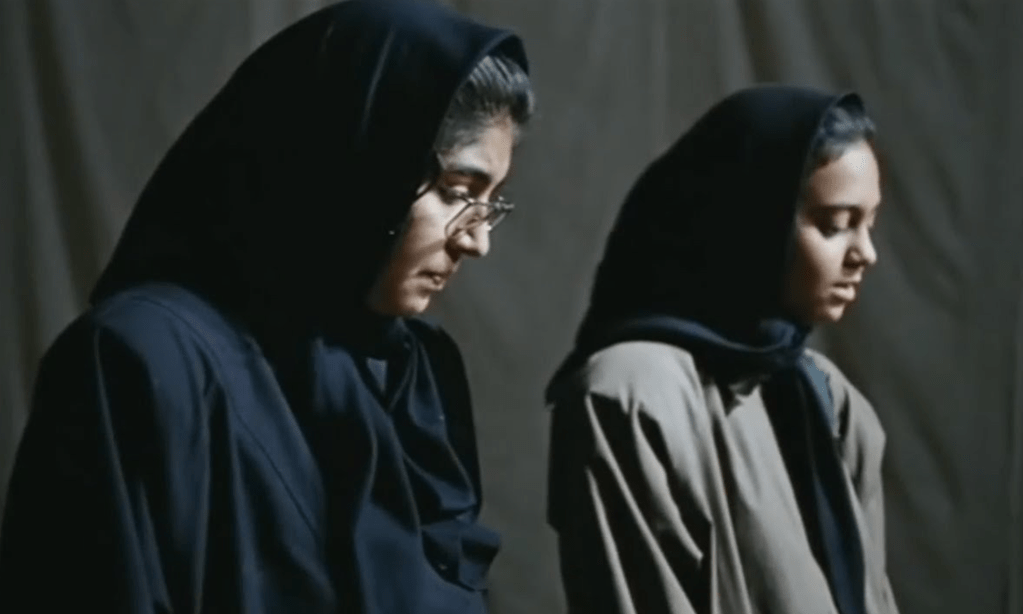
The version of himself Makhmalbaf offers is rather tyrannical. He impatiently demands his actors naturally cry and laugh on cue and sometimes pits them against each other if multiple strangers are in the clinical audition room at the same time. Much of the Salaam Cinema focuses on a tryout with two 16-year-old girls — one of whom begins the process headstrong and confident, almost mercenary in her dedication to get a part — whose conviction Makhmalbaf steadily tries to undermine. He absurdly makes them question if their I’d-do-anything-for-this-part certitude is staining their sense of humanity.
Makhmalbaf’s played-up coldness might make you a little queasy. It also engenders fascinating responses, evincing how much someone is willing to withstand if there’s a possibility of seeing their face blown up onto a big screen. The closest Salaam Cinema comes to being celebratory in a way that feels suitable for a 100th anniversary is by simply displaying how much power the movies have over people — how exciting a prospect it is to actively be involved in their making.
It’s no secret that the artform has long enabled directors to be legitimately brutish in the way Makhmalbaf is pretending to be and get away with it. But if his conscious portrayal of director’s-chair despotism still has the same emotional and psychological effects on this large group of people, how much different is it, ultimately? Salaam Cinema dwells in gray areas, illuminating larger points while being unabashed about the unpleasant method it uses to arrive at them.
 Peterson Reviews