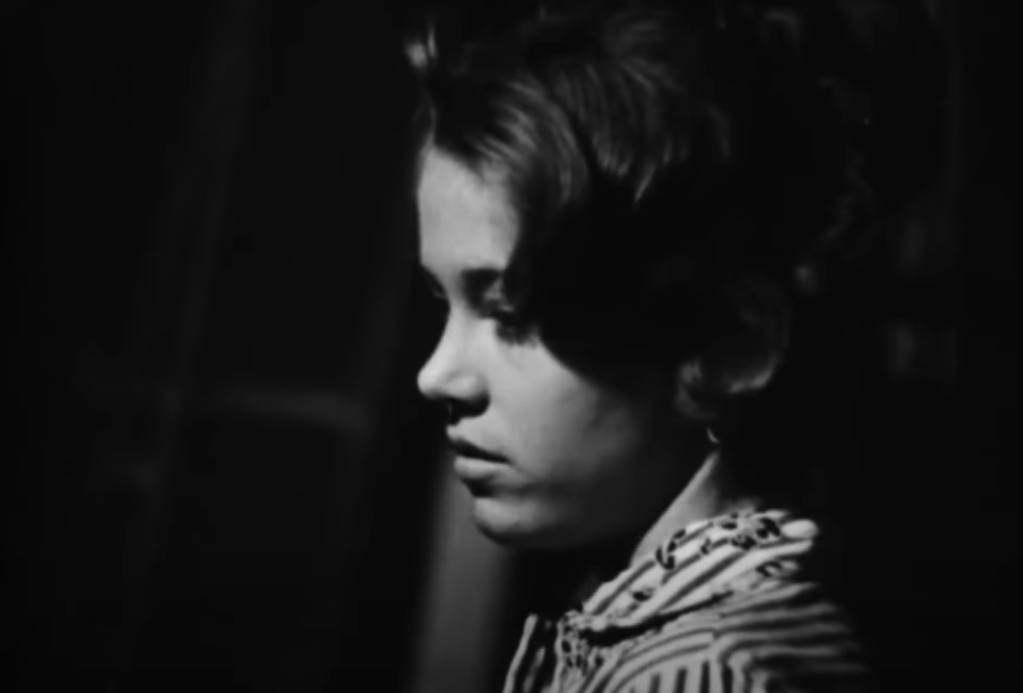
The first words heard in D.A. Pennebaker’s 1962 documentary Jane concisely state what it’s going to show us while also alluding to how most viewers of the time saw its subject. As if he were mindlessly taking verbal notes with a handheld recorder, Pennebaker says, in voiceover, “Jane Fonda, daughter of a famous actor, preparing for her first opening night as a star on the Broadway stage,” as its central figure’s face overtakes the screen.
The name of Fonda’s movie-star father, Henry, doesn’t have to be said because of how big a shadow it cast over his 25-year-old daughter’s public image. At the time the documentary was made, Fonda was viewed as little more than a gorgeous nepo baby trying out acting. She’d starred in a few movies (a theater marquee touting her co-starring role in her fourth film, Period of Adjustment, is briefly seen) but hadn’t proven herself as a formidable performer who could be seen separately from her living-legend dad. Jane’s opening words immediately, albeit not unfairly, undercut the persona she was trying to create by yoking her to her lineage at the outset.
It also is a reminder that the movie probably wouldn’t exist if not for Fonda’s famous connection. A nascent talent with a beloved father trying to forge a professional path on her own terms is already arguably more interesting than if the same basic conceit were applied to someone anonymous. In Fonda’s case, the question the film is implicitly asking — “Can she pull it off?” — has a fascinating double meaning and whiff of Schadenfreude that wouldn’t be there for a true nobody. Can she pull off being seen as someone other than Henry Fonda’s daughter? Can she pull off her dream of headlining a successful Broadway play, something she thinks will cement her credibility?
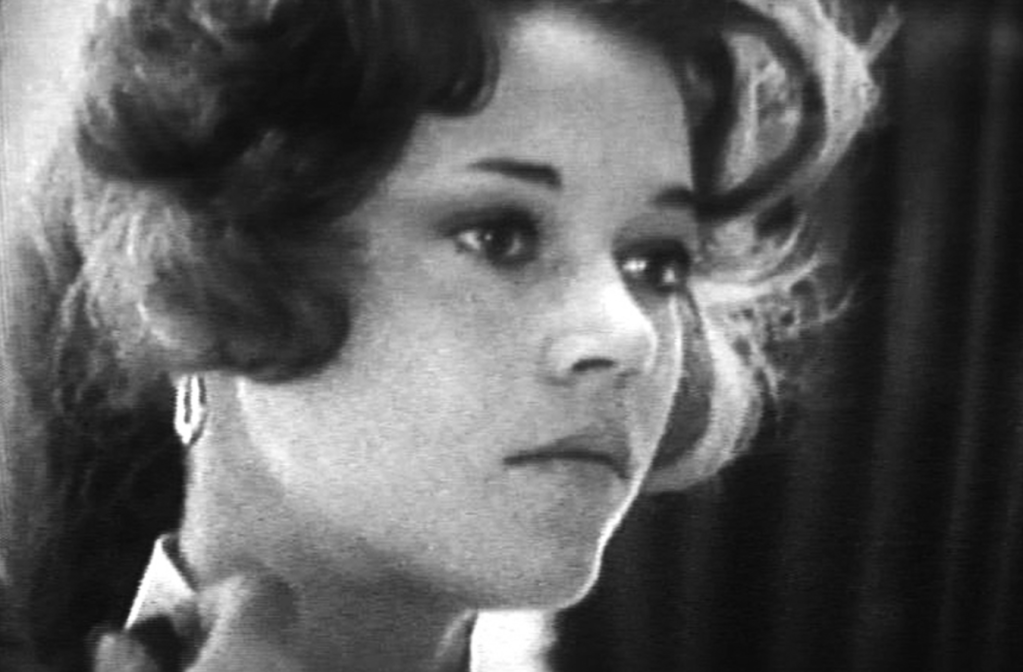
Jane Fonda in Jane.
The answer would remain no for different stretches of time. Fonda continued cultivating her acting capabilities for the rest of the decade, public skepticism fading a little more with each new project. But even if her chops were made pretty quickly clear, especially when it came to comedy, they arguably wouldn’t fully reveal themselves until the end of the 1960s with They Shoot Horses, Don’t They?, a ’30s-set tragedy that announced Fonda as one of her generation’s most gifted and emotionally intuitive movie stars. (That respectability rose to a new echelon with 1971’s Klute, for which she won a Best Actress Oscar playing a sex worker in danger, though much of that decade’s sterling acting work was eclipsed in the public eye for divisive, committed-to-the-bone activism.) As for Broadway: Fonda gave it one more shot, with 1963’s experimental Strange Interlude, before throwing in the towel for nearly a half-century.
All this is another way of saying that it’s largely impossible to watch Jane in 2026 without thinking about what would happen to its subject later. Across less than an hour, the film watches Fonda and her diva-ish playwright-slash-director boyfriend Andreas Voutsinas mount the misguided domestic comedy The Fun Couple, which presages her similarly premised and much better movie vehicle Barefoot in the Park (1967). They do a test run in a few U.S. cities for feedback-gathering purposes (the resulting negativity forces rewrites Fonda grumbles make the narrative confusing) before bringing it to Broadway. The Fun Couple is so badly received there that it shutters after three performances.
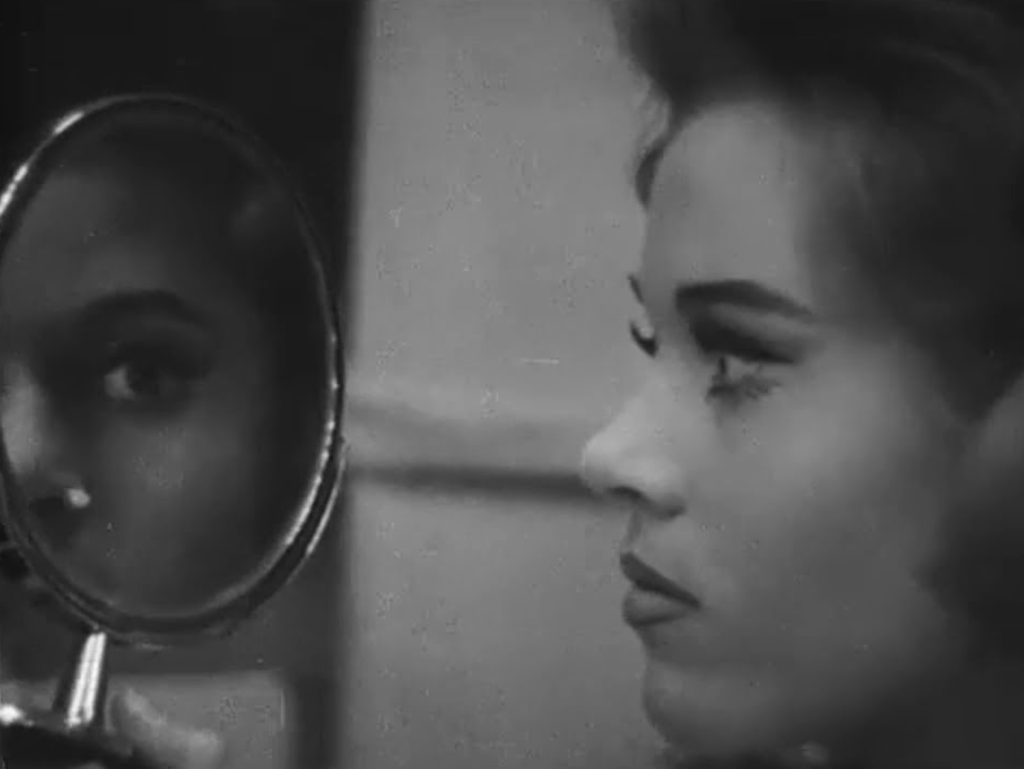
Jane Fonda in Jane.
The Fonda we see behind the scenes is openly self-conscious, glancingly seen taking a swig of liquid courage before one performance. She notes that because many of her colleagues have a “she’s only here because of her father” opinion of her, she’s taken triple the number of classes than is likely average from storied acting coach Lee Strasberg to show her commitment and readiness for hard work. She knows it will probably take more for her than for other young actresses in her shoes to live up to the magnitude of top billing.
Fonda’s general air of cool-headedness is also fairly obviously deliberately maintained for Pennebaker’s inquisitive cameras. They want to capture something true. Fonda, walls up, has an implicit “you’re not going to see me sweat” posture that she mostly keeps in check, even when she’s vulnerably speaking of her self-doubt. Her outward restraint slightly cracks, though, when she reads invariably bad newspaper reviews aloud the morning after the play’s Broadway debut. If she cries on camera, cynics watching the documentary might gloat. If she seems like she doesn’t care, then it might seem like acting isn’t serious to her. “It’s like needles,” Fonda will offer of the blistering review from the New York Herald Tribune’s Walter Kerr, who of the seven critics attending opening night she personally bequeathed the most make-it-or-break-it power.
Watched in 1962, Jane might seem to be confirming possibly predestined artistic failure that would last. But from today’s view it feels prophetic about one layer of Fonda’s persona that she’s become admired for: her willingness to take risks and move forward no matter what, inclined to reinvent herself rather than let the past become an albatross. Her never fully crumbling in front of Pennebaker’s cameras, which naturally come invisibly loaded with outside expectations and gossip, signals an inner strength that remains both endearing and an indication of a fundamental resoluteness that would continue hardening with maturity, despite her other hang-ups. “She wanted the world to know who she was,” Pennebaker recounted to The New Yorker in 2011, “not the person she was playing.” Nearly 65 years later, you could say the much-lionized Fonda has gotten what she wanted.
 Peterson Reviews