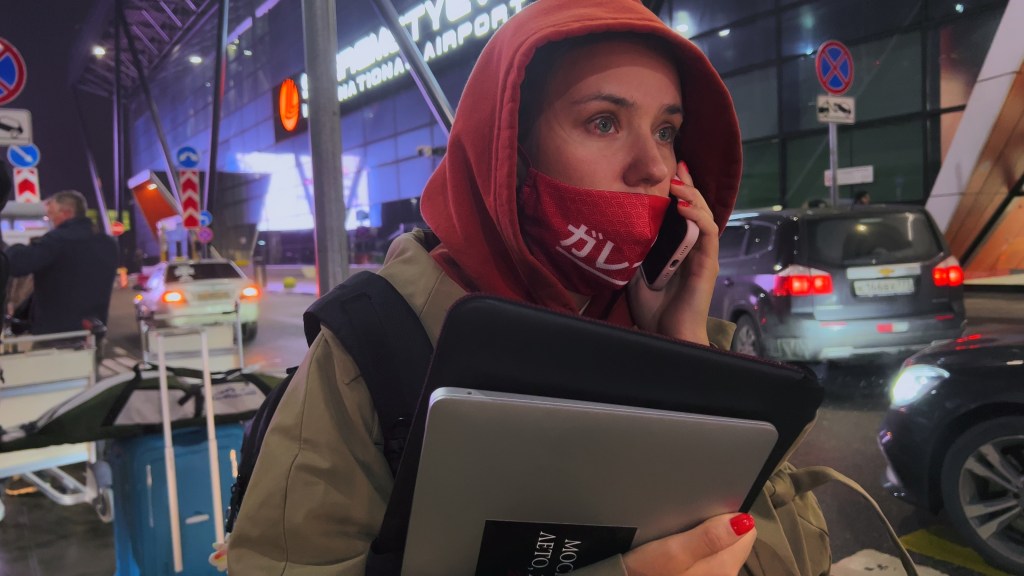
Julia Loktev hadn’t gone to Moscow thinking she’d end up with a documentary quite like My Undesirable Friends. The Leningrad-born American filmmaker initially flew over for a research trip with a nebulous idea for a project guiding her. She was meeting up with a friend, TV journalist Anna Nemzer, in the second half of 2021, around the time Nemzer and scores of other left-wing reporters and their outlets were designated by President Vladimir Putin’s government as “foreign agents.” If they did not put an onerously blocky disclaimer on everything they published, down to an innocuous Instagram snap of, say, a puppy or a flower — “THIS NEWS MEDIA/MATERIAL WAS CREATED AND/OR DISSEMINATED BY A FOREIGN MASS MEDIA PERFORMING THE FUNCTIONS OF A FOREIGN AGENT AND/OR A RUSSIAN LEGAL ENTITY PERFORMING THE FUNCTIONS OF A FOREIGN AGENT” — they’d be heftily fined. Then they’d be jailed if they “disobeyed” the purposely confusing directive enough times.
Her background mostly defined by fiction filmmaking, Loktev was thinking of directing a feature about what life was like after the foreign-agent appellation and the process of producing critical, hard-hitting journalism amid growingly strict censorship. But things shifted soon after landing in Moscow. The situation’s urgency seemed too pressing to stick with her original plans: refine her approach, go back to the states, and poach a proper cinematographer before returning.
“I never looked back,” Loktev told Dennis Lim at one of this year’s New York Film Festival screenings of My Undesirable Friends, an epic in which she follows Nemzer and several other young women reporters in the months leading up to, and the days after, Russia’s Feb. 24, 2022, invasion of Ukraine. Subtitled Part I — Last Air in Moscow and eventually to be followed by a sequel about its subjects’ exile, the five-and-a-half-hour-long documentary was shot entirely with an iPhone. It proved as much a utilitarian choice for tailing people who could at a moment’s notice have to flee a suddenly dangerous location as a way to foster trust. Nearly all of My Undesirable Friends’ “characters” are used to being on camera: The majority are staffed at the independent news channel TV Rain, and those who aren’t often make guest appearances. But the absence of a traditional crew and the easy-to-live-with mundanity of a hoisted-up phone especially helped make Loktev’s subjects less resistant to opening up. When she wonders aloud if her presence is causing more problems, she’s met with a scoff. It’s not like she’s going to make them more of a foreign agent than they already are.
The ease around Loktev is part of what makes the first three of My Undesirable Friends’ five chapters often feel surprisingly jovial despite the grave anxieties and relentless somebody’s-watching-me-style paranoia undergirding everything. All of the film’s subjects unconsciously use regularly laugh-out-loud-funny pitch-black humor to cope with their fears of persecution. One woman, the initially unfathomably sunny Sonya Groysman, reminisces about the earlier part of her and her boyfriend’s relationship by cracking that it took place while “we used to be sentimental.” Another muses that the only good thing about 2021 was the severing of Britney Spears’ conservatorship. The only-sometimes-heard Loktev can seem like just another friend in the room with whom steam is being blown off. I came to love being around these people.
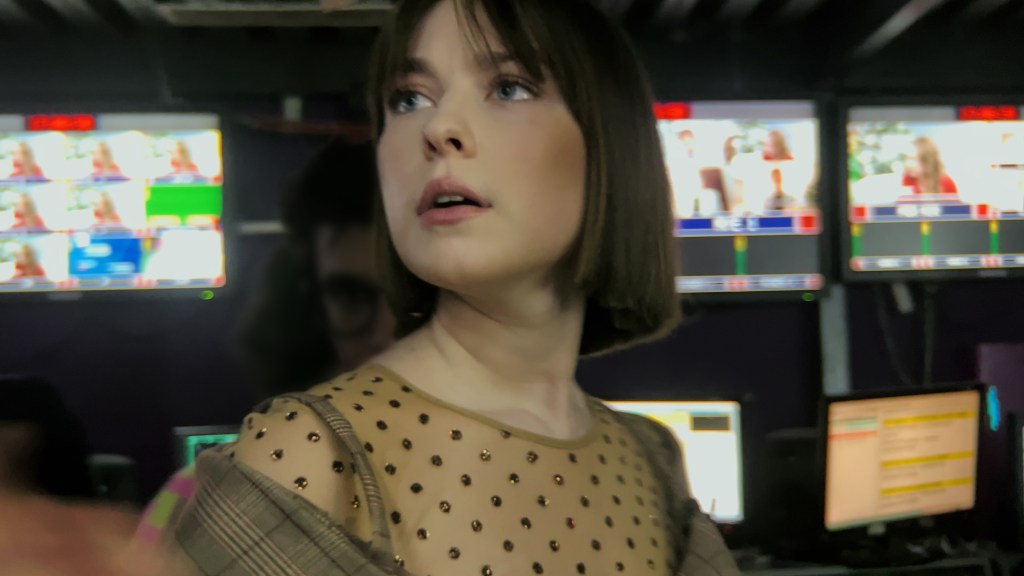
Ksenia Mironova in My Undesirable Friends: Part I — Last Air in Moscow. Lead photo is of Olga Churakova. All imagery courtesy of MUBI.
You know ahead of time that My Undesirable Friends’ subjects are young and prolifically produce powerful, in-depth journalism, yet both facts can still momentarily take you aback. Ksenia Mironova, whose reporter fiancé, Ivan Safronov, was bogously sentenced to 22 years in prison for treason in September 2022, is 23 when we meet her. Twenty-six-year-old Alesya Marokhovskaya groans that she hates how the foreign-agent branding will stalk her permanently when her adult life is still getting started. After married mother-of-two (and for a while de facto guide) Nemzer, Elena Kostyuchenko is the oldest and most experienced of everybody, though the kicker when she alludes to her 17 years of reportage is that she started her career when she was 16. The Harry Potter series is referenced to an almost comical degree as a tool for these women to make sense of what’s going on. Marokhovskaya sometimes wears a slouchy red Stranger Things sweater; Irina Dolinina loyally watches Emily in Paris to relax but laments the stupid decision-making of the vapid title character with some annoyed expletives.
With everyone having first- or secondhand experience being detained, having their homes raided and sneakily bugged, watching their defensive arguments get essentially eyerolled at during court dates, and seeing colleagues get murdered outright, it’s astonishing that every one of My Undesirable Friends’ main players continues pressing on, on edge but undeterred. The movie was shot in late 2021 and early 2022; no one starring in it has since abandoned the field. And none of the outlets worked for — TV Rain (Nemzer and Mironova), Important Stories (Marokhovskaya and Dolinina), Novaya Gazeta (Kostyuchenko) — ultimately folded after being completely blacklisted in Russia post-invasion. They all pivoted to find new ways to report on their homeland despite all but being forced out of Moscow.
These journalists have stayed with their jobs because, as it’s noted a few times, they know they love their country more than the craven people running it do. They can’t imagine not having the small things they adore about Moscow when — though the hypothetical at this point still starts with an “if” — they have to leave. Dolinina waxes poetic about the near-omnipresent scattering of repertory cinemas around town; Marokhovskaya’s lived in her apartment for years and hasn’t yet tired of its august Moscow-skyline views, especially when in the summer skyscrapers are on a near-nightly basis bathed in sherbet-orange sunsets.
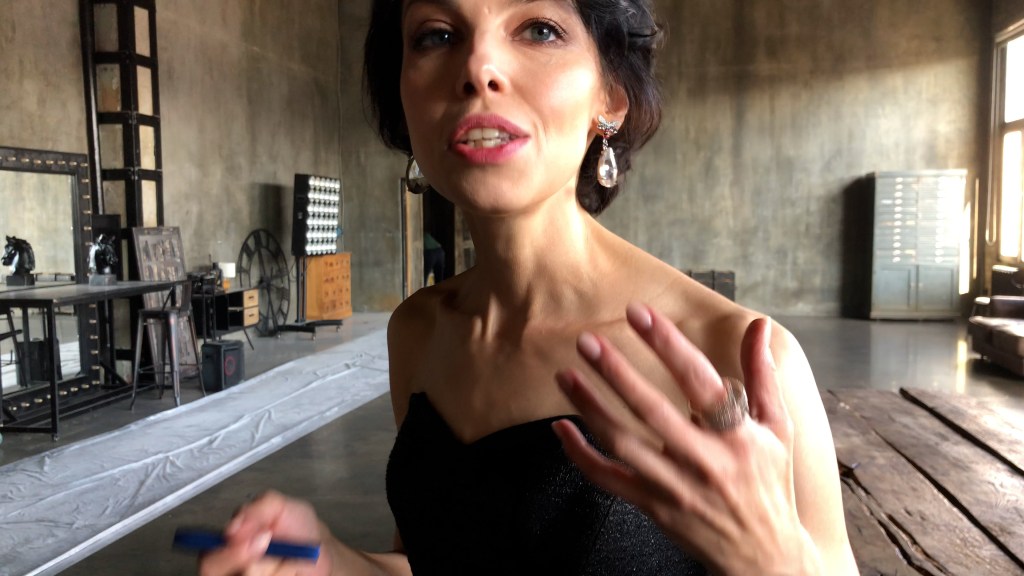
Anna Nemzer in My Undesirable Friends: Part I — Last Air in Moscow.
It too is found useful to never dismiss the importance of simply keeping a record. Even when journalism’s thanklessness and the churn of governmental destruction can create an impression of futility, disseminating the truth is always preferable to inaction. (Nemzer has since the film’s premiere openly struggled with Friends’ usefulness to viewers, given that she and her colleagues do not, exactly, wind up somewhere particularly victorious; I’d argue that the documentary at the very least has a galvanizing effect, though I can’t imagine the level of emotional and psychological exhaustion repudiating fascism she’s experienced and continues to.) Mironova has a simpler reason for her journalistic drive: She jokes that she’s too dumb to do anything else.
My Undesirable Friends’ first few chapters, when things are certainly not good but also not yet completely dire, keep a pit firmly resting in your stomach. It fully drops in the final two, when everyone isn’t just waiting with bated breath about their outlets getting shut down but also about getting arrested, or worse. (In the days preceding the final act’s mass — and terrifyingly sudden — exile to the scant selection of countries accepting Russian visas, journalists are barred from calling what’s happening in Ukraine an invasion or a war, and TV Rain’s own anchors are forced to interrupt Ukrainian interviewees — whose realities Loktev is painstaking about including in the narrative so that the movie, though clear-eyed, isn’t all one-sided — with Putin-mandated rebuttals.) A vacation that had been planned months ago turns permanent for Nemzer and her family. In what might be the movie’s most emotional stretch, Mironova pains over whether she should leave at all, weighing legitimate worry that her fiancé’s still at that point up-in-the-air sentencing could become harsher if authorities know she’s no longer sticking around for him.
There’s some relief knowing these women are now on safer terrain, able to continue producing invaluable journalism without needing to unduly agonize over their safety. But it’s a kind of relief that also leaves you hollowed out, furious at the country’s dramatic Putin-led warping and the millions of lives either literally destroyed or irreversibly upended as a side effect. “A year from now, we’ll remember this as Eden,” Groysman presciently observes shortly after her foreign-agent labeling.
By now it feels like a given in reviews of My Undesirable Friends to note the disconcerting parallels between some of what happens in it and the U.S.’s contemporary fascist turn. When one person in the film finds herself feeling nostalgic for the not-long-ago days when Putin allowed independent journalists to ask questions during press conferences — a practice that has obviously since been abandoned — the hostility sounds familiar. Already litigious against broadcasters and publications, Trump attempting to categorize opponents as something along the lines of foreign agents doesn’t seem like a faraway possibility but something that could be announced any day. His war-mongering hasn’t relented. Putin’s shutting down of the civil-rights organization Memorial and other vital resources is kindred to Trump’s own destructiveness around crucial cultural and governmental institutions. “Every day,” Loktev told NPR recently, “it feels like something in the film starts to resonate in a different way here for the U.S.”
 Peterson Reviews