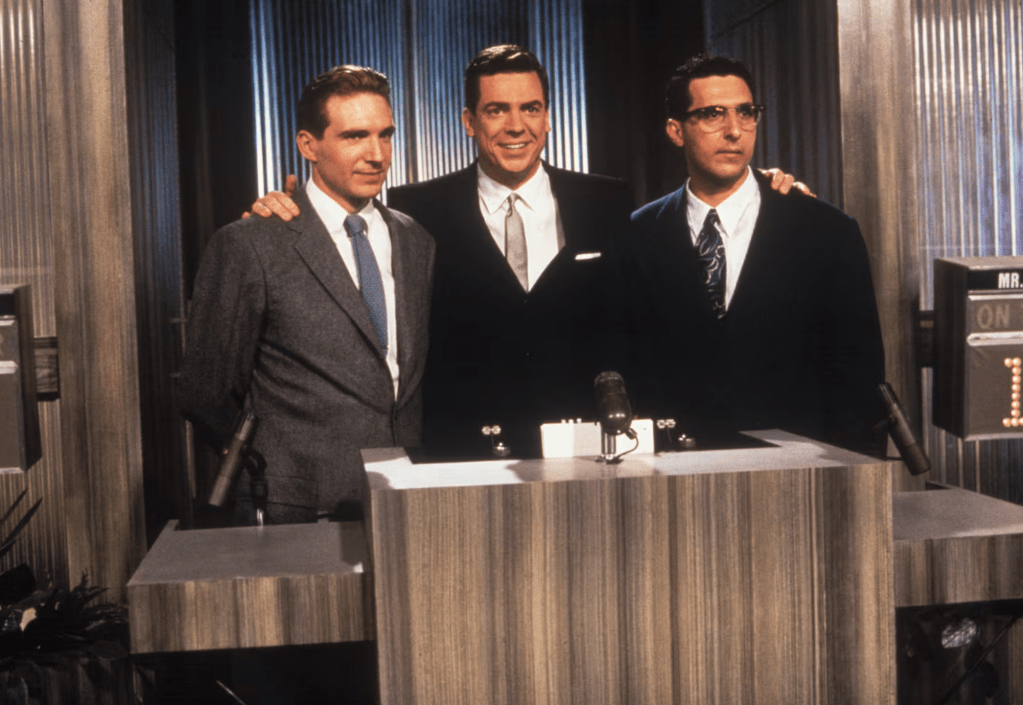
One has come to expect at least a little behind-the-scenes narrative manipulation in the reality-show genre and all its mutations. Robert Redford’s Quiz Show (1994), then, might catch the trained-to-be-untrusting contemporary viewer by surprise: Its fact-based story sees the practice spectacularly and influentially punished.
The first mistake of the TV show driving the scandal Quiz Show dramatizes was how suspiciously it flaunted its integrity in advertisements, declaring that episode details were kept safe in a vault ahead of time when they really weren’t. In the late 1950s, it was found that Twenty-One, a popular game show spiritually similar to the soon-to-premiere Jeopardy!, had been secretly engineering every seemingly spontaneous detail of each episode. It fed winners correct answers. It told predetermined losers when, for a handsome cash reward, to flub a question. And it advised contestants when, exactly, to pat their faces with a handkerchief to telegraph unease for maximum dramatic effect. Even player backstories were sometimes manufactured to make them easier to cheer on. Herb Stempel, played in Quiz Show by an entertainingly preening John Turturro, was, for instance, introduced as a cash-strapped army veteran working to get an education but was actually a married man whose wife hailed from an affluent family that subsidized the household’s income. His homely, ill-fitting clothes were part of the mirage, too.
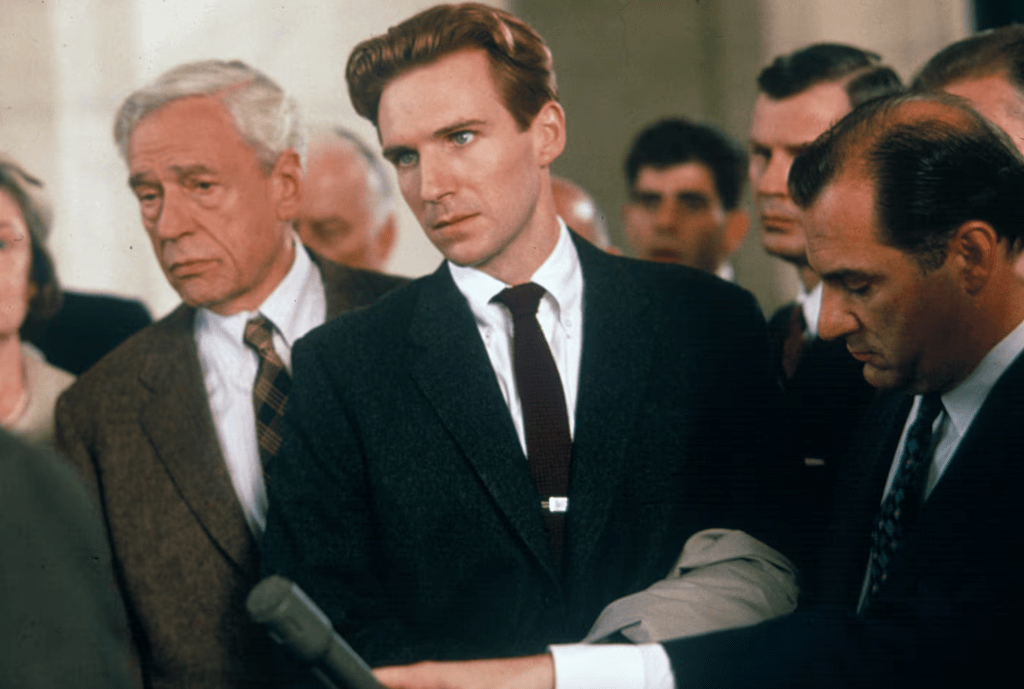
Paul Scofield and Ralph Fiennes in Quiz Show.
Quiz Show documents Twenty-One’s final days as a TV-dinner mainstay and the long, painful process of its inevitable destruction. Its downward spiral is sparked by the casting of Charles Van Doren (a rosy-cheeked Ralph Fiennes), a handsome professor from an academically renowned family, in an effort to unseat the unlikable, socially bumbling Stempel as the program’s multiweek champ. (“America needs an intellectual Joe DiMaggio,” one producer offers after it’s decided that Stempel is a major ratings killer who has to go.) Richard Goodwin (Rob Morrow), a young, driven lawyer who isn’t easily intimidated by TV-executive rigidity, spearheads the investigation.
Using Goodwin’s memoir, Remembering America, as its source material, Quiz Show takes liberties with the historical record, as biographical movies are wont to do. Goodwin wasn’t actually as involved with the investigation as the movie would have us believe — the brunt of that work had been done by congressional committee consultant Joe Stone, who isn’t seen or mentioned at all, long before Goodwin stepped in — and the film compresses several years of dirt-digging into what seems to be a tidy few months. The running time-conscious narrative constraints of feature filmmaking can make the resculpting of fact fairly forgivable. In Quiz Show, though, the custom juts out more, if only because this is a movie so dismayed by the very thing it too is guilty of: distorting truths in service of a more palatable dramatic outcome.
Quiz Show works best as an empathetic portrait of human fallibility. Its unctuous executive characters (Hank Azaria and David Paymer) notwithstanding, its characters are neither written as particularly heroic nor villainous. Morrow’s Goodwin comes closest to the former, but a major hindrance in his casework is his long-standing refusal to see Van Doren as possibly involved in the conspiracy, despite tell-tale evidence. He comes from a “good family,” Goodwin rationalizes; it wouldn’t be possible for someone of such high stature to be susceptible to a consequential moral transgression. Such a line of thinking can only get you so far in his truth-finding profession.
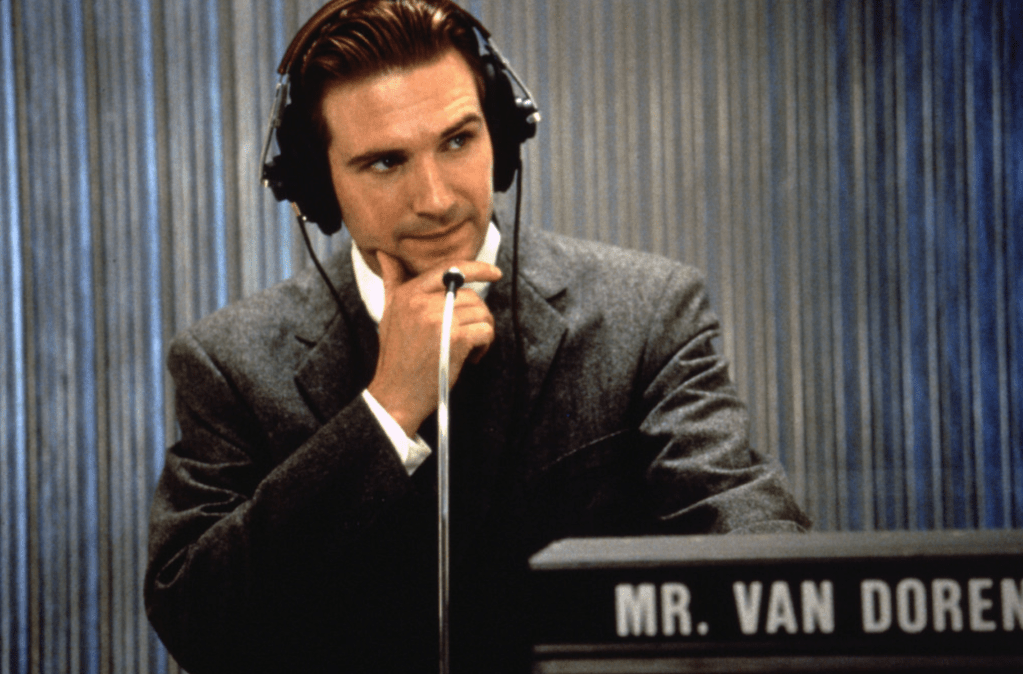
Ralph Fiennes in Quiz Show.
Torturro’s Stempel is both insufferably self-pitying and sympathetic. We understand his refusal to stay quiet for very long about being a cog in a machine that doesn’t care about him, even if that refusal is expressed in a pity-party whine exasperating enough to make you want to leave the room. Primmer, better-mannered Van Doren grates, too: Fiennes pitch-perfectly portrays him as someone who’s never had to struggle much for anything in his life and perhaps ought to be knocked down a peg. But he also efficiently articulates how Twenty-One’s corporate-backed scheming could go on for as long as it did. Even people like Stempel and Van Doren, both of whom are well-meaning history buffs who could have gone far with the series’ questions without a producer’s guidance, aren’t immune from participating in the sort of collusion that was asked of them, the temptation of TV notoriety and large sums of money too great to pass up.
Quiz Show implicitly asks the viewer what they would do if they were put in a similar situation to Stempel and Van Doren. Considering how many people continue lining up for reality-show castings, knowing full well when they sign contracts that their experiences will almost certainly not be accurately reflected in the final product, many would probably do the same thing. The consequences of Twenty-One and its immediate peers’ deceptions doomed them. They ensured that game-show successors with similar premises maintained basic honesty. But Quiz Show’s frowned-upon behind-the-scenes machinations have persisted in other sibling-like forms, so much sewn into the related reality-TV fabric that to see a program’s veracity called into question in court, the way it did for Quiz Show’s real-life story, is slightly surreal.

