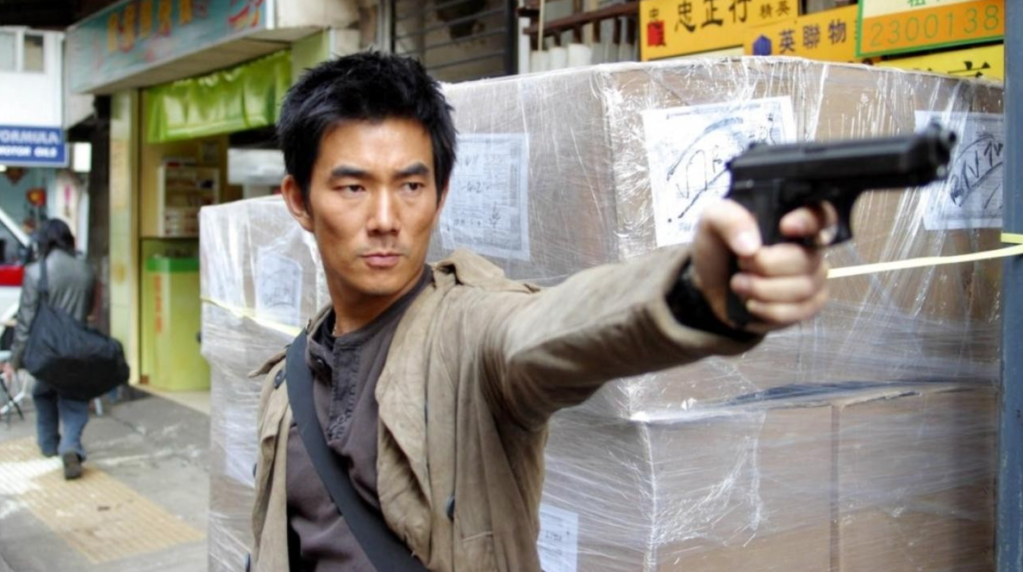
The cameras move so gracefully in the one-take opening of Johnnie To’s Breaking News (2004) that it has a way of making the carnage it’s cataloging — a shootout between a faction of the Hong Kong police and some mobsters mid-robbery — more perversely beautiful than conventionally heart-quickening.
Best exemplified by that opening sequence, To’s finest-in-his-class action filmmaking never yields in Breaking News, but it quickly becomes more propulsive in a way that befits its story. (It also has plenty of slow motion, putting it on a similar plane to the genre movies of John Woo.) Mostly unfolding in real time, Breaking News follows some warring between the police and the career criminals at the center of the botched, film-starting heist. News footage damningly shows a police officer amid the mayhem surrendering, his hands shakily held up, to the men over whom he’s meant to have power. There’s an immediate outcry from the public, peeved over this visual evidence of the law’s apparent inadequacy. Superintendent Rebecca Fong (Kelly Chen) reasons that the most efficient way to win back public favor is to overdocument for the media subsequent efforts to bring down the robbers who ostensibly brought her department to its literal knees. “We have to put on a show … This is the age of the media,” she says. She’ll get what she needs pretty immediately: it’s decided, by her opponents, that it’s better to attempt another robbery in the immediate term than wait and give the law extra time to figure out its response.
Fong’s methods of image remediation are comically deceitful. She sends to news stations footage of army-like raids, complete with action movie-esque music, and shares emotionally manipulative short video interviews in which the family members of injured police officers tearfully moan. Anything that could potentially make her officers look bad is cut out completely. As she’d hoped for, the bait is taken and goes unquestioned. There are limits to that working, though: the criminals Fong is battling find out what she’s doing and copy her, often in an unflattering way that brings the police back to square one of their reputational rehab.
Breaking News’ critical derision works twofold, simultaneously indicting the police’s institutional willingness to misdirect the public it’s supposed to be serving and the TV news media’s tendency to take law enforcement-approved messaging at its word and disseminate it as totally reliable. (I would have liked it if among Breaking News’ cast of characters there were more substantial journalistic presentation: we mostly just see anchors robotically sidling up to and commentating on a scene, or droves of anonymized camerapeople snapping the action with the ravenousness of mid-2000s paparazzi accosting an at-her-wits’-end Britney Spears.)
Breaking News’ “bad guys” come off better. Ringleader Yuan (Richie Jen) especially appears savvy and no-nonsense, willing to use his gun as needed but, as he reminds Wong during one exchange, never inclined to outrightly lie to get what he’s looking for. You’re further endeared to him during the film’s tenderest moment: him and an unaffiliated hitman who happened to be in the wrong place at the wrong time (You Yong) coming together to make dinner for themselves and the family they’ve taken hostage. Each a little elegiacally speaks of once having long-gone dreams of running a restaurant. Breaking News finds something to aslantly admire in Yuan’s regularly brutal and risk-attracting approach to life: being honest with yourself and the people around you about the harm you cause rather than cynically offering a false image of honorability you know you have no business broadcasting.

