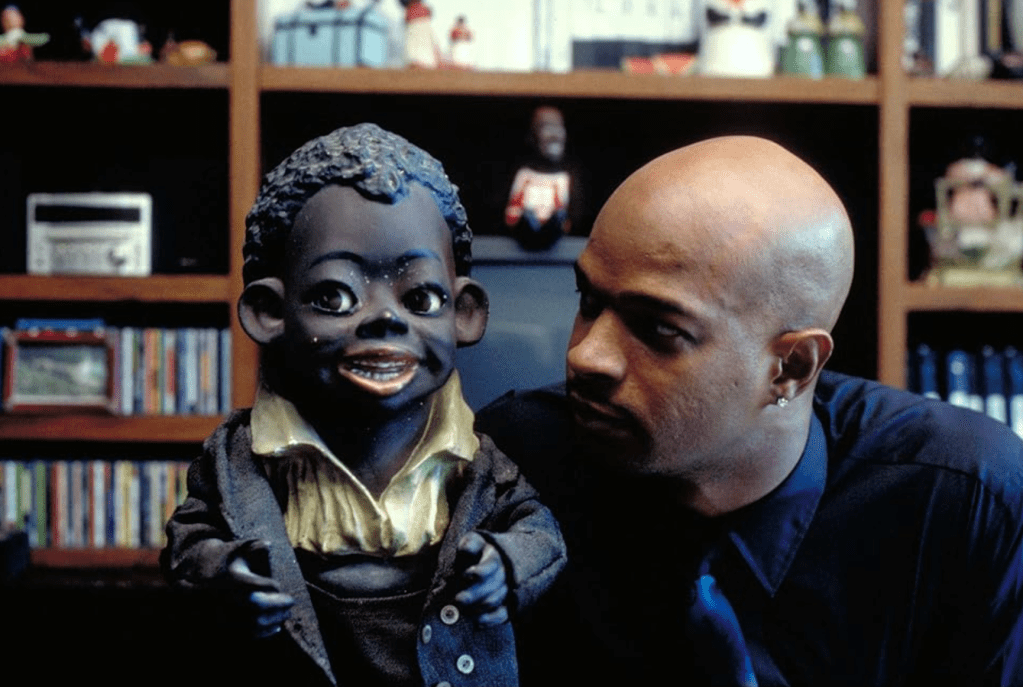
Bamboozled (2000) was shot on MiniDV digital video with Sony VX 1000 cameras. The thinking of its writer and director, Spike Lee, was mostly that that would save time and money. The decision also has the effect of making the film, part of a wave of movies at the time employing the inexpensive, easy-to-port-around technology, today look “un-updated — archival,” as K. Austin Collins wrote in a retrospective review a few years ago. Often the movie’s grainy look evokes a suddenly unearthed behind-the-scenes documentary capturing a scandal’s incubation and viral spread, the people in front of the camera unaware they’re being watched.
In Bamboozled, the scandal is the greenlighting of an ultra-offensive variety show. It’s pitched by Pierre Delacroix (Damon Wayans), a Black TV-network employee who feigns an all-over-the-place French accent to signal his Harvard-educated intellect. The network is run by a boorish white guy, Thomas Dunwitty (an unfortunately well-cast Michael Rapaport), who thinks he has the license to say the n-word in casual conversation because his wife and kids are Black. Pierre is sick of working there, not just because of his boss’s loud-mouthed ignorance but also because Pierre’s ideas for pilots — usually fish-out-of-water-style sitcoms where Black people get the upstanding straight-man roles — get roundly rejected.
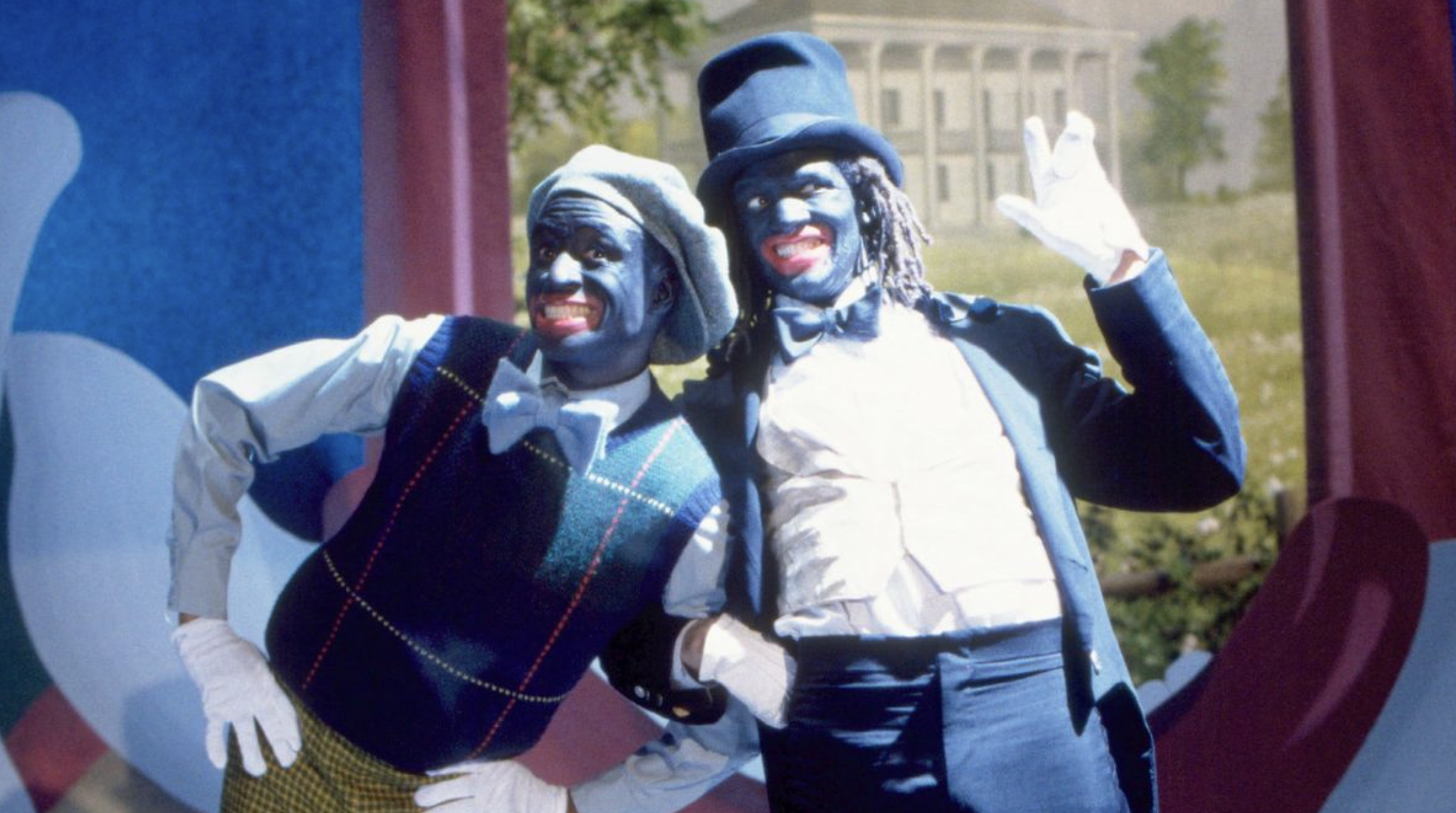
Tommy Davidson and Savion Glover in Bamboozled.
Looking to get fired so that he won’t have to deal with contract-breaking complications, Pierre decides to offer a concept so hideous that Dunwitty will have no choice but to let him go. It’s a modern-day minstrel show, its running title Mantan, that will tentatively star a couple of professionally angling Black tap dancers (Savion Glover and Tommy Davidson) who will slather their faces with burnt cork and prance around stage doing the sorts of horrifically stereotypical antics that ensured the performance style’s inexorable demise.
Bamboozled’s predictable twist is that Dunwitty, the type to call Amos and Andy “my boys,” loves the concept. So do audiences, who are hesitant to embrace what they’re seeing at first but eventually come to see the show’s very existence as OK’ing their once-choked-back laughter. (In the moments depicting what happens onstage, we go from an unpolished digital format to glossy, crystal-clear Super 16mm film stock, accentuating how expensively produced, mainstream depictions of heinous ideologies — whether critically or complicitly — can soften their ugliness.) The controversy-blighted fame and fortune that comes for Pierre, his wingwoman Sloan (a very good Jada Pinkett Smith), and their stars is initially a shock. Then it’s relished; then it curdles, Pierre’s critics referring to him as the Clarence Thomas of TV turning out to be one of the better things that will happen to him in the course of the movie.
I wished the movie interfaced more with Mantan’s viewers. Many of them are seen guffawing in a live studio setting and many of them include Black people. What, exactly, are they thinking? What about this show tickles them? But this provocative movie, conceived by its writer-director after years of frustration with both his own professional experiences and onscreen portrayals of Blackness in other projects, also indirectly asks not to be seen so literally, coarsely using a nightmarish worst-case scenario to emphasize how latter-day mutations of minstrelsy — stereotype-dependent writing, cultural appropriation, and the like — live on in entertainment.
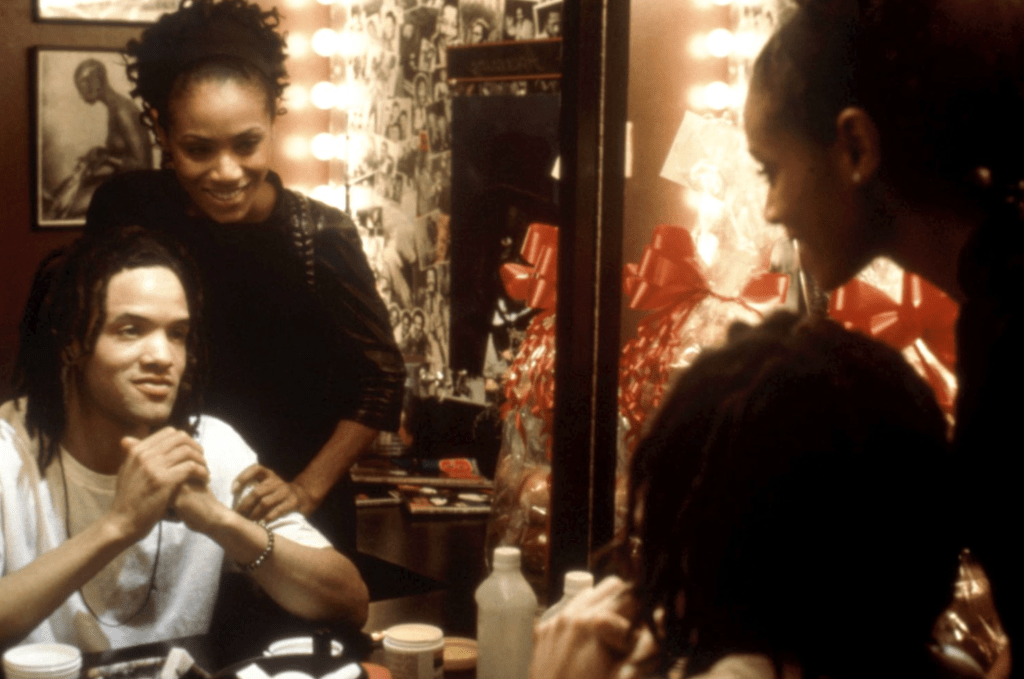
Savion Glover and Jada Pinkett Smith in Bamboozled.
They’re able to with enough normalization, just as minstrelsy once had. In the grand scheme of history, our present and the days when blackface flourished aren’t particularly far apart. It wasn’t that long ago that Judy Garland and Mickey Rooney were jovially bopping around musical sequences with their youthful faces inkily smeared. Bamboozled satirically posits that our contemporary times are not as enlightened as they might like to think, though I don’t know how many living in our fascistically poisoned current moment think of it as particularly enlightened anyway. “I don’t understand the thinking that says, ‘Oh, it’s not as bad as it used to be,’” Lee said in an interview at the time of the movie’s release. “That doesn’t negate what the film is about or what we’re trying to say. I think it shows that today, it’s more sophisticated, so you don’t have to wear blackface to be a minstrel actor.”
The root of the frustration Delacroix experiences that makes him propose the show in the first place hasn’t particularly improved, either. Nielsen found this year that 71% of Black audiences felt misrepresented in the media, a statistic emblematic of a white-dominated industry not particularly inclined to pursue substantive representation. The Glover and Davidson characters agreeing to take beneath-them parts is indicative of that, too. Fewer work opportunities are obviously interrelated, and as the film’s concluding montage partly reminds us, long been a problem for Black entertainers trying to make a living through TV and film work, where professional benefits, especially mid-century and before that, were laced with surefire damage to both one’s personal legacy and representation writ large. Bamboozled makes its points with sledgehammer precision, but there’s power in its knock-you-back force.

