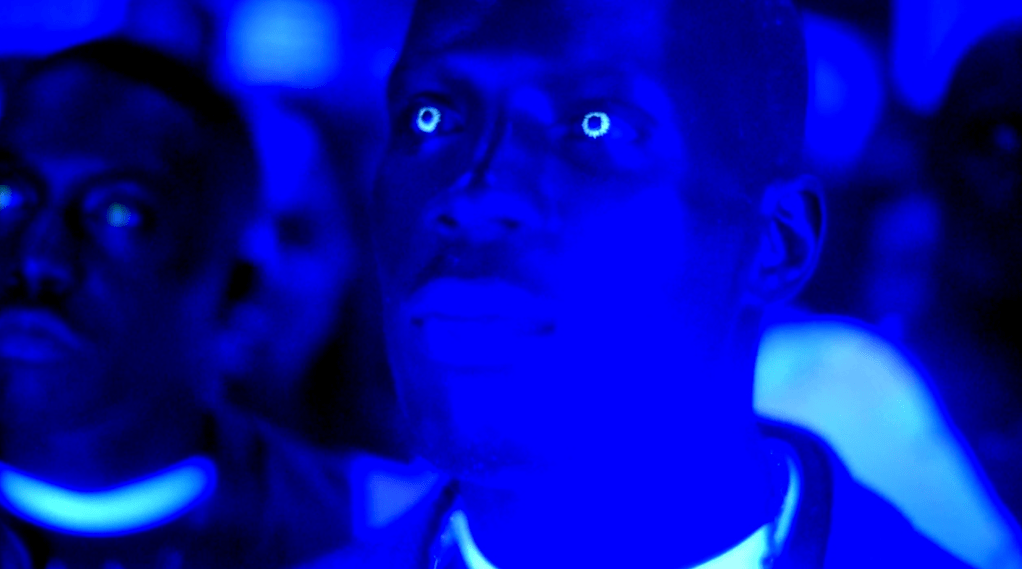
The most common refrain directed at Hype Williams’ first and only attempt at feature filmmaking, 1998’s Belly, is that it plays like an extended version of one of the countless music videos he’d at that point been helming for nearly a decade. Then and in most circles now, that characterization was meant to be an insult — a snide assertion that for all the public-image-crystallizing visual brio Williams brought to the music-video form, he didn’t have it in him to turn what amounted to a snack-size delicacy into a full, hearty meal.
I and the majority of Belly’s other defenders won’t pretend its storyline is particularly engrossing, or that its performances — especially Nas’, who as the film’s purer-hearted second lead is committed to sleepily flat line readings, no matter how serious the situation — can shake off the feeling that we’re watching a musician try out acting rather than a musician proving that their acting chops are on par with their studio savvy. Its leads, DMX and Nas, play, respectively, ill-tempered and increasingly disillusioned small-time criminals and best friends who scale up by wading into the heroin-trafficking business. The short-term thrills of fast money and quickly snowballing power sour just as swiftly, self-help book-reading Nas the first of the two to realize that the all-but-inexorable consequences are more than likely going to be far bigger than either can handle.
Rote crime thrillers are a dime a dozen. Rote crime thrillers that look as amazing as Belly have been in such short supply since its release that time has had a way of making the humdrum storytelling of this once-largely-dismissed movie forgivable. The film tells you plenty with Malik Hassan Sayeed’s photography. It has a big appetite for silent-movie-style tinting — usually scarlet reds and frosty blues — and vertiginous angles that in hands less knowing than Williams’ would feel deeply wrong. (As is the case with his music videos — acclaimed, among other hallmarks, for their futuristic funhouse feeling — that wrongness only ever comes across as audaciously inventive; it makes filmmakers who don’t as much prioritize composition and texture seem like they’re going through the motions.) According to DMX in an oral history about the film’s making in which Williams did not participate, the filmmaker was reportedly adamant about slathering his actors with baby oil in certain scenes so that their skin would maximally gleam for the cameras.
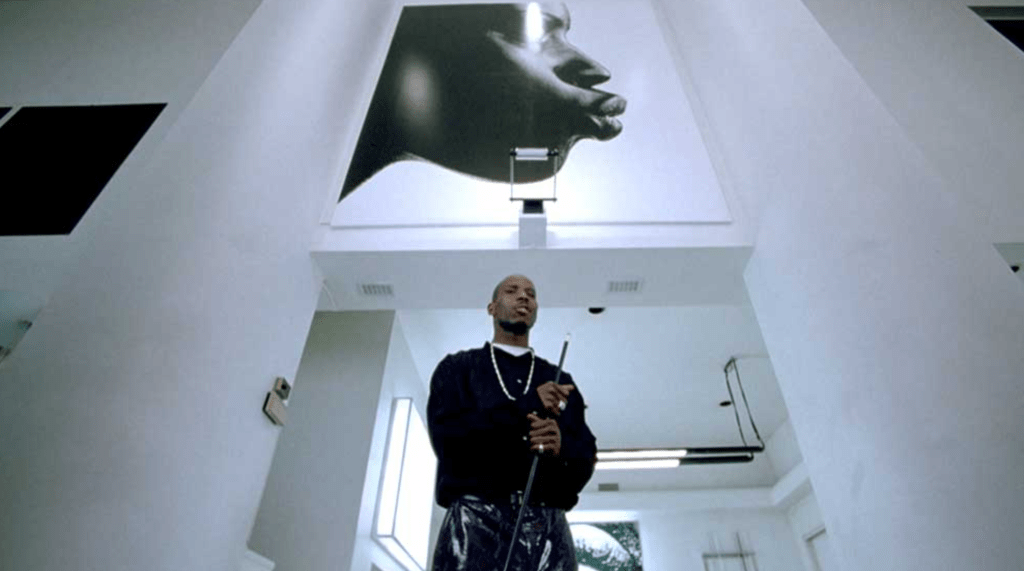
DMX in Belly.
Williams’ struggles with pen-to-paper dialogue and narrative momentum never stain his visual milieu. Its dangerousness is couched in illicit glamour even as the film wobbles into its third act, which is wrought with a heaping of crime-doesn’t-pay moralizing that eventually plants it firmly in anticlimax. Belly never surpasses its great first impression: a slow-motion, blacklight-saturated nightclub shootout that nearly in full uncoils without a sound, the only thing heard an a capella, non-diegetic rendition of Soul II Soul’s “Back to Life” that vacuums all the air out of the room enough to make the first bullet audibly fired make you jump. But the visual splendor never subsides. Williams boosts the mundane — DMX’s live-in girlfriend (Taral Hicks) padding around their plush mansion in white lace, scraps of multicolored confetti raining down on Times Square on New Year’s Eve — into something more sublime. It’s a tragedy that he’d never again make a movie, exclusively retreating back to the form on which he built his reputation. A purportedly stormy shooting process, often obstructed by creatively motivated quarrels between Williams and the movie’s financiers, more than probably can take most of the blame for that withdrawal.
Williams injects both Belly and the music videos that preceded and succeeded it with a celebratory quality. Regularly assisted by his soft spot for wide-angle and fish-eye lenses, his stylishly disorienting sensibility only heightened the public images of the stars with whom he collaborated. The off-kilter visual planes he put them on tacitly communicated that they ought not to be looked at as mere mortals but someone transcendent enough to warrant their own distinct visual language.
Watching and being held rapt by Belly, though, also made me think about the nefariousness on the other side of Williams’ skillful image-making. Nas’ ex-wife, the singer Kelis, has alleged physical and mental abuse at the hands of her former husband. Frequent Williams collaborator R. Kelly makes multiple appearances on Belly’s soundtrack. Williams so consummately helped make stars that it made it naturally harder for the public to meaningfully accept the sometimes-unforgivable human fallibility to later come to light. Williams’ ethically dubious decision to work with an artist like the disgraced Kanye West as recently as last year leads one to speculate about the extent to which he might have turned a blind eye to what would eventually be publicly disclosed about some of his clients. The decades have mostly been kind to Belly, but its ultimate sermonizing — that money and power corrupt, points made by an actual preacher character to a rueful DMX — hits differently now.

