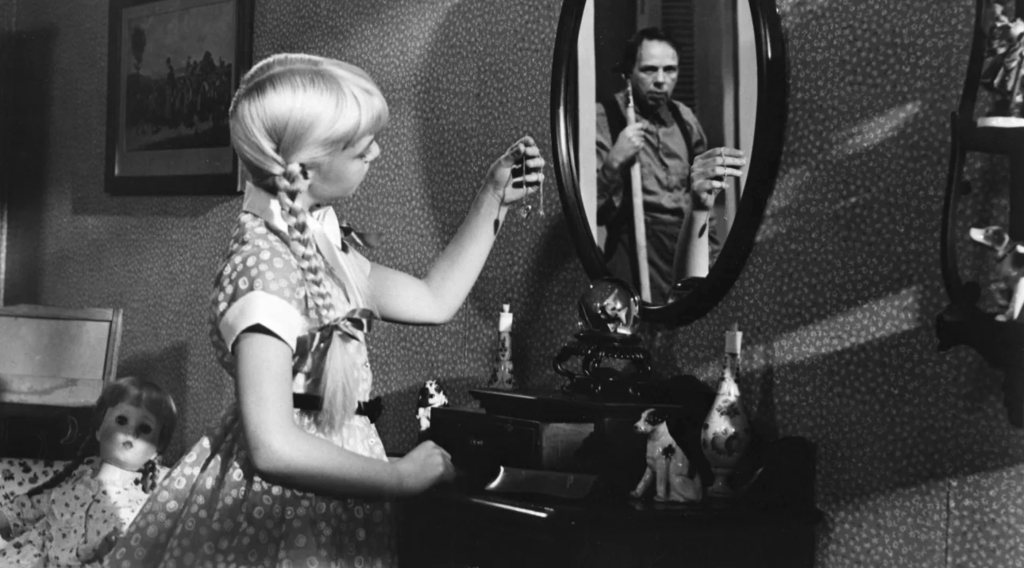
Most people probably recognize The Bad Seed (1956)’s premise without actually having seen it. Arguably responsible for a subgenre unto itself thanks to its pioneering commercial and critical success, it’s been echoed by the likes of Village of the Damned (1960), The Omen (1976), The Good Son (1993), Orphan (2009), and myriad others: What if my cherub-faced child was actually deeply evil?
It isn’t unreasonable to posit that The Bad Seed endures not because it set an exceptional don’t-fuck-with-the-original precedent but because it’s over the top in a way that makes it impossible not to forget before it’s even gotten near its closing credits. Its central creepy kid, Rhoda (Patty McCormack), couldn’t be creepier. “There’s a mature quality about her,” one concerned adult says of this 8-year-old, “that’s disturbing in a child.” Her helmet of shiny white-blond hair is pulled into scalp-tugging pigtails. She skips around in frilly, costume-like dresses and rehearsedly introduces herself to guests with curtsies like a robot who’s been programmed to act like a little girl; she plays piano only when the movie needs to show the depths of her emotional insensitivity. And she gets breathtakingly mad as hell when she’s, say, talking about a school assignment a much-resented peer did better on and subsequently won an award for. On the same day a classmate dies during a school-hosted picnic — a tragedy the film wastes no time nudging us to think was a murder perpetrated by its wee maybe-villainess — Rhoda is freakily unperturbed. “I thought it was exciting!” she exclaims; then she needles her mother upon arriving home to make her a peanut-butter sandwich, since the picnic, she groans, got derailed before anyone could have lunch.
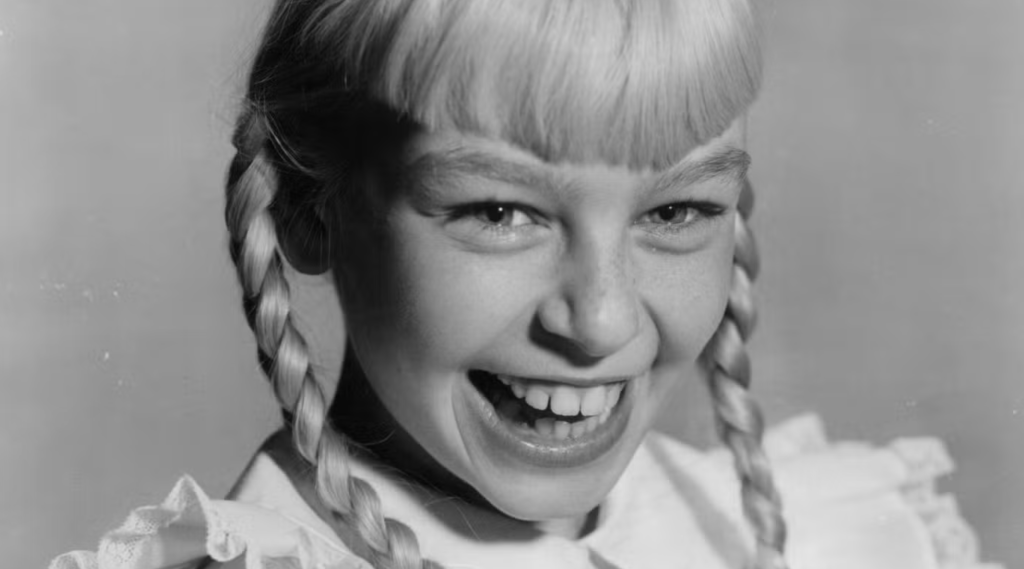
Patty McCormack in The Bad Seed.
The franticness of Rhoda’s mother, Christine (Nancy Kelly), is drained, meanwhile, of much of its I-wouldn’t-want-to-be-in-her-shoes poignancy because Kelly does so much teary shouting that her voice, especially during the film’s back half, gets almost comically Sahara-hoarse. (McCormack and Kelly were both nominated for Oscars, deserved purely for their mutual commitment to the bit.)
The Bad Seed probably would not have spawned so many spiritual successors — nor would its horror-genre iconicity persevere — if it weren’t so overwrought and campy. But its campiness is exactly why it might so quickly lose you emotionally. The internal battle Christine has for most of the movie — she’s forced to confront the painful question of whether her daughter is capable of murder, and whether she should protect her or protect a public potentially endangered by her easily homicidally angered progeny — is immediately emptied of tension. A more average-acting kid would make the worst-case-scenario query far more empathetically torturous. Maybe it’s actually wrong of me to think my daughter could do what I think she’s done. But hear Rhoda say only a few sentences, with her pinched-skin tone and velociraptor eyes, and all you can do is get impatient for Christine to have the sort of clarifying realization the movie takes a long time getting to.
This also is a 70-year-old movie wont to offer the psychobabble that sociopathy is something potentially inheritable, a happy and healthy home no match for what’s innate. (It’s revealed, midway through the film, that the adopted Christine’s mother was a best-in-her-class serial killer who avoided suspicion and capture for a long time because she was savvy enough to avoid a recognizable modus operandi; the urge to kill skipped over a generation, her daughter shuddering at even the slightest gossip over a recent poisoning case the local newspapers have latched onto.)
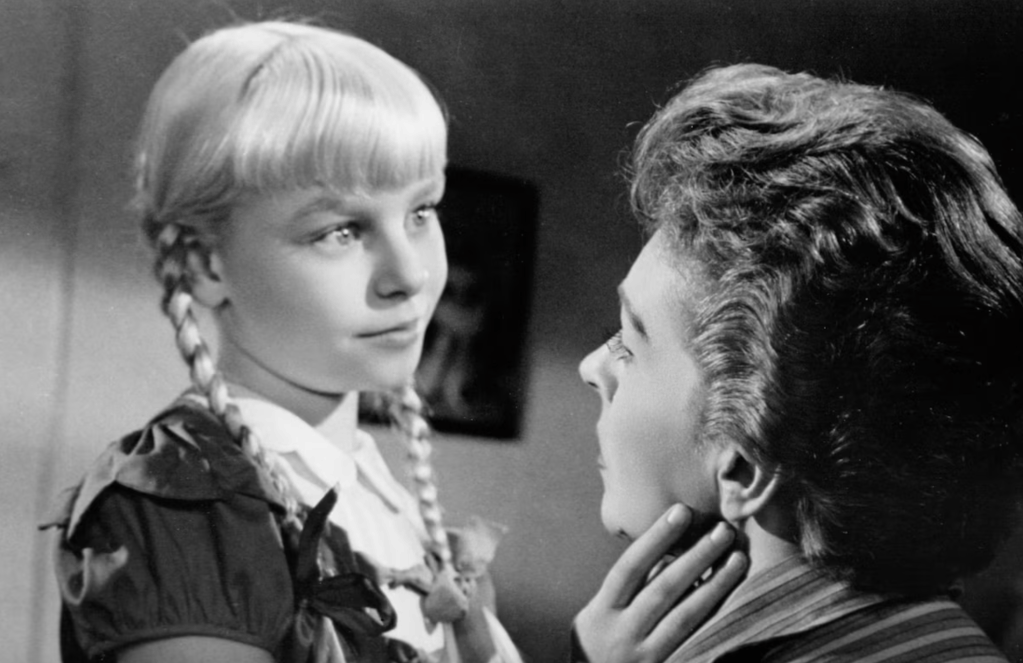
Patty McCormack and Nancy Kelly in The Bad Seed.
The Bad Seed is uncomfortable remaining encased in the darkness it proffers, too: A pre-closing credits montage highlights the cast as if they were in the opening theme of a sitcom, the all-smiles accession concluding with Kelly spanking the young actress who’s been faux-tormenting her all film long. The movie’s director, the extremely prolific Mervyn LeRoy, will always have my respect for directing movies as distinctive and varied as Little Caesar (1930), Gold Diggers of 1933 (1933), Heat Lightning (1934), Random Harvest (1942), and Million Dollar Mermaid (1952), but the fact that The Bad Seed’s laughable just kidding of a final statement was his idea and not the studio’s is bad enough to undo the many years of goodwill his professional dependability wrought.
Yet I still respect The Bad Seed for its daringly nasty-for-1956 conceit; its determination to puncture holes in the wholesome portrayals of suburbia that were, in TV and movies of the time, generally the default; and its claustrophobic chamber-piece commitment to its stage play source material. (Kelly notably inaugurated her role on Broadway.) It mostly dwells inside the walk-up in which Rhoda, Christine, and never-around army-man patriarch Kenneth (a note-perfectly clueless William Hopper) live; the pressure-cooker squeeze of reality makes Christine squirmier and squirmier inside its beige walls. There, a procession of guests — Rhoda’s passive-aggressively insinuating teacher (Joan Croydon), Christine’s secret-keeping father (Paul Fix), an older upstairs neighbor (Evelyn Varden) who fawns over Rhoda, and most stubbornly Rhoda’s dead classmate’s self-soothingly sloshed mother (Eileen Heckart, doing enough drunk acting for at least two performers) — come in one after the other. They hold up, in their own ways, proverbial mirrors showing Christine what she would rather not see.

