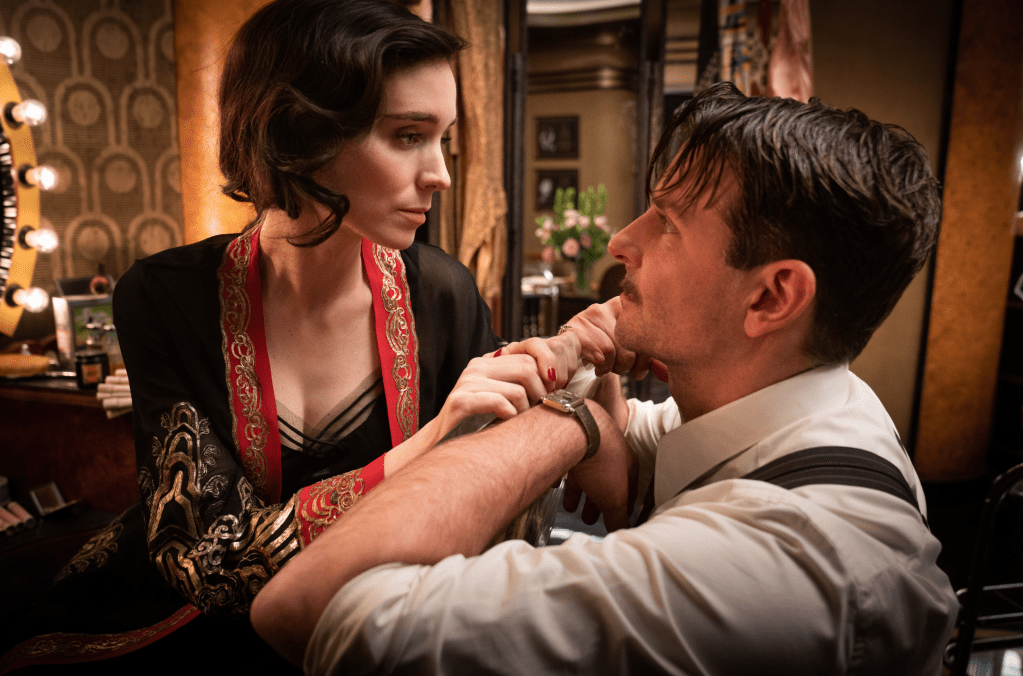
William Lindsay Gresham’s 1946 novel Nightmare Alley centers on a conman who muscles his way through modest carny life into high society with a slippery-but-successful mentalist act. One might ultimately classify his story as classically tragic if said conman, Stanton Carlisle, were at any point defined as something other than a manipulative liar. Instead, the practically karmic Nightmare Alley is more a queasy drama chronicling the spiritual rot that sets in when one’s desperate climb toward success necessitates mercilessly squishing other people to reach the much-dreamed-of summit. (The final nail of Carlisle’s spiritual coffin is hammered in when, during the back half of the story, he unwisely decides to take his “psychic abilities” to wealthy grief-addled clients, overhauling his all-in-good-fun deception for something more wantonly cruel.)
This unpleasant material was brought to moviegoers pretty immediately by 20th Century Fox. Directed by Edmund Goulding and starring a going-against-type Tyrone Power (he usually played dreamboats and swashbucklers and was sick of both), the 1947 adaptation was a compulsively watchable thriller about one seemingly amoral man’s ruin. It wasn’t particularly liked by critics or audiences upon release, but the movie would eventually find its way as a film noir classic, in large part because of Power’s career-best work and Goulding’s embrace of material that by the strict standards of the classic Hollywood era was practically polluted.
Read the rest of the column on Nightmare Alley and Drive My Car at 425.
 Peterson Reviews