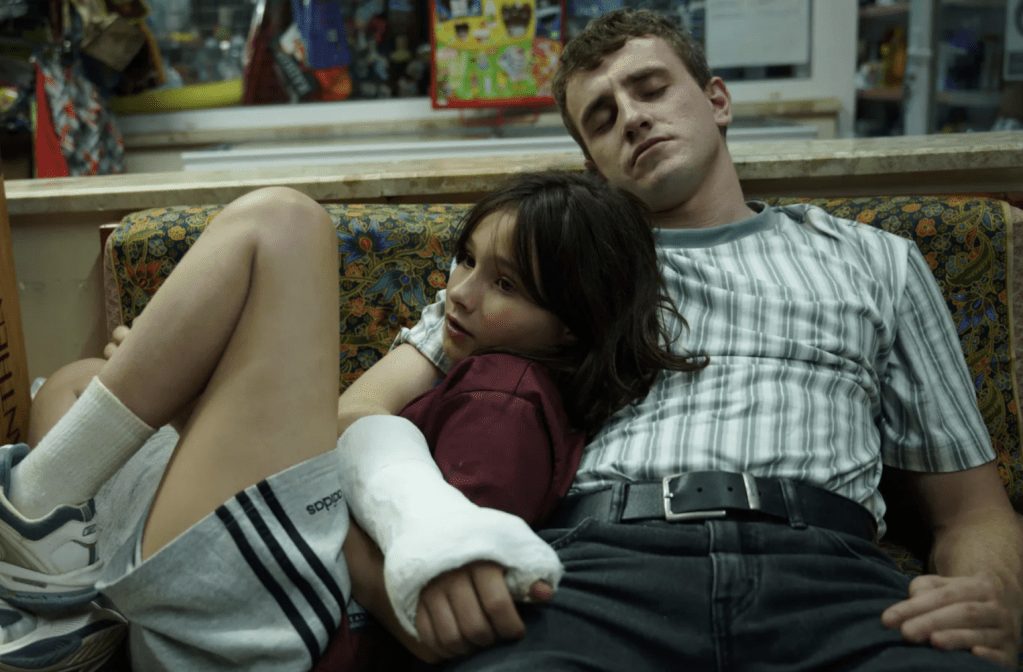
Time is the most reliably effective tool to see your parents with sharper focus. In Aftersun, Scottish writer-director Charlotte Wells dramatizes, with that retrospective clarity, a pivotal period in a young woman’s ostensibly now-difficult relationship with her father: a brief holiday in Turkey, when she was 11 and he 31, in celebration of her birthday. The daughter-father pair are Sophie (Frankie Corio) and Calum (Paul Mescal); though the majority of the film unrolls during that vacation, Wells indirectly makes clear through a handful of super-brief images of an adult Sophie (now 31 and a parent herself) that this all should be considered less a play by play than a transfer of a memory bank into a movie. You see things as 11-year-old Sophie literally did while being aware of which elements might strike her differently in her 30s.
Hushed and languid, Aftersun captures the feeling of a reminiscence whose center continues to hold but whose surrounding minutiae will inevitably slip away. We don’t get many super-specific details about Sophie and Calum. But partly because of evocative work from Mescal and Corio, we come to feel like we know them — that they’re real — anyway. We hang on to fleeting actions to fill in gaps: the familial way Calum tells Sophie’s mother, with whom the 11-year-old lives full time back in Scotland, that he loves her over the phone; his hasty hacking-off of the right-arm cast he comes to Turkey with; his almost aggressive insistence on teaching Sophie self-defense maneuvers after she plays billiards with some slightly older boys; one moment, alone, where Calum slouches on the side of the bed and sobs.
Read the full column, on Aftersun and Causeway, on 425.
 Peterson Reviews