The thing Elizabeth Banks’ Cocaine Bear gets most right in its aping of the gimmicky, high-concept B movies of the 1970s and ‘80s is its way of being diverting enough while ultimately feeling like it hasn’t lived up to the nebulously crazy hypotheticals we’d been cooking up in our heads about it beforehand. It’s very “not bad,” probably better off being purely conceptual and not real; it’s on the whole no greater than it has to be and no worse. But I also found it pretty easy to like, what with how much fun it has with its built-in stupidity, how much it evokes the kinds of monster movies you don’t really see anymore, and how much it mostly gives you what you went into it wanting.
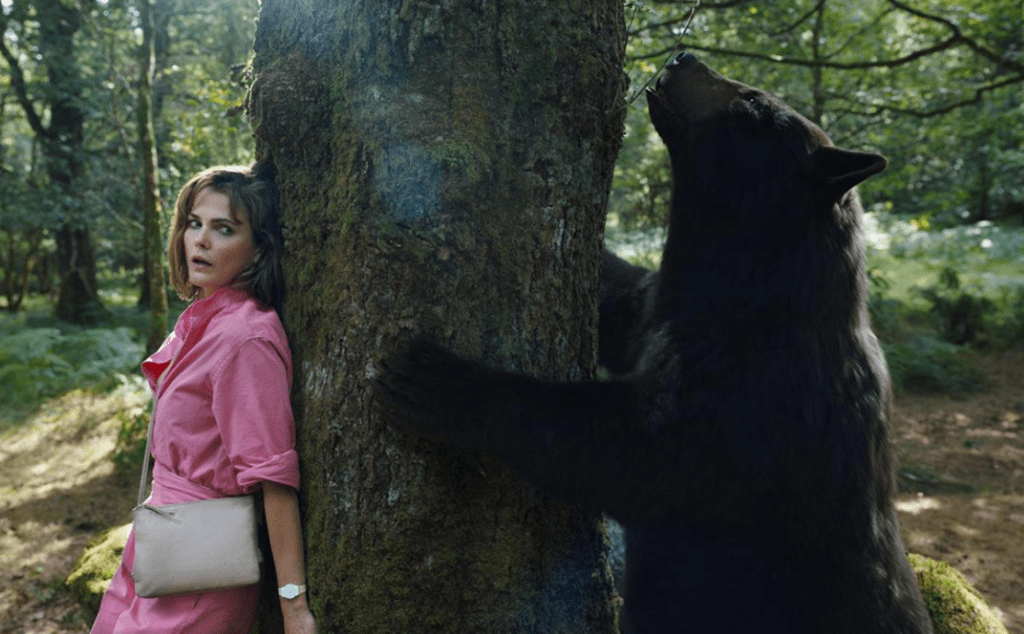
Cocaine Bear is based on a true story. It also takes such liberty with said true story — that in 1985 a black bear in northern Georgia consumed about $15 million of cocaine because of a super-botched drug drop and died — that the truest things about this “adaptation” are pretty much just the year in which it’s set and there being a bear with a body full of blow involved. In Banks’ movie, the tragic antagonist becomes a kind of Jaws figure, her by-nature harmlessness warping into bloodthirstiness apparently driven by a desperate need for a fix. A coterie of characters, including a hot pink-clad nurse (Keri Russell) looking for her young daughter (Brooklynn Prince) who’s skipped school to deface a nearby waterfall with her buddy (Christian Convery) and a drug kingpin (Ray Liotta) trying to patch up the messed-up drop, accidentally puts themselves in this furry predator’s path when they wander into her verdant domain. There are a lot of decent opportunities to kill this unlucky bear — many characters tote firearms — but they’re either puzzlingly not taken or comically very off their mark when they are, stretching this game of coked-up cat and mice well into the night.
Read the full column, on Cocaine Bear and Huesera: The Bone Woman, on 425.
 Peterson Reviews