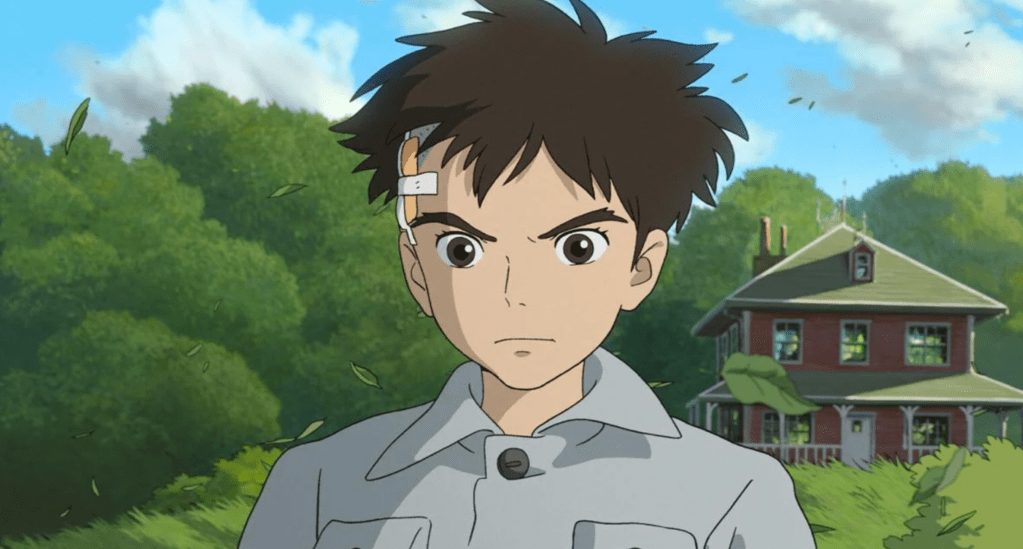
You can depend on the hand-drawn fantasies of Hayao Miyazaki (My Neighbor Totoro, Spirited Away) to suggest a child’s playtime daydreams turned real, both thrilling and a little frightening in the wide-open possibilities they pose. The now-82-year-old’s latest movie, The Boy and the Heron, is as packed with wonder as you’d expect from a filmmaker the writer Margaret Talbot once memorably christened the world’s first auteur of children’s entertainment. But with its upped presence of autobiographical detail and a character you can’t help but see as a stand-in for Miyazaki himself, much of the movie is also colored by the kind of self-interrogation and awareness of one’s mortality betraying an aging artist thinking particularly hard in the twilight of his life about his legacy — the unconscious motivations guiding a career nearing the middle of its seventh decade. One might call the film a great swan song if there wasn’t word of Miyazaki already being hard at work on his next project.
The Boy and the Heron begins with tragedy. It’s 1943 in war-torn Tokyo and the mother of our 12-year-old protagonist, Mahito (voiced by Luca Padovan in the film’s English dub), has been killed in a hospital fire. Some time later, Mahito; his father Shoichi (Christian Bale); and the latter’s pregnant new wife Natsuko (Gemma Chan) — who also is the younger sister of his late spouse — decamp from the city’s din to the quiet of the countryside.
Read the full review on 425.

