

he pastoral setting of playwright Annie Baker’s feature-filmmaking debut, Janet Planet, has an enchanting, all-my-problems-would-go-away-if-I-lived-here quality until its characters remind you that there is only so much gorgeous golden hours and breezy afternoon walks by the water can do for the soul. “You know what’s funny? Every moment of my life is hell,” Lacy (an astonishing Zoe Ziegler), the 11-year-old daughter of the single-mother title character (Julianne Nicholson), confesses one night. After a little more back and forth, Janet agrees: “I’m actually pretty unhappy, too.”
Janet Planet is set in 1991, in the middle of a long, hot summer, mostly at a quaint cabin with pleasing wood paneling Janet has bought in rural Massachusetts for reasons obscured. She subsists by practicing acupuncture in a basement clinic the movie is named after and using whatever is left of an alluded-to inheritance from her late grandfather.
The home is stifling, sticky with seasonal heat and what emerges as a claustrophobic mother-daughter relationship. Lacy is shy, albeit a surprisingly direct conversationalist, and a little dorky; she passes the time with piano lessons up the road and by staging little plays for her own pleasure with miniature figurines whose heads she festoons with crinkly Lindor-truffle wrappers. She doesn’t have any friends and is acutely aware of it (though in the brief flashes we see of her with other kids, they generally seem to like her); she clings to her mother so tightly that she can’t sleep if she isn’t lying next to her, the bodies not in some way touching.

Julianne Nicholson and Zoe Ziegler in Janet Planet. All imagery courtesy of A24.
Janet, in return, seems a little cramped, prone to relying on someone else to tell her where to go in life to ease some of her maternal obligations. She approaches relationships, whether romantic or platonic, with such all-in, one-after-the-other enthusiasm that the chaptered film names each of its acts after a person who temporarily waltzes into Janet and Lacy’s lives and alters something about it. (They’re played by Will Patton; Elias Koteas; and Sophie Okonedo, who centers the most emotionally immediate section of the film as a woman trying to escape what she promises is not a cult that has taken everything from her.) Janet’s capricious lifestyle betrays a hunger for adventurousness and kindles a tendency for bad decision-making; she’s also trying to maintain some distance from a daughter she feels is watching her even when they aren’t in the same room.
Every child inevitably starts to notice that the adults they look up to, parent or not, are less deities than fallible humans. Janet Planet is about that, its unhurried pace and generous use of pregnant-with-meaning quiet redolent of the slow process of unconscious realization. An early sign of the gradual shift comes when Janet requests Lacy give her relationship advice. You sense nothing in Nicholson’s voice suggesting she isn’t genuinely asking or that she wouldn’t do exactly what Lacy says — not because of wanting what’s best for her daughter, but because she truly doesn’t know what to do.
Janet Planet unfurls from what feels like Lacy’s transitional point of view. As noted by the critic Stephanie Zacharek, we don’t sense any of the nostalgic warmth that would imply an adult looking back. Everything seems to spring “directly from the fierce, untamed mind of a child.” The movie toes a line; you can almost feel Lacy trying to hold on to more naïve ideas of her mom and her life while also reaching the age where you can’t ignore a newly critical discomfort with what’s in front of you. You can’t help but wonder how the coming decades will go. Will this period of intensity calm, or will it unhealthily compound? Speculation about what could be isn’t indulged by Baker. Making it through the present is difficult enough.
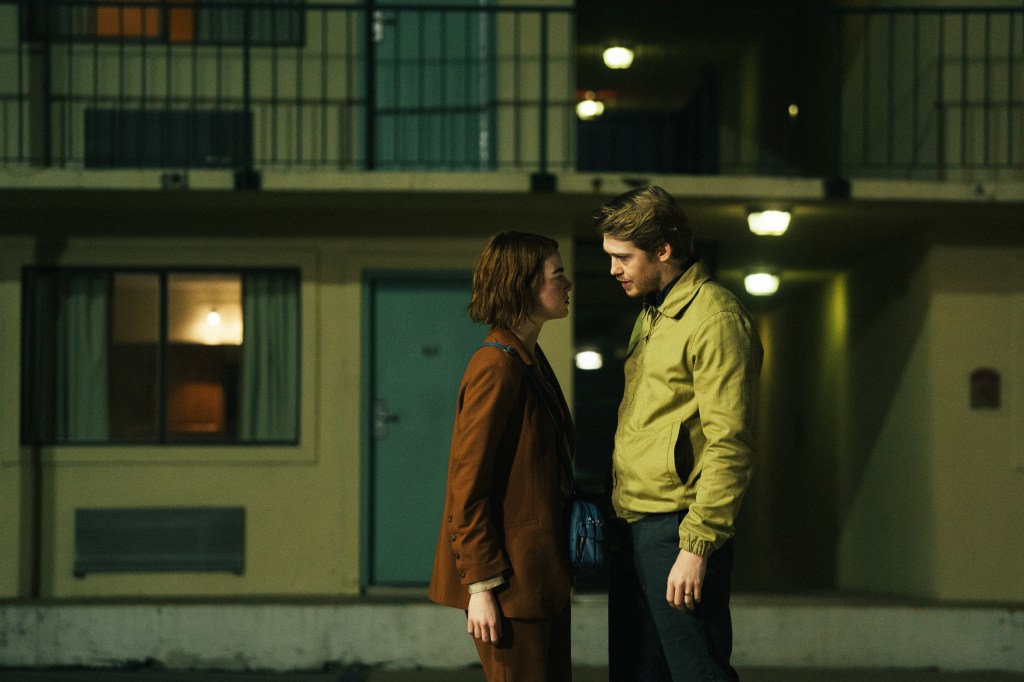
Emma Stone and Joe Alwyn in Kinds of Kindness. Photo by Atsushi Nishijima, courtesy of Searchlight Pictures.
Kinds of Kindness, Yorgos Lanthimos’ follow-up to last year’s Poor Things, left me so cold that something seemed to have died inside me in the theater. It offers a triptych of tales that in some way connect to a mysterious man known only as R.M.F. (Yorgos Stefanakos). They recycle the same actors — Emma Stone, Willem Dafoe, Jesse Plemons, Joe Alwyn, Margaret Qualley, Hong Chao, and Mamoudou Athie — in roles of varying sizes, their hairstyles and ‘fits rotating like clockwork. The throughline in Kinds of Kindness’ stories, aside from their R.M.F. connection and their performers, is their insistence on being dark and unsettling while only proving notionally both.
Kinds of Kindness amounts to an endurance test-slash-acting exercise that allows, its exception found in professional freak Dafoe, its stable of actors to be bold in ways they rarely get to, something that becomes more and more of a one-sided thrill the longer the film’s tedious, repetitively dour three hours drags along. The film’s release comes unusually quickly after its predecessor (it premiered at Cannes only six months after Poor Things’ U.S. debut); it’s turned whatever enthusiasm I had for Lanthimos’ similarly fast-released Bugonia, due next year, into dread.
 Peterson Reviews