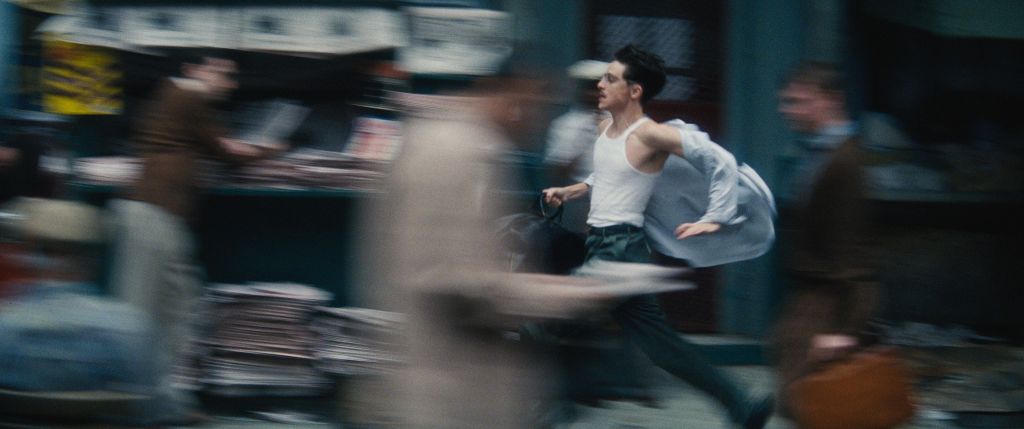
The currently uncoupled Safdie brothers reintroduced themselves as individual filmmakers last year by making movies that complementarily trained their gaze on men hitching themselves to a niche sport: MMA fighting in Benny’s The Smashing Machine; table tennis in Josh’s Christmas Day-released Marty Supreme. The aesthetically studied, early-aughts-set The Smashing Machine has no real urgency besides its obvious hope that its more-vulnerable-than-usual Dwayne “The Rock” Johnson performance will net its Herculean lead an Oscar nomination. Though somewhat guilty of, to borrow tired-by-now meme parlance, nacho-reheating — it reiterates the Safdies’ “pathological fuckup makes stressfully bad decisions for an entire movie” calling card — Marty Supreme is, by contrast, lapel-grabbingly assertive from the outset. It’s conducive to conclusions that Josh, directorially speaking, had been the sibling with cannier instincts in the two’s acclaimed collaborations.
The sports-match centricity of Josh’s and Benny’s respective 2025 forays as singular talents can’t help but make you see their solo endeavors in competitive terms, as unfair as that impulse could be accused of being. But as The Smashing Machine and Marty Supreme eagerly drive home, the world is an ungenerous place. Constituting two and a half hours of frantic striving, the 1952-set Marty Supreme is more aggressive about making that point than the comparatively even-keeled The Smashing Machine. Doing the floundering is a 23-year-old New Yorker named Marty Mauser (Timothée Chalamet, fitted with a Groucho Marx-thick monobrow and constellations of faux acne). He’s a very good shoe salesman who would much rather be a very good — more like best-of-the-best — ping-pong player. He believes he’s uniquely positioned to be the U.S.’s face of the sport, something he thinks can be solidified if he releases his own line of specially branded sherbet-orange balls.
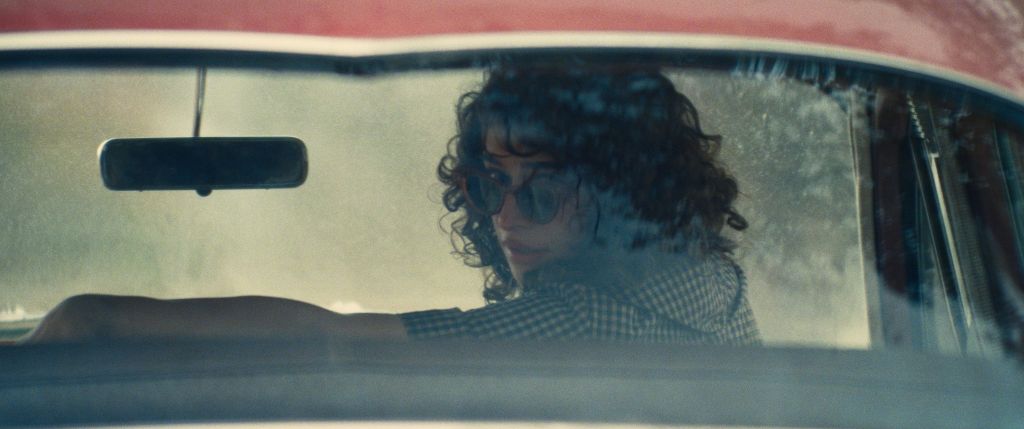
Odessa A’zion in Marty Supreme. All Marty Supreme imagery courtesy of A24.
Anachronistically soundtracked with chintzy 1980s pop that suits its lead’s delusions of grandeur, the film chronicles Mauser’s sometimes cosmopolitan attempts at major title-winning. It’s interspersed with dripping-with-sweat games that are most thrilling when Mauser is up against his sworn, and definitely one-sided, enemy: a phlegmatic table-tennis ace (Koto Kawaguchi) from Japan whose World War II-induced hearing loss only helps him better zone into a day’s match. But more of Marty Supreme is taken up by the misadventures its lead gets into back at home. (It’s an uncommon sports movie where the sport around which everything revolves is more dreamed about than actually depicted.) Mauser is guided by a cock-in-the-walk, follow-your-gut approach to life — he manages, for instance, to woo a comeback-staging movie star who peaked in the 1930s (Gwyneth Paltrow, shrewdly cast) simply by giving her a charged, disarmingly confident phone call; he talks his way out of bunk bed-cramped competitor quarters for a deluxe room at The Ritz for which he’ll eventually be hair-curlingly indebted — that brings immediate gratification whose price is usually blood-curdling consequences.
Marty Supreme doesn’t present the anxiety-inducing aftermaths of Mauser’s foibles with tidy episodicness. They accumulate to a point of it feeling like each of his limbs was being pulled by horses galloping ahead in opposite directions. But when something terrible happens, the extremeness of the terribleness makes you laugh more than shudder. Safdie, who co-wrote the movie with regular collaborator (and, one could say, stealthy third brother) Ronald Bronstein, is good at refashioning a dire circumstance — a bathtub plummeting through a ceiling and mangling the arm of the man (Abel Ferrara) whose apartment sits underneath; a bumbling shootout at the home of an out-of-town man who’s stolen a keenly-wanted-back dog — into bruising slapstick.
A conspicuously Academy Award-gunning, probably never-better Chalamet is flexible to whatever Safdie requires of him. So is the rest of the (typically for Safdie) smartly cast ensemble. Continuing the brothers’ yen for either introducing new (or making you see anew veteran) actresses, Odessa A’zion — as a ringleted married woman with a voice that sounds, much like her aurally iconic mother, like scraped metal whom Mauser impregnates at the start of the film — is especially a revelation.
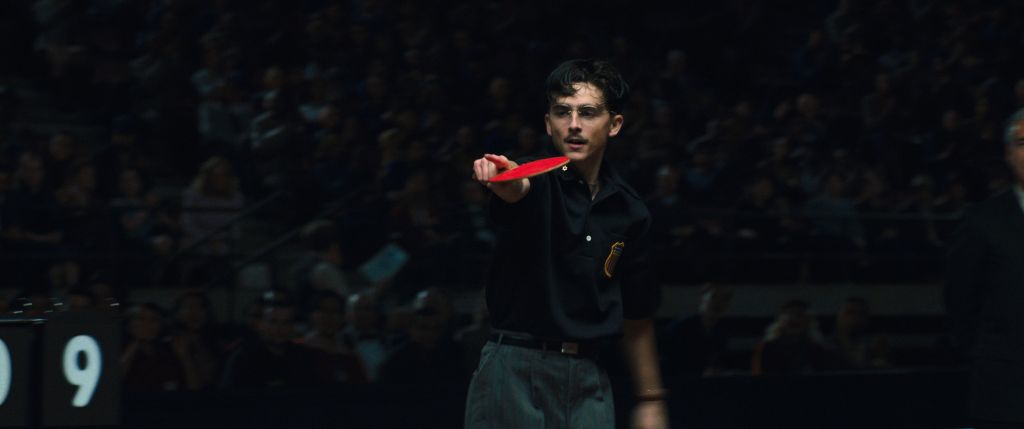
Timothée Chalamet in Marty Supreme.
You don’t root for Chalamet’s Mauser because he’s very likable or charismatic. His big-headed audacity and stray cat-like talent for wriggling out of danger make you hanker to see what mess he’ll next get himself into and how he’s going to find a way out of it, much like Uncut Gems’ Howard Ratner or Good Time’s Connie Nikas. (Wesley Morris has put it more concisely: “He’s an asshole, but I want him to win anyway.”) But Marty Supreme is more stomachably entertaining than its more pronouncedly unpleasant, frequently heart attack-compared predecessors. It’s more mainstream-friendly than the Safdies’ other movies, a feeling further enforced by its more glossy than grimy look (courtesy of cinematographer Darius Khondji, who also shot Uncut Gems), higher-than-before budget, and unexpectedly sunny conclusion.
Mauser almost improbably winds up with a happy ending that might make all his desperate American dream-chasing worth it after all. It would feel more pat and sentimentally unearned if it didn’t also arouse a more-than-sneaking suspicion that it won’t last. “Drama is very important to me,” Mauser will say at one point. “I can’t undercut the drama.” What would be less dramatic for this reckless, stir-crazy character than contentment?
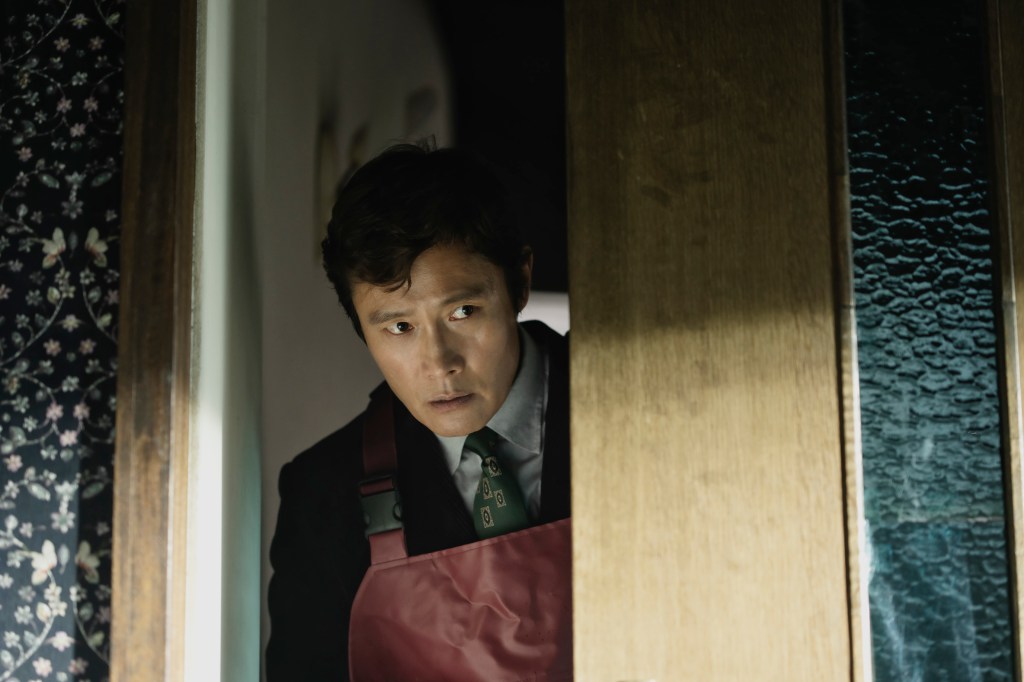
Lee Byung-hun in No Other Choice. Courtesy of Neon.
Overstylized and overly daffy No Other Choice has a juicy-sounding premise: a distressed unemployed man starts killing those he thinks will be selected over him for the job opening he really wants. But it’s nearly entirely wasted on the fussier-than-ever aesthetic and tonal caprices of director and co-writer Park Chan-wook.
This long-in-the-making adaptation of Donald Westlake’s The Ax (1997) starts off strong, satisfyingly satirizing the dehumanizing coldness with which layoffs happen and the subsequent humiliations of flop sweat-slick LinkedIn culture. (Its anti-hero, the Lee Byung-hun-portrayed You Man-su, has been at the paper company he’s been let go from for 25 years and has been in a managerial position for most of them.) No Other Choice’s title is first repeated, and it will be many times, by the eye contact-avoiding American company men responsible for swallowing the corporation Man-su works for. Man-su’s soon attending what looks like a self-help group for the recently riffed where the organizer doesn’t have many practical tips for jumpstarting a vocational second life besides woo-woo-adjacent, manifestation-y pointers. Interviews never go well for this generally overqualified man who has a tendency either to drone on too long or be jokingly pithy at the wrong time. He’s not helped, either, by his understandable but ultimately unwise refusal to apply for anything not in the paper industry, which AI — whose dire infiltration of the job-application process itself isn’t nearly explored as it could be — is gutting.
When Man-su’s wife, Lee Mi-ri (Son Ye-jin, far and away the best thing about the movie), matter-of-factly tells her husband and their two kids (Woo Seung Kim and So Yul Choi) how they’re going to downsize after Man-su’s severance package runs dry — that includes relinquishing their painstakingly renovated generational home and temporarily rehousing with Mi-ri’s parents the family’s fluffy pair of white-furred Golden Retrievers with his-and-hers doghouses — it feels like a knife to the chest. Mi-ri’s quick nabbing of a part-time dental-hygienist gig only twists the weapon. Though his despair is tangible and will be automatically recognizable to anyone who’s experienced protracted professional precarity, the development that Man-su’s not going to change up his approach to applications but, instead, start murdering the competition doesn’t feel like a natural progression. It’s such an out-of-left-field switch that even as it starts happening you’re not totally sure what he has in mind.
The crazy-making, toxic masculinity-informed agony might have been more clearly telegraphed if Park didn’t bog everything down with a surplus of nifty editing tricks and pervasive, often pratfall-dependent dark comedy. No Other Choice’s inundation of stylistic acrobats begins, after a while, to get annoying in their magic-trick relentlessness. And the near-refusal to be fully serious about anything undermines much of the empathy we might have for the escalatingly ruthless and delusional Man-su. Son is the movie’s most valuable asset because her character, aside from the sporadically seen kids, feels so much more like a fully formed person than Man-su. Her bewildered frustration with her suddenly unforthcoming, disappearance-prone husband feels touchable, while Lee, though laudably committed, is forced to put on bungling cartoon-serial-killer theatrics that are most of the time too goofy and/or contrivedly complicated to either be that funny or effectively tense. (It also, vexingly, takes what feels like forever for any blood to be shed, which is not to suggest that it’s unfair to an audience’s bloodlust but to a premise that rests so heavily on its all-but-promised nastiness.)
The most impactful murder is as upsetting as it is because Park, for once, deviates from the film’s wheel-spinning bedlam for something colder and face-to-face-intimate. The victim, who’s all but given up on paper sales in favor of hawking high-priced shoes so that he can support his briefly seen young daughter, is sympathetic, but that still doesn’t stop Man-su’s cutthroat determination. The venom of this particular section of No Other Choice is when it’s most potent, vividly translating with shocking brutality the extent to which Man-su’s soul has rotted, his one-time moral steadiness abraded by corporate inhumanity. No Other Choice leaves no doubt that Park is a talented showman; it would be more pleasurable to marvel at if it didn’t feel like his showmanship was getting in the way.
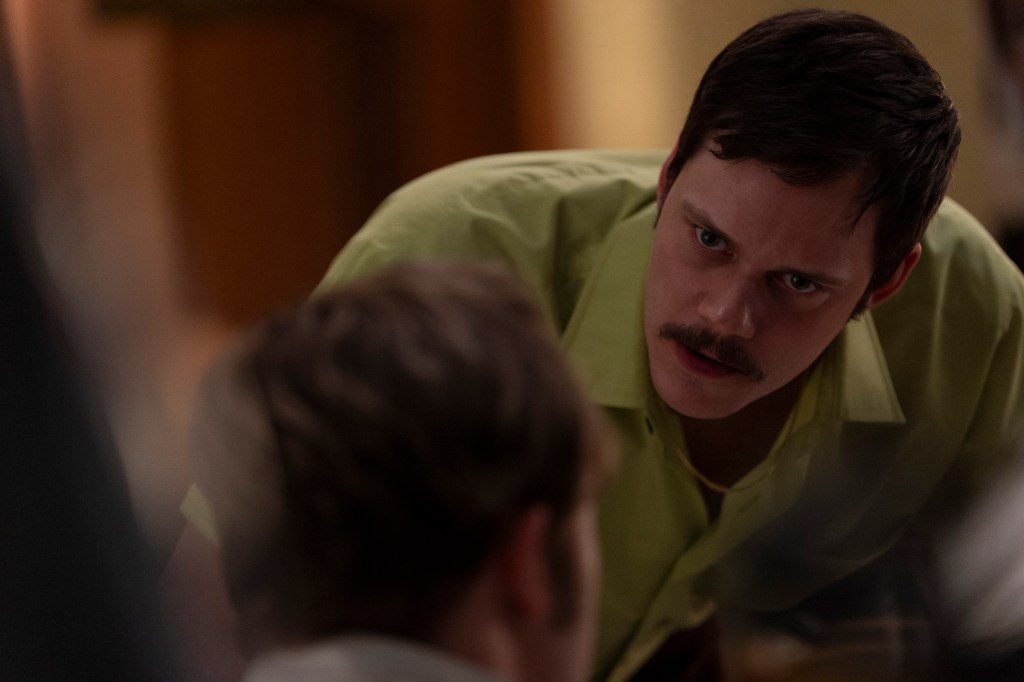
Bill Skarsgård in Dead Man’s Wire. Photo by Stefania Rosini/Row K Entertainment.
Aside from capitulating to the boring, and not here made worth it, “we have to cast younger and hotter people” trope that strikes true-story-based movies like clockwork, Gus Van Sant’s for-hire Dead Man’s Wire most disappoints for all around feeling like a small-screen sibling to Sidney Lumet’s far superior Dog Day Afternoon (1975). It’s not something one would expect from a director as consistently daring and surprising as the now-73-year-old Van Sant has been.
Further negative comparison-haunted by the presence of a drawling, splotchily tanned Al Pacino in a supporting role, the movie runs through a 1977 hostage standoff in Indianapolis. It’s between an aspiring businessman, Tony (Bill Skarsgård), and a mortgage broker, Richard (Dacre Montgomery), whom Tony alleges has wronged him. Tony directs his opponent to his cramped apartment after snatching his victim from his high-rise office. He confabs over the phone with release-minded police but most excitingly for the impulsive criminal a local radio host (Colman Domingo) who’d much rather be spending time with his wife and family. Tony keeps Richard from attempting to flee by employing the eponymous method: wiring a 12-gauge Winchester shotgun’s muzzle around his captive’s neck, which ensures that if Tony is incapacitated, the gun goes off. This does not sound like, but is, the work of someone who thinks of himself as gentlemanly. He habitually apologizes for his frustrated cursing and repeatedly assures anyone that will listen, with “some of my best friends are …”-style platitudes, that none of what he’s doing has anything to do with a disdain for the police.
When Dead Man’s Wire calms down from its self-consciously cultivated frenziedness — the initial kidnapping, the inexorable media circus centered by an unpersuasive Myha’la, who plays a scoop-thirsty TV reporter — to focus on Tony and Richard temporarily forgetting about the stakes and their clamminess to commiserate about their life’s difficulties, it starts to feel more natural, unrestricted by overarching narrative ambitions. It’s a shame, then, that that only takes up a sliver of this unconvincingly feverish, notionally topical movie. Its anonymous “one for them” quality wouldn’t feel so depressing, to echo critic Eric Zhu, if it seemed like Van Sant was allowed to make anything else anymore.
 Peterson Reviews