One of the Israeli-intelligence interview subjects of Naza believes that what his government has been perpetrating in Gaza following the Oct. 7, 2023, attacks amounts to genocide. Though he unhesitantly characterizes himself as an active participant, he also admits to finding his blood-spilling tasks “so insanely fun” in the “mission”-driven heat of the moment; there were no instances he can recall of his peers or supervisors voicing moral ambivalence about the indiscriminate, quantity-minded destruction of Palestinian infrastructure and life.
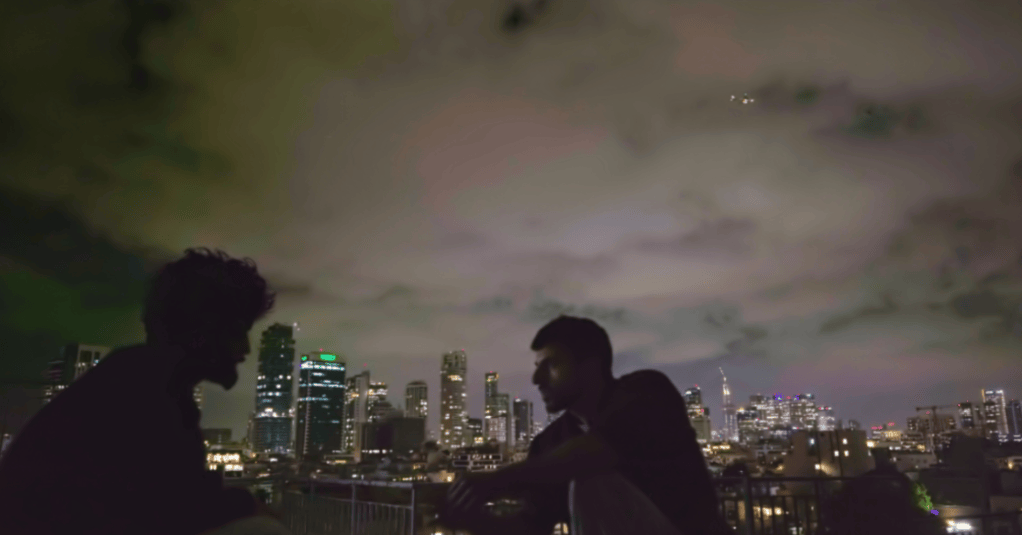
In Naza — directed by Yuval Abraham and Rachel Szor, who made up half of the filmmaking quartet behind the Oscar-winning 2024 documentary No Other Land — two dozen testimonials like that one morph to paint a horrific picture the Israel Defense Forces has inevitably and swiftly already denied since the film’s release. Comprised of nighttime interviews conducted, face to face, by Abraham on the murky rooftops of Tel Aviv from late 2023 onward, Naza hides in shadow the faces of jail-fearing IDF personnel. In sometimes granular detail — sheets of paper and pens are frequently used as supplements — they illustrate the planning, surveillance, and rhetoric feeding the last three-plus years of Gazan annihilation by Israel and its allies.
Naza’s anonymous subjects are variously remorseful, something suggested by their very participation in the project even when they don’t explicitly say it. But they nonetheless do not appear to have fully reckoned with what they’ve done. One man still considers himself and many others in his unit left-wing and not at all hateful of the Arab population they have played a part in systematically decimating. Another, who now finds himself able to empathize with Nazis who committed atrocities by day but still saw themselves as degree-holding average Joes by night, does not currently think of himself as on the same level as Hitler and his merciless cohort. The movie is a frightening record of just-following-orders mental gymnastics and the invoked-to-death, Hannah Arendt-coined “banality of evil”; no one is willing to give a self-lacerating answer when Abraham challenges attempts to soften their crimes against humanity. Commandeered by the kept-offscreen Szor, the film’s cameras regularly glide across and sometimes even peer into the high-rise apartment buildings flanking the interviews. Seen through a protective scrim of windows, the lives inside and the propagandistic TV news watched in living rooms complement the psychological and emotional distance the movie’s interviewees continue to maintain between their everyday task work and its tangible repercussions.
Abraham and Szor, both of whom are Israeli and made the film at much already-borne-out personal risk, don’t try to stoke sympathy for their protected participants. Naza — a title that refers to the dehumanizing euphemism for “collateral damage” used by the IDF that does not distinguish between children and adults — foregrounds the machinations of mass killing and the contradictions between internal versus public messaging, elucidated by people whose accounts largely bear no traces of emotion. The gravity of their actions hasn’t fully sunk in, in part, because the virtual-forwardness of their day-to-day tasks made everything feel tantamount to repeatedly referenced video games. “How can this keep happening?” one is likely to keep incredulously asking themselves every time new unconscionable footage or news reports emerge from Gaza, no matter how historically or contextually informed they are. Naza tells us some quotidian specifics; it remains unfathomable that this is what’s happening.
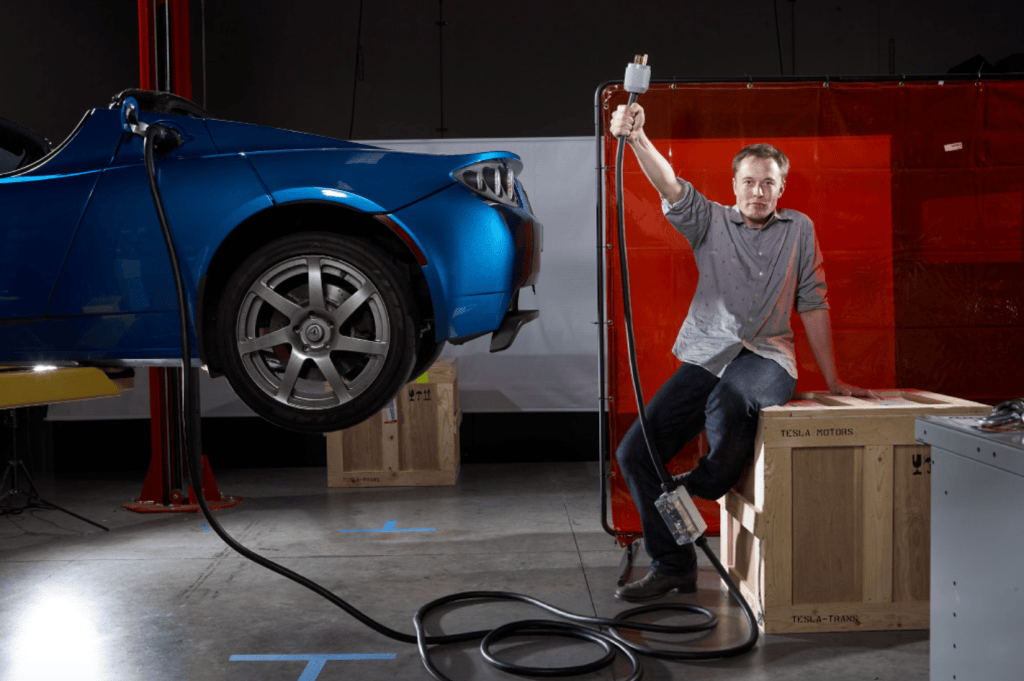
Elon Musk in Musk. Courtesy of Gregg Segal. Header image courtesy of The Guardian/JW Films.
Alex Gibney’s nearly four-hour biographical documentary about Elon Musk is not generous with new information about the tech supervillain but feels vital anyway. There is much power, the film reminded me, when a damning procession of facts about an appallingly influential person is all legibly laid out with the assistance of former collaborators, loved ones, journalists, and other sharp commentators; when their awfulness is as inescapable as Musk’s has been especially in the last few years, the minutiae of that awfulness can begin to blur. And what a damning procession Musk unloads, with no stone left unturned in its commensurately thorough investigations of its eponymous figure’s recklessness with everything from fatherhood and faulty Tesla technology to, more scarily, the security of the federal government. Dedicated mostly to the latter, the movie’s last stretch is its most nauseatingly demoralizing. It also made me look closer at myself as my memory was jogged about things I’d apparently self-protectively kept out of my mind in the long term despite happening very recently. Learned numbness only avails oligarchs like Musk.
Musk refused to sit down for an interview with Gibney. The movie begins with the former getting word of the filmmaker’s interest in him as a subject and vulgarly broadcasting to his Twitter followers that he saw Gibney’s nascent undertaking as a hit piece. So the film resorts to its utmost misstep: having old interview footage play, with some AI-assisted smoothing-out, through the mouth of a CGI’d Musk, made to look like an uncanny video-game character sitting in an overlord’s chair. Along with other chintzy visuals sprinkled throughout the movie meant to cheekily reflect how Musk sees the world not as something real but a simulation over which he has ultimate control, that choice seems to want to repurpose Muskian aesthetics to subversively support its indictment but only really feels like it’s stooping to his level. The stakes feel too high for even the most barbed sense of humor to land successfully.

