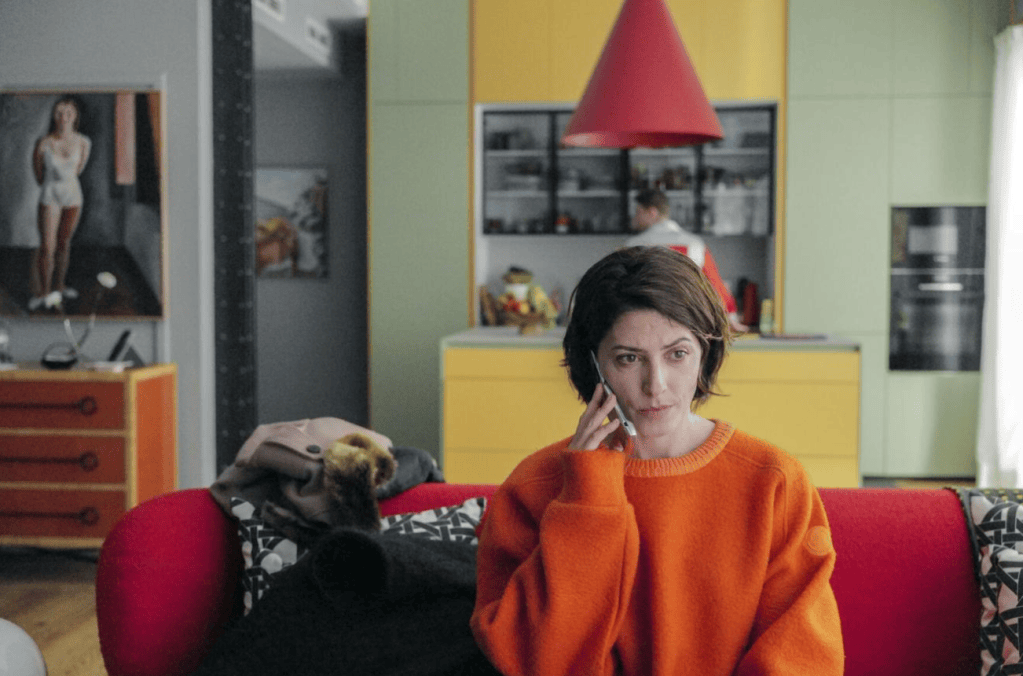
Bitter Christmas, Spanish auteur Pedro Almodóvar’s first movie in his native tongue since 2021’s baby-swapping melodrama Parallel Mothers, spends a fair amount of time apologizing, in so many words, for its listless narrative. Most of the film lives inside a movie-within-a-movie being written by a cleanly coiffed, Prada-loving Almodóvar analog named Raúl (Leonardo Sbaraglia). Raúl’s latest in-the-works project is set in 2004, and follows a cult film director turned marketer, Elsa (Bárbara Lennie), who’s suffering from debilitating, panic attack-induced migraines theorized to be a delayed aftereffect of the year-ago and mostly unprocessed death of her mother.
Sparing a last-minute introduction of an emotionally unstable model (Parallel Mothers co-star Milena Smit) who too is enveloped by world-destroying sorrow over a familial death, that, as well as some feeble relationship woes, is about all there is to it. What’s really riveting about Bitter Christmas is its frame story. While also streaked with the destabilizing forces of grief, it’s keener on the kind of self-indictment Almodóvar most recently practiced in 2019’s Pain & Glory. In Bitter Christmas, it slowly materializes that the majority of Raúl’s work in progress borrows and then only gently fictionalizes details from the lives of those in his circle. Most cumbersome is what he repurposes from Mónica (Aitana Sánchez-Gijón), his fearsomely capable publicist of 20 years. As the film opens, she resigns so that she can help a close friend whose child is dealing with a potentially lethal tumor.
Read the full column at 425.
Header image: Sony Pictures Classics

