The Photograph (2020), filmmaker Stella Meghie’s fourth — and so far latest — feature, is so appealingly old-fashioned that it’s easy to forgive it for being a little slight. (Meghie has cited narratively ambitious Black-led romantic dramas from a few decades earlier as key inspirations: 1990’s Mo’ Better Blues, 1997’s Love Jones, and 2000’s Love & Basketball are among them.) An additional feeling of it belonging to two different eras has emerged with hindsight: It was released just before the onset of the U.S.’s COVID lockdown, a purgatorial timeframe where the impact of very recent art was understandably foreshortened to a difficult-to-transcend degree.
The Photograph’s love story is ignited by unusual chance. A reporter, Michael (LaKeith Stanfield), is in Louisiana working on a hazily defined story about Hurricane Katrina’s ongoing impacts. The movie’s action starts with him visiting a lifelong community member, Isaac (Rob Morgan), at whose home he’s drawn to a black-and-white photo of a woman, Christina (Chanté Adams), in repose on a kitchen chair. It’s an exceedingly rare snapshot, Isaac notes, not just because, as a photographer, Christina was seldom a subject, but also because he’s barely seen her in the last 30 years, their once-passionate romance abruptly ended when a discontented Christina decided to take her creative ambitions to hopefully better thrive in New York.

Y’lan Noel and Chanté Adams in The Photograph.
Michael’s sudden interest in Christina is transformed when, upon returning home, he gets acquainted with her museum-curator daughter, Mae (Issa Rae). She, like Isaac, has a complicated relationship with the late photographer. Prone to prioritizing her professional pursuits over her personal life, Christina was the type to disappear without warning and unapologetically miss major events in Mae’s life. Early on in The Photograph, Mae is brought to a safety deposit box containing two letters written by Christina: one for Mae, and the other for Isaac, each functioning simultaneously as apologies and, essentially, long-winded diary entries that clarify Christina’s feelings and thought processes around “the mess I made” — an approach that helps makes Mae see her mother with more clarity and empathy. “She was just a woman,” one of Christina’s former paramours (Courtney B. Vance) reminds Mae.
The more compelling narrative of the two (The Photograph oscillates from Mae’s possibility-laden present to Christina’s tortured past) is Christina’s. It forces us to see the world through the eyes of the kind of woman the movies scarcely take the time to get to know — those willing to sacrifice motherly and marital commitments for a career — and makes us sympathetic to her and the restraints foisted on her. But far more of The Photograph is allocated to Mae and Michael’s developing, and less engrossingly thorny, romance, which is a shock to them both.
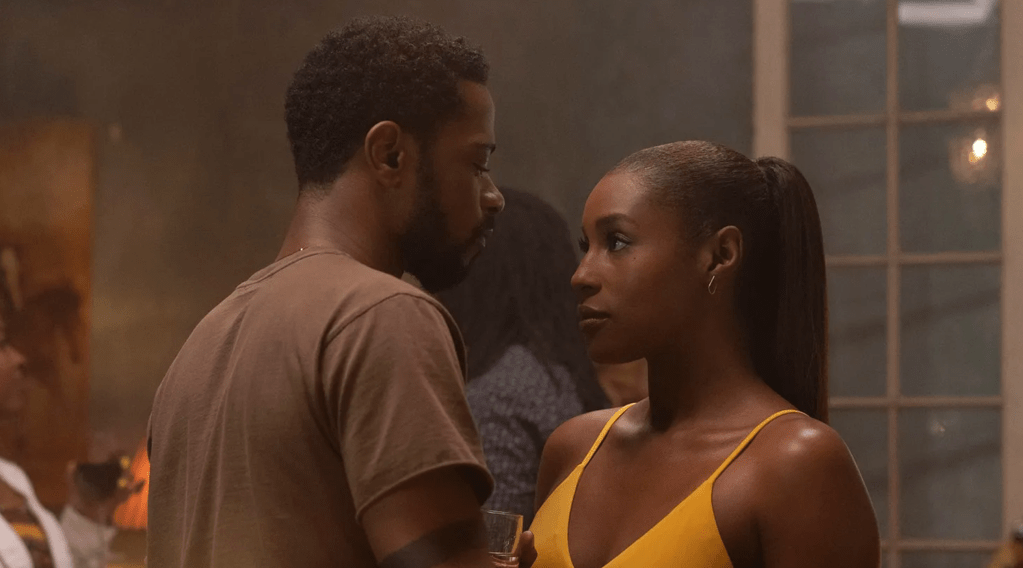
Each has just gotten out of a major relationship. Paralleling her ready-to-run mother, Mae recently broke off an engagement; just-dumped Michael is so ready to start fresh that he’s eyeing a prestigious reporting gig in London to which he has no connections. That’s part of what makes this new spark — which is, outside of Rae and Stanfield’s warm chemistry, felt the strongest when they’re teasing each other, cheekily sparring over drinks whether, for instance, Drake or Kendrick Lamar is the superior rapper — have such a charge. They both want to resist the calls of new love, which could very well lead them to the places of hurt from which they still haven’t completely recovered, while being well-aware that they can’t. They have the sort of kinship that makes restraining themselves from making out while still seated at a restaurant on their first real date hard. Stanfield and a more-understated-than-usual Rae are winning as stable, sure-of-themselves people with big feelings they instinctively try to deflate out of a fear of betrayed vulnerability.

LaKeith Stanfield and Issa Rae in The Photograph.
The ’80s B-plot comes to resemble a cautionary tale you hope won’t be repeated. Running away from love spiritually wounds. Those injuries are doomed to widen with time; absence can haunt one’s life like a specter. But The Photograph also knows too well an artist’s internal battles, which so often are vexed with questions of whether enough time is being surrendered to the craft and whether the craft is suffering because of the conditions in which it’s made. Christina appreciates the career she manages to cultivate while lamenting that “I wish I didn’t leave people behind so often.”
You know The Photograph won’t have Mae repeating her mother’s mistakes. We can immediately tell from the movie’s gauzy look, courtesy of cinematographer Mark Schwartzbard; its aspirational real estate and clothing; and its swooning music, which, when not a variation of Robert Glasper’s score, comes from a tastefully put-together soundtrack stuffed with dreamy R&B ballads from the likes of Karyn White and Luther Vandross. The Photograph, a film one wishes there were more of in a landscape where romantic movies of its ilk seem to get harder to come by, is a movie that feels made by a romantic for romantics.
 Peterson Reviews