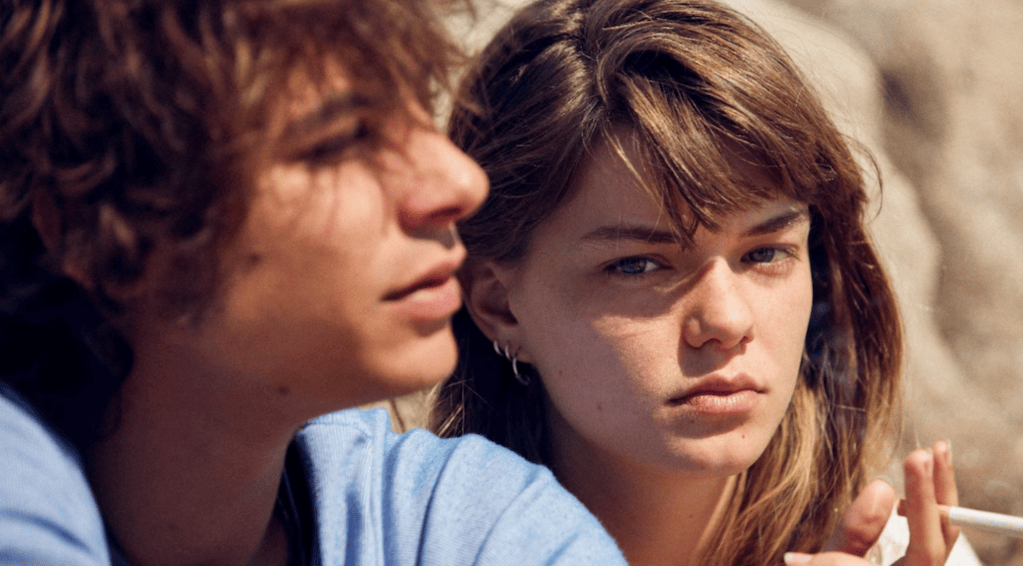
Catalan writer-director Carla Simón has framed Romería, her sore-to-the-touch new movie, as the final part of an autobiographically imbued trilogy. Together working as an opening salvo for her relatively recent foray into feature-length filmmaking, Romería’s two predecessors, 2017’s Summer 1993 and 2022’s Alcarràs, were, respectively, narratively inspired by the families of the orphaned filmmaker’s biological and adoptive mothers. Maintaining her ostensibly closure-motivated thematic preoccupation, Romería is propelled by her dad’s side, with a teenage Simón stand-in made to appraise its destructive legacy of image maintenance in the span of a little less than a week.
Marina (Llúcia Garcia, fortuitously street-cast after some 3,000 young women auditioned) isn’t delving into her messy familial history because she’s particularly interested in getting to better know the father she never met. (She’s long understood that he died of AIDS, after years of heroin addiction, in 1987, the year after she was born.) An aspiring filmmaker who totes around a handheld video camera like an extra limb, she’s told that she’s ineligible for the scholarships she’s eyeing because she isn’t recognized on her rather mythic dad’s death certificate. So she heads from Barcelona, where she’s been raised by her surrogate mom, to her father’s native Vigo, where she’s hoping to wheedle her estranged grandparents into attesting to the paternal connection in front of a notary.
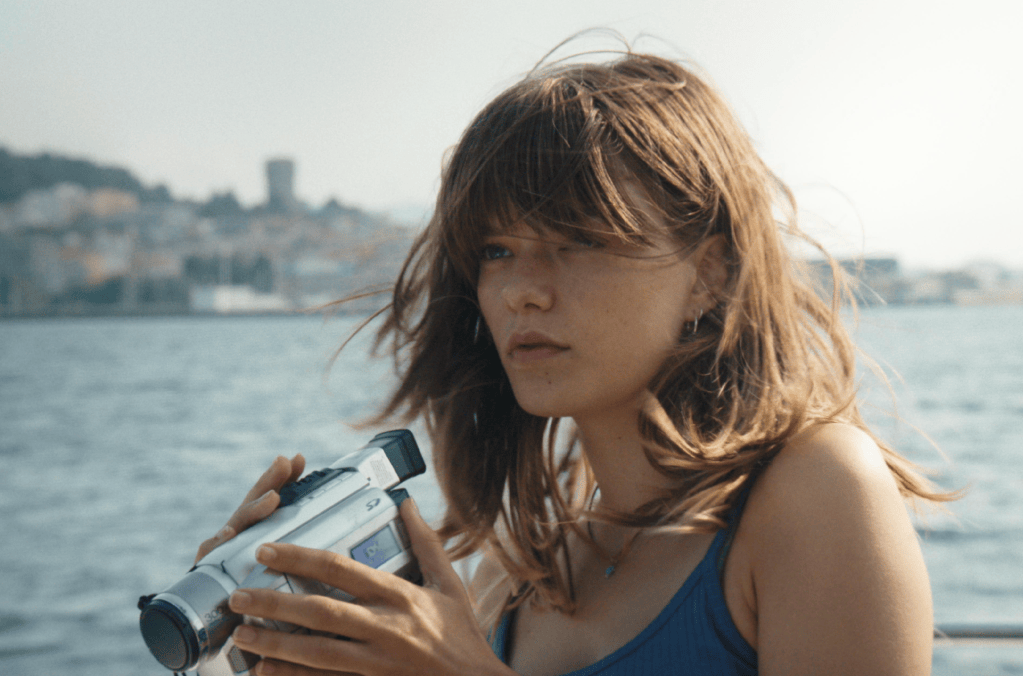
Llúcia Garcia in Romería. All images courtesy of The Criterion Channel.
The 2004-set Romería’s conceit, all but promising the disclosure of possibly explosive tucked-away secrets and a new, high-definition understanding of personal tragedy, is a boon for melodrama. But Simón swats away the potential for big emotion in favor of, mostly, prevaricating, awkward-silence-fringed conversation and, seemingly intentionally to line up with Marina’s bewilderment, making it difficult to confidently keep track of who’s who.
Though some of the family members Marina is meeting for the first time treat her warmly, she is, with a surfeit of suspicious glances and tiptoeing small talk, made to feel more like an inconvenient interloper. (Perhaps most hurtfully, some of her little cousins inform her that they’ve been instructed not to touch her, owing to her parents’ history with AIDS.) Sometimes it’s casually confirmed that she’s been protectively lied to by her adopted mother — she finds out, for instance, that her father actually passed away a few years later than she was led to believe — but much of the insight she gathers comes from overheard conversations, her dad’s family at odds about how forthcoming they ought to be with her.
I admired Romería’s understated, realism-minded subversion of family-movie expectations even as I admittedly wanted it to be more emotionally direct — for Marina to show more personality. She’s fitfully playful, teasing some boys with a spider she plucks from endangerment and rejecting some offered drugs by charmingly fiddling her dose from her fingers. But more often she exists as a po-faced, gimlet-eyed ghost, straining to maintain polite appearances, uphold composure when she’s met with world-rattling new information, and see her new-to-her family beyond the external appearances to which they hold on tightly.
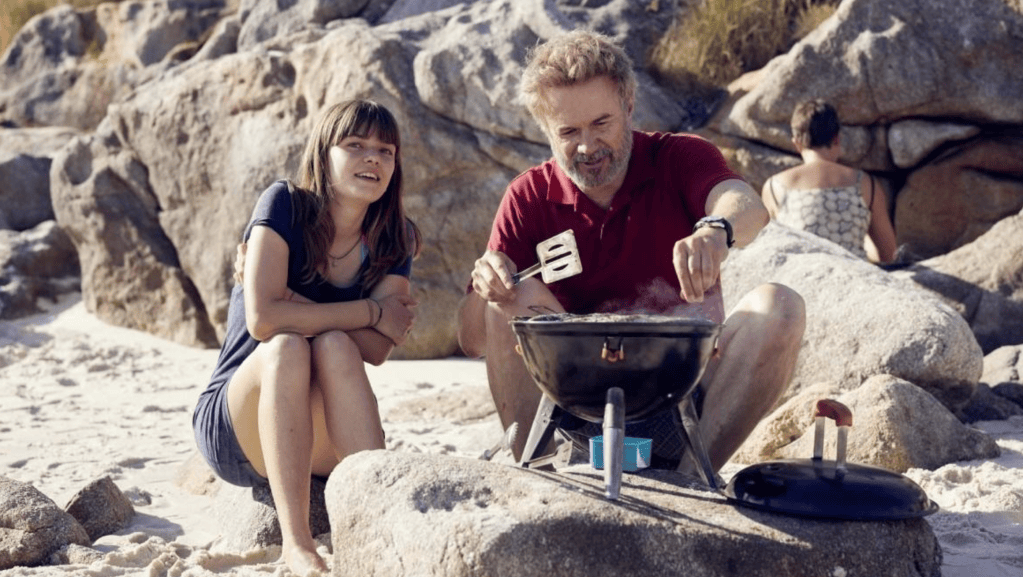
Llúcia Garcia and Tristán Ulloa in Romería.
Simón has admitted in interviews to battling with herself, on every project, to find a healthier directorial balance between control and welcoming spur-of-the-moment magic. Her most consistent form of relinquishing has been her openness toward structured improvisation, which streaked Romería’s making. I found the film the most electric when Simón wades out of her ultra-precisely composed and staged main drama for something more abstract. Separated into bluntly titled chapters, the film is atmospherically punctuated by voiceover readings of Marina’s mom’s diary entries, which go from around 1983 to the late ’80s and use grainy, expectations-shirking visuals from Marina’s coveted video camera. A centerpiece, dialogue-free late-movie sequence dramatizes, in the same style as Marina’s collection of travel videos, Marina’s parents’ calamitously carefree courtship, which is as much marked with leisurely trips to the beach as late nights spent shooting heroin.
In this movie fascinated by the unreliability of memory — no one in the family lines up in their view of how they treated Marina’s father in the years heralding his tragic death — the dreamy latter montage is a bold monument to how quickly the mind surrenders itself to filling in the blanks, stitching together narratives it may logically know it cannot. (Romería would make for a good double feature with Sophy Romvari’s Blue Heron, which too was released this year and, with loaded placidity, plumbs many of the same ideas without getting much closer to the tied-in-a-bow truths it longs for.) Marina cannot reasonably know, exactly, what her parents experienced together, but she can’t help herself from imagining a history that, as Simón has pointed out, is common for a generation driven by a post-Franco sense of liberation and its unfortunate correspondence with a heroin epidemic. Simón’s handling of Romería’s more fanciful flourishes makes me look especially forward to the next project she claims to be working on: a brand-disrupting, flamenco-influenced musical.

